Choosing the right commercial fence in Houston, TX isn’t just a style decision. It’s a security plan, a traffic-control plan, and a durability plan for Gulf Coast weather. We build commercial fences every week across the Houston area, and the best “fit” usually comes down to four things: what you’re protecting, how you need people and vehicles to move, what visibility you want, and how much maintenance your team can realistically handle.
Below, we break down the best commercial fencing options for Houston businesses, explain where each system performs best, and share the practical upgrades that turn a “basic perimeter” into a dependable, long-term security asset.
Start with the goal: security, safety, access, or image (usually all four)
Before you pick material or height, define what success looks like for your property:
- Security and theft deterrence: Keeping unauthorized people out and keeping assets in place after hours.
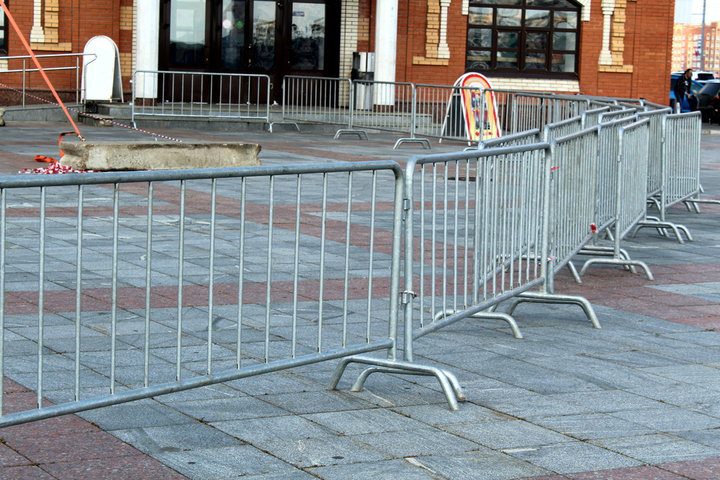
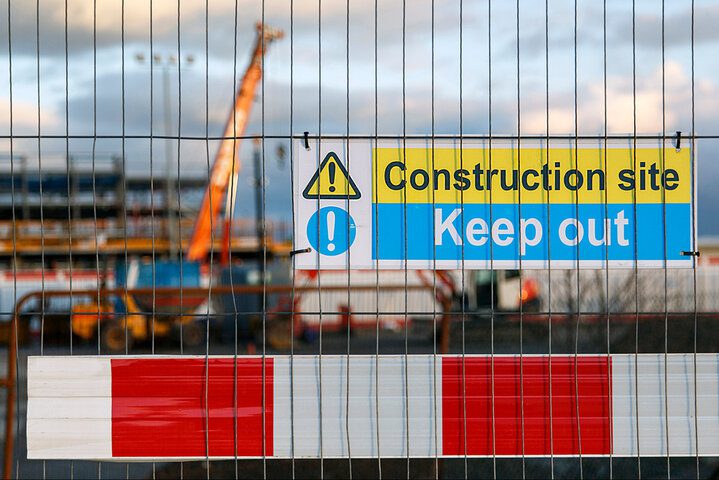
- Safety and liability control: Separating the public from loading areas, equipment yards, and hazards.
- Access control: Managing deliveries, employee parking, visitor entry, and emergency access.
- Brand and curb appeal: Presenting a professional first impression at the street.
- Match the fence type to the real-world risks at your site (theft, trespass, traffic flow, safety).
- Plan gates and entry points early so the fence supports daily operations instead of slowing them down.
- Choose materials and coatings that make sense for Houston heat, humidity, and storm season.
Option 1: Commercial chain-link fencing (the Houston workhorse)
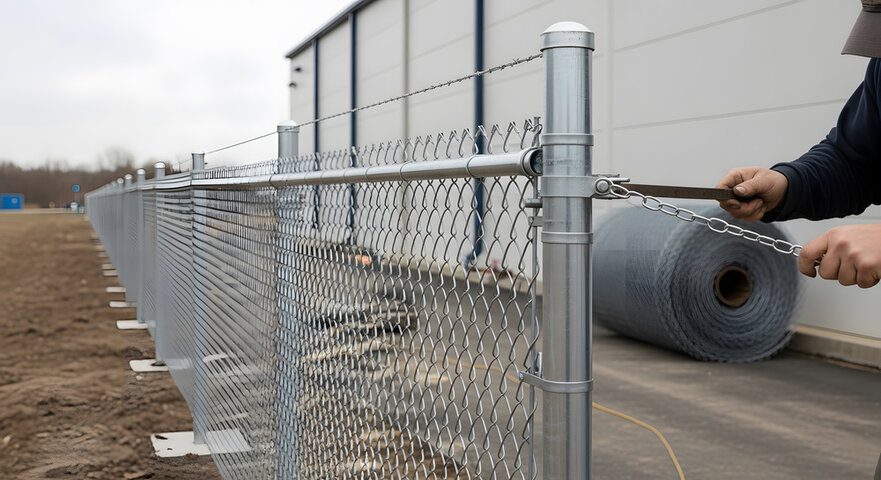
For many Houston businesses, chain-link is the most cost-effective way to secure a large perimeter. It’s fast to install, durable, and easy to repair if a vehicle bumps it or a storm drops debris along the line.
Where chain-link shines
- Equipment yards and laydown areas where you need visibility for security patrols.
- Warehouses and distribution sites that need long fence runs and multiple gates.
- Multi-tenant properties where boundary definition matters more than privacy.
Houston-specific upgrades we recommend
- Heavier framework and proper post spacing for wind exposure and long-term rigidity.
- Vinyl-coated (black) chain-link for better appearance and corrosion resistance in humid conditions.
- Barbed wire or razor wire (where appropriate) for higher security sites and controlled perimeters.
- Privacy slats or screened panels when you want to reduce visibility into the yard while keeping the benefits of chain-link.
If you’re comparing chain-link specs, it’s helpful to know that ASTM publishes standards for chain-link fence fabric. For example, ASTM A392 is a standard specification covering zinc-coated steel chain-link fence fabric and includes requirements such as mesh size, wire size, and coating requirements.
- Chain-link is often the best value for large commercial properties that need durable perimeter security.
- Security and longevity come from the “details”: framework, coatings, and smart anti-climb upgrades.
- For higher-risk sites, pair chain-link with controlled gate access and perimeter lighting for a complete approach.
Learn more about our chain link fencing in Houston, TX and our chain link fence with barbed wire options.
Option 2: Ornamental iron fencing (security + curb appeal)
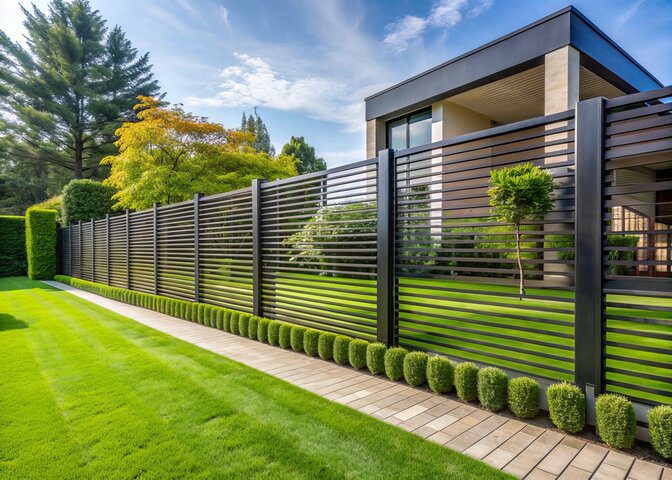
Ornamental iron is a strong fit when your fence needs to look professional from the street but still provide a serious barrier. Think offices, retail centers, schools, churches, HOAs, and properties where first impressions matter.
Why businesses choose iron
- Professional appearance: A clean, high-end look that complements landscaping and architecture.
- Visibility: You can see through the fence, which helps with security monitoring.
- Strength: Properly built iron fencing is difficult to defeat quickly.
Best use cases in Houston
- Front-of-property fencing where you want security without “industrial” aesthetics.
- Pool and amenity fencing where code compliance and durability matter.
- Controlled entry areas with pedestrian gates and vehicle gates.
- Iron fencing is ideal when you need security and a polished look for customers and tenants.
- It pairs well with access control systems, cameras, and automated gates.
- Powder coating and proper installation details help performance in Houston’s humidity.
Explore our iron fencing in Houston, TX, iron fence and gates, and iron gates in Houston, TX.
Option 3: Anti-climb security fence systems (for high-risk sites)
Some sites need more “delay time” than standard chain-link or ornamental iron can provide. Anti-climb systems (often tight-mesh steel panels) are designed to be hard to scale and hard to cut quickly, which makes them a good fit for:
- Utilities and critical infrastructure
- Data/telecom facilities
- Industrial plants and storage yards
- Schools and campuses that need controlled perimeter security
These projects work best when the fence is planned as part of the whole security system: cameras, lighting, controlled gates, and clear lines of sight.
- High-security sites benefit from anti-climb fence designs that increase “time to breach.”
- The fence should be designed alongside lighting, cameras, and access points for maximum effectiveness.
- We help match the security level to your risk and budget so you don’t overbuild (or underbuild).
Option 4: Wood fencing for commercial privacy (when appearance and screening matter)
While chain-link and iron dominate many commercial projects, wood still has a place in Houston commercial fencing. We often install wood fences when a business needs privacy screening—like dumpster enclosures, service yards, outdoor storage, or patio spaces where you want to reduce noise and visual clutter.
For commercial wood fencing, we focus on durability details that matter in Houston: post depth, proper drainage at the base, and finishes that hold up to sun and humidity.
- Wood fencing can be a strong choice for privacy screening around commercial yards and enclosures.
- Long-term performance depends on proper post setting, drainage, and protective finishes.
- We can combine wood fencing with iron or chain-link in different zones for a balanced site plan.
If your property needs a mixed-material approach, we can coordinate everything under one plan through our fence installation services in Houston, TX.
Don’t forget gates and access control (the most used part of the system)
On commercial properties, gates take the most “daily abuse.” They open and close hundreds (sometimes thousands) of times per month, which means the quality of the hardware, alignment, and operator setup matters.
We recommend deciding early whether you need:
- Sliding gates (good for limited swing space and high-traffic vehicle entry)
- Swing gates (great for many standard driveways and lower traffic volume)
- Pedestrian gates with controlled entry
- Automated operators with keypad, card access, phone entry, or other controls
For properties that need reliable access management, our access control systems and new access control installations help you tie perimeter security into a system your team can manage.
- Gates are the most used component on most commercial sites—plan them carefully.
- Access control reduces unauthorized entry while keeping day-to-day operations smooth.
- A well-designed gate layout improves traffic flow for deliveries, employees, and visitors.
Houston weather and wind: why engineering and materials matter
Houston commercial fencing has to stand up to intense sun, heavy rain, and tropical weather. Wind loads can also become a factor, especially on taller fences or sites with open exposure. Texas commonly references the International Building Code (IBC) with ASCE 7 wind load provisions, and commercial projects often require engineered calculations depending on site conditions and scope.
When we design commercial fences, we think about wind exposure, soil conditions, drainage, and how water moves across the site—because the strongest fence can fail early if the base conditions aren’t right.
- In Houston, durable commercial fencing means planning for sun, humidity, and storm season—not just day-one appearance.
- Taller fences and exposed sites may need engineering consideration for wind loads and structural stability.
- Material choice, coatings, and foundations are what make a fence perform over 10+ years.
How we match fence type to different Houston business types
Different industries in Houston tend to have different weak points, so we try to design the fence around the real problem—not a generic “one-size-fits-all” solution.
Warehouses, distribution, and industrial yards
These sites usually need long runs of fencing, clear visibility, and gates that can handle daily truck traffic. In most cases, we recommend commercial-grade chain-link with the right framework and a gate system sized for your largest vehicles. If theft has been an issue, we’ll look at anti-climb features, improved lighting, and a tighter approach to access points so the perimeter is easier to monitor after hours.
Retail centers and office properties
For properties that face the street, ornamental iron often gives you the best blend of security and appearance. It creates a strong boundary without making the property feel “closed off.” We can also separate customer-facing areas from loading docks and dumpsters using a mix of iron and wood screening where it makes sense.
Schools, churches, and community facilities
These properties often need controlled pedestrian access and safe separation between public areas and staff-only zones. We plan gate locations for drop-off and events, and we recommend fencing styles that keep visibility for staff and security teams while still creating a clear perimeter.
- Different business types have different risks—industrial yards, retail centers, and campuses shouldn’t use the same fence plan.
- A strong commercial fence design balances visibility, access, and “delay time” for security.
- We help choose where to invest (gates, access control, anti-climb) so the budget goes to what actually reduces risk.
Spec details that matter on commercial jobs (and why they affect price)
Two commercial fences can look similar from the street but perform very differently over time. When we build bids, we focus on the parts that determine rigidity, lifespan, and maintenance.
Posts, foundations, and soil conditions
Houston soil can vary a lot from one neighborhood to the next, and drainage patterns can change across a commercial site. Post depth, footing size, and how the fence line handles water movement matter for long-term stability. We also plan around underground utilities and paving so you don’t end up with weak points at corners, gate pockets, or transitions.
Coatings and corrosion resistance
Humidity and frequent rain can speed up corrosion on exposed metal. Galvanized coatings are the baseline for chain-link, and many commercial properties choose vinyl-coated systems for additional protection and a cleaner appearance. For ornamental iron, quality powder coating and proper prep work are critical—those steps help the finish resist chips and rust over the years.
Gate hardware and operators
Gate performance is usually where commercial properties feel the difference between “budget” and “built right.” Hinges, rollers, latches, and operator selection all affect how smoothly the gate moves, how it handles wind, and how often you’ll need service calls. We’d rather build it correctly up front than have your team fighting a misaligned gate every morning.
- Commercial fence cost is driven by structural details: posts, footings, coatings, and gate hardware.
- Houston drainage and soil conditions matter—foundation planning prevents early leaning and movement.
- Investing in the gate system often pays off the most because it’s the part used every day.
FAQ: commercial fencing in Houston, TX
What is the most secure commercial fence type?
The most secure option depends on your risk level and site layout. For many businesses, heavy-duty chain-link with anti-climb upgrades and controlled gates is a strong baseline. High-risk sites often benefit from anti-climb tight-mesh systems paired with access control and camera coverage.
Is barbed wire allowed on commercial fences in Houston, TX?
Many commercial and industrial properties can use barbed wire or similar deterrents, but the details depend on where the fence is located, height, and the property’s use. We review your site conditions and recommend a compliant, practical approach.
How tall should a commercial fence be?
Height depends on security goals and visibility needs. Many sites choose 6’–8’ fencing for perimeter definition, while higher-security areas may go taller with additional deterrents. We’ll help you balance security, cost, and any site constraints.
How long does commercial fence installation take?
Timeline depends on linear footage, terrain, gate complexity, and materials. Many chain-link projects move quickly once the layout is confirmed, while iron and custom gate systems can require more fabrication time. We’ll provide a clear schedule during quoting.
Get a commercial fence plan that fits your Houston property
If you’re comparing options and want a practical recommendation, we can help. Start with our commercial fence company near me page to see how we approach perimeter security projects, then review our process and financing if you need to plan budget and timelines.
Call Griffin Fence today at (713) 937-6611 or contact us online for a free estimate.
External references: ASTM’s overview of ASTM A392 for chain-link fence fabric and a Texas wind load overview referencing IBC/ASCE wind load requirements.