When you live in Houston, TX, your fence doesn’t just “sit outside.” It takes a beating from months of 90°+ heat, humidity that hangs in the air, UV exposure, sudden downpours, and wind events that can turn a weak fence into a weekend project. In this guide, we’ll break down the best fence materials for Houston weather based on real-world performance and what we see in the field every week.
We’ll compare wood (cedar and pressure-treated pine), vinyl and composite options, and metal choices like ornamental iron and galvanized chain link. You’ll get practical pros/cons, maintenance expectations, and how to choose the right fence for your neighborhood, your budget, and your tolerance for upkeep.
What Houston weather does to fences (and why the wrong material fails fast)
Houston’s climate creates a specific set of fence problems we plan for on every job:
- Heat + UV exposure: Sun breaks down finishes, dries wood unevenly, and can fade or chalk certain plastics over time.
- High humidity: Moist air slows drying, encouraging mildew on shaded fence faces and accelerating corrosion on unprotected metal.
- Heavy rain + poor drainage: Saturated soil can cause post movement, leaning panels, and premature rot when posts aren’t set correctly.
- Clay soil movement: Expansive clay can shift seasonally, stressing posts and gate frames if footings aren’t deep and stable.
- Storm gusts: A fence is basically a wind sail. The taller and tighter the fence, the more wind load it catches.
That’s why we emphasize both material selection and proper installation. Even the “best” fence material can fail early if posts are set too shallow, drainage is ignored, or hardware isn’t rated for Houston conditions.
- Heat and UV drive most fading and drying-related cracking in Houston.
- Humidity and wet soil are the biggest drivers of rot and corrosion.
- Wind events expose weak posts, cheap fasteners, and undersized frames fast.
Quick ranking: best fence materials for Houston weather (our contractor take)
If you want the short answer first, here’s how we typically rank materials for Houston’s hot, humid, storm-prone climate when installed correctly:
- Vinyl or composite (lowest maintenance): Great humidity resistance and consistent appearance when quality materials are used.
- Cedar wood (best natural wood option): Strong rot/insect resistance, looks great, but needs planned maintenance to stay sharp.
- Ornamental iron/aluminum (best for airflow + durability): Excellent for wind and visibility, but needs quality coatings and maintenance checks.
- Galvanized chain link (best value + storm-friendly): Durable, open design handles wind well; privacy options available.
- Pressure-treated pine (best budget wood): Works when installed right, but typically requires more upkeep in Houston.
- Low-maintenance materials reduce the “Houston tax” of constant refinishing.
- Open-style fences handle wind better than solid privacy walls.
- The longest-lasting fence is usually the one installed correctly for clay soil and drainage.
Cedar fencing in Houston: the best wood for heat and humidity
When homeowners ask us for the best wood fence material for Houston weather, cedar is usually the conversation starter. Cedar has natural oils that help it resist rot and insects better than many other woods, which matters in our humidity.
In neighborhoods with lots of shade (trees, north-facing fence lines, tight lots), cedar tends to outperform cheaper woods because it’s less likely to become a sponge that stays damp all week. It also holds a stain beautifully, which helps with UV resistance.
If you’re considering cedar, we recommend looking at the full lifecycle cost, not just the install price. A cedar fence that’s cleaned and sealed on a regular schedule can stay straight and good-looking for years.
Related service: if you’re comparing options, start with our Cedar Fence Installation Near Me page and our Wood Fence Installation Near Me overview.
- Cedar is the top wood choice for Houston humidity and insects.
- Stain/seal is not optional long-term if you want cedar to look new.
- Installation quality (posts, rails, drainage) matters as much as the wood species.
Best cedar fence styles for Houston homes
Houston has everything from traditional subdivisions to modern infill. These cedar styles tend to work well here:
- Board-on-board: Great privacy and noise reduction; strong visual appeal.
- Good neighbor: Looks finished on both sides; a good choice for shared property lines.
- Shadow box: Allows airflow while still offering partial privacy (helpful for wind).
We build all of these regularly. You can also browse our dedicated pages for Board on Board Fencing in Houston, TX and Good Neighbor Fencing in Houston, TX.
- Board-on-board maximizes privacy but catches more wind.
- Shadow box is a good compromise for wind-prone yards.
- Good neighbor styles help avoid “bad side” disputes on shared lines.
Pressure-treated pine: best budget-friendly fence material (with a Houston maintenance plan)
Pressure-treated pine is popular because it’s accessible and cost-effective. The treatment helps the wood resist decay and insects compared to untreated lumber, which is important in high-moisture environments. Some sources estimate pressure-treated lumber can last 20–40 years outdoors with proper use and maintenance (Contract Exteriors).
Here’s the reality in Houston: pressure-treated pine can be a solid choice, but it’s more sensitive to installation details and ongoing care. We often see early issues when pickets are installed too tight (no room for movement), when drainage traps water at the base, or when the fence isn’t cleaned and sealed on a schedule.
If you’re planning pressure-treated pine, we strongly recommend setting expectations: you’ll likely be staining/sealing more often than cedar, and you should budget for periodic repairs. If you want help maintaining an older fence, our Wood Fence Repairs in Houston, TX page outlines common fixes we handle.
- Pressure-treated pine is the “best budget wood,” but it needs a maintenance plan in Houston.
- Expect more movement, surface cracking, and finish wear versus cedar.
- Drainage and post setting are non-negotiable to avoid premature rot.
Vinyl fencing: a low-maintenance winner for Houston humidity
Vinyl is popular for a reason: it doesn’t rot, it isn’t attractive to termites, and it’s easy to clean. In Houston, where humidity drives rot and mildew on many materials, vinyl can be a great “set it and forget it” option.
Quality matters. Thicker vinyl profiles and UV-resistant formulations tend to hold up better over time. One industry article notes vinyl fencing is designed to tolerate high temperatures and is formulated with UV inhibitors to protect it from sun exposure (Vinyl Professionals, Inc.).
Where vinyl can struggle in Houston is impact damage (mowers, debris, storm-blown objects) and sometimes wind load on tall solid panels. That’s why we focus on strong posts, correct spacing, and good gate hardware. If privacy is the goal but wind is a concern, we may recommend a design that breaks up the surface area or reinforces posts more heavily.
- Vinyl is one of the best options for Houston humidity because it won’t rot.
- Look for quality UV-resistant vinyl to help with long-term color stability.
- Solid vinyl panels need strong posts and proper installation to handle wind.
Composite fencing: the “premium low-maintenance” option
Composite fencing is often chosen when homeowners want the look of wood but with reduced maintenance. Many composite products resist moisture and insects well and tend to stay more dimensionally stable than traditional wood.
Composite can be a great match for Houston if you want a consistent look and you don’t want to stain every couple of years. The tradeoff is cost and the importance of professional installation. Composite systems are product-specific, so fasteners, rails, and spacing must match manufacturer requirements.
If you’re weighing composite versus other options, we can walk you through the long-term cost and help you pick a fence that fits your property layout. Our Our Process page explains what to expect from estimate through installation.
- Composite delivers a wood-like look with reduced upkeep.
- Higher upfront cost can be offset by lower maintenance over time.
- System-specific installation matters; don’t mix and match components.
Ornamental iron (and aluminum): great for wind, visibility, and long-term durability
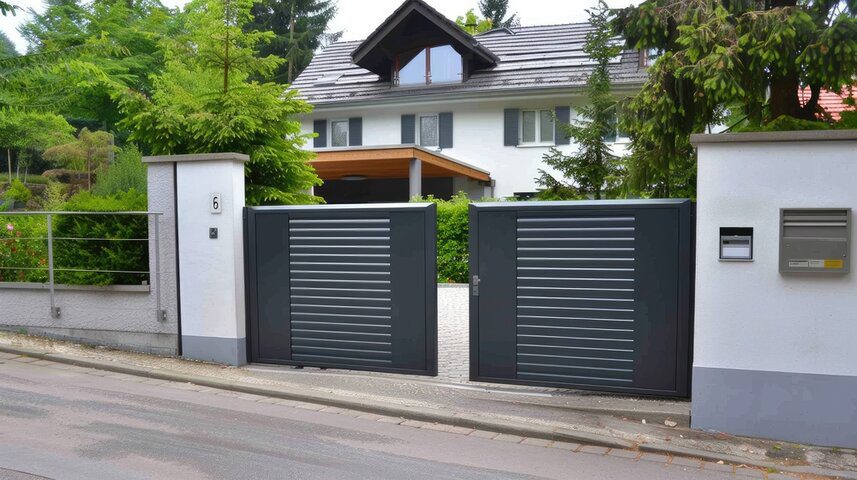
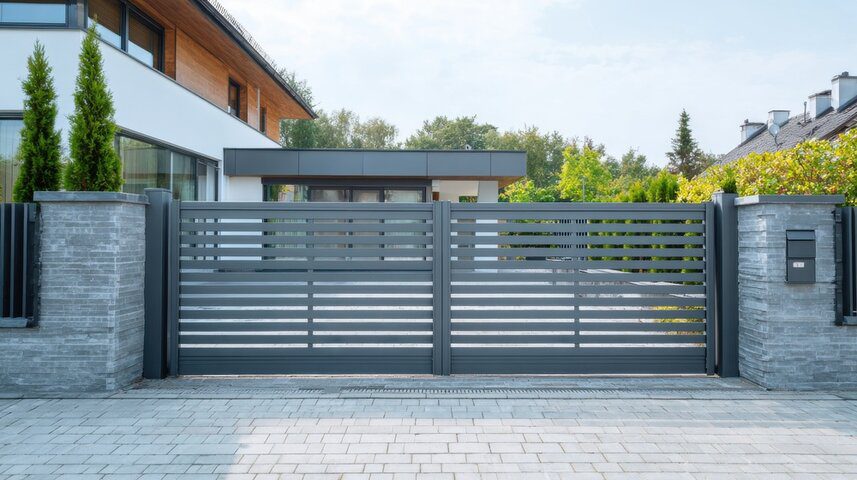
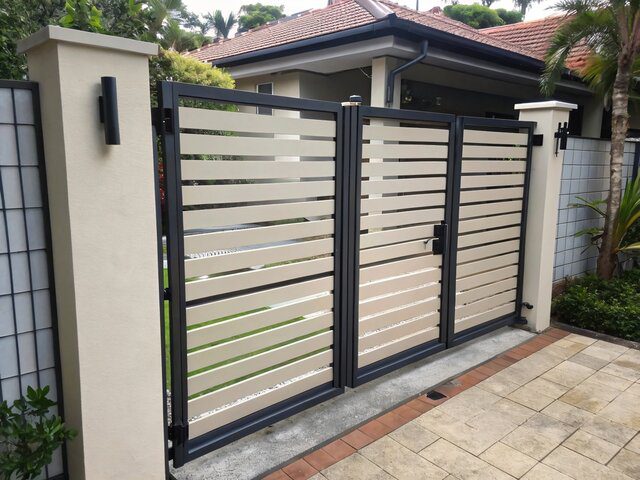
In Houston, we often recommend ornamental iron or aluminum fences for front yards, pools, and properties where visibility matters. Because these fences allow airflow, they typically handle wind events better than solid privacy fences.
The key with metal fences is corrosion protection. Powder coating and quality prep work go a long way, especially in a warm, humid environment. If you’re very close to the coast or exposed to salt air, protection becomes even more important. The American Galvanizers Association notes that warmer climates can make coastal environments more corrosive to galvanized steel, and surfaces exposed to salt-laden winds can show rusting faster than sheltered areas (American Galvanizers Association).
Even away from the coast, we treat Houston as a “humidity-first” environment. That means avoiding cheap hardware, using the right fasteners, and planning for maintenance checks. If you’re considering gates and automation, see our Iron Gates Houston, TX page for options we install.
- Ornamental iron/aluminum handles wind well thanks to airflow.
- Coatings and hardware quality matter in Houston humidity.
- Near the coast, corrosion risk increases and protection becomes critical.
Galvanized chain link: best value fence for Houston storms (with upgrade paths)
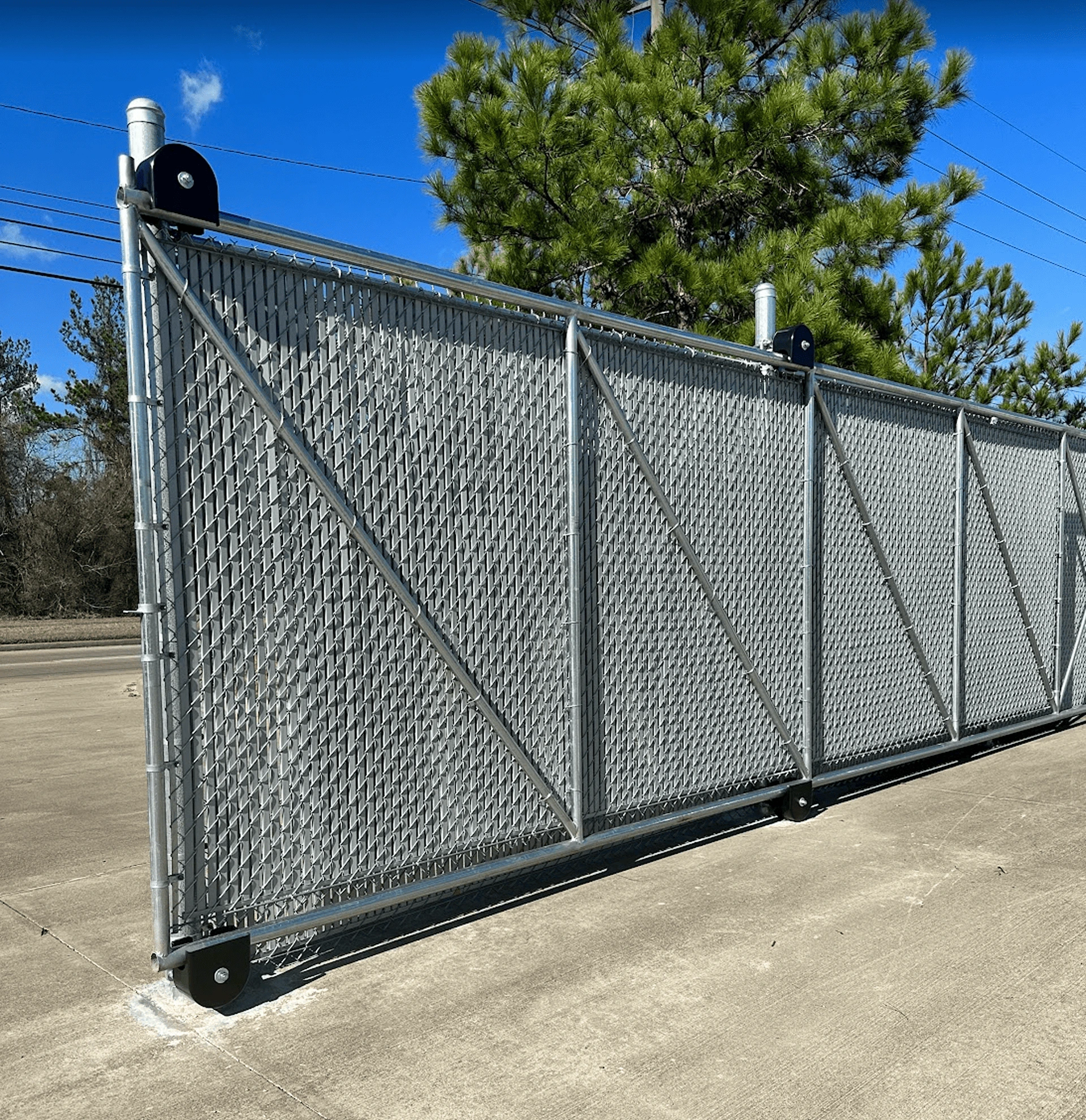
Chain link is a workhorse in Houston. It’s cost-effective, durable, and the open design performs well in wind. Many homeowners dismiss chain link because they think it can’t be private or attractive, but there are several upgrades that change the look and function:
- Privacy slats: Add visual screening without building a solid “wind sail.”
- Vinyl-coated chain link: Black coated options look modern and can blend better with landscaping.
- Security upgrades: For commercial properties, barbed wire and access control are options when appropriate.
If you’re exploring chain link options, check our Chain Link Fence Installation Near Me and Chain Link Fence Houston, TX pages.
- Chain link is one of the most storm-friendly fences because wind passes through.
- Privacy slats and vinyl-coated finishes can modernize the look.
- Quality galvanized components help slow corrosion in humid conditions.
Installation matters more in Houston than most homeowners realize
Houston’s soil and weather punish shortcuts. If you want a fence that lasts, here are the installation details we focus on:
- Proper post depth and concrete: Tall privacy fences need stable footings, especially in clay.
- Drainage and grade: We avoid trapping water at the base of posts and plan for runoff.
- Fasteners and hardware: Exterior-rated fasteners resist corrosion; cheap hardware fails early.
- Gate frames: Houston ground movement can rack gates; strong frames and correct hinges matter.
If you want to understand how we approach installations, see our Our Process page. If you’re looking for an instant ballpark, try our Fence Estimator.
- Post setting and drainage are the two biggest longevity factors in Houston.
- Exterior-rated hardware is worth it in a humid environment.
- Strong gate construction prevents the most common “Houston fence” headaches.
How to choose the best fence material for your property in Houston, TX
Instead of picking a material based only on looks, we recommend choosing based on how you live and what your property needs:
- If you want low maintenance: Vinyl or composite is usually the best fit.
- If you want the classic Houston privacy fence look: Cedar with a stain/seal schedule is a strong choice.
- If you need airflow and storm performance: Ornamental iron/aluminum or chain link performs well.
- If budget is tight: Pressure-treated pine can work, but plan for more upkeep.
We also consider neighborhood requirements and HOA rules. If your project includes a formal agreement, you can review our Terms And Conditions and Warranty pages.
- Match the material to your maintenance tolerance, not just your budget.
- Choose open-style designs when wind is a recurring concern.
- In Houston, a great installation can make an average material last much longer.
FAQ: Best fence for Houston weather
What fence lasts the longest in Houston, TX?
Longevity depends on material quality and installation, but low-maintenance materials like vinyl/composite and properly protected metal fences tend to last a long time in Houston because they resist moisture-related rot. Cedar also performs well when it’s maintained on a predictable schedule.
Is wood fencing a bad idea in Houston humidity?
No, but you have to pick the right wood and maintain it. Cedar is our go-to wood choice because it resists rot and insects better than many alternatives. Pressure-treated pine can work, but it typically requires more frequent staining/sealing and repairs.
Does vinyl fencing warp in Texas heat?
Quality vinyl fencing is engineered for high temperatures and typically holds its shape well, especially when it’s made with UV inhibitors and installed correctly (Vinyl Professionals, Inc.). As with any material, cheaper products and poor installation can lead to problems.
What’s the most storm-resistant fence style for Houston?
Open-style fences like ornamental iron/aluminum and chain link usually handle storms well because wind passes through them. Tall solid privacy fences catch more wind, so they need stronger posts and correct installation details to hold up.
Get an expert recommendation and a free estimate
If you’re not sure which fence material is best for your yard, we can help you compare options based on your layout, privacy goals, and budget. Call Griffin Fence today at (713) 937-6611 or contact us online for a free estimate.