Why Cedar Fence Installation Near Me Starts With the Right Wood
When Houston homeowners start searching for cedar fence installation near them, the first question we always ask is: why cedar? The answer comes down to decades of real-world performance in one of the most punishing climates in North America. Houston, TX sits in a humidity zone that routinely hovers above 80% for months at a time. We get tropical storms, hurricane-force winds, clay soil that expands and contracts like a sponge, and a summer heat that can crack inferior wood in a matter of seasons. Western Red Cedar is the one wood species that has proven it can handle all of it — and still look beautiful years down the road.
At Griffin Fence, we have been installing cedar fences across the Greater Houston area since 2001. We have seen what lasts and what fails. Pine fences installed by other contractors that turn green with mold after two wet seasons. Pressure-treated wood that checks and splinters along the grain before the five-year mark. And cedar fences we installed fifteen years ago that still stand plumb, still hold stain, and still make neighbors stop and ask who built that. This guide covers everything you need to know about cedar fence installation in Houston — the wood, the styles, the costs, the installation specifics, and how to maintain your investment for twenty-plus years.
- Western Red Cedar is the dominant wood choice for Houston fences due to natural rot and insect resistance
- Houston’s clay soil and high humidity demand deeper post holes and proper concrete setting
- Cedar fences in Houston typically cost $18–$25 per linear foot fully installed
- Proper staining every 2–3 years extends cedar fence life to 20+ years
- Griffin Fence has been installing cedar fences in Houston since 2001 — call (713) 937-6611 for a free estimate
What Makes Western Red Cedar the #1 Fence Wood in Houston
Not all cedar is created equal. The cedar used in quality Houston fence installations is Western Red Cedar (Thuja plicata), sourced primarily from the Pacific Northwest and British Columbia. This species contains naturally occurring oils — thujaplicins — that act as a built-in preservative against fungal decay and insect damage. In the Houston context, this matters enormously.
Houston is rated as one of the highest termite-pressure zones in the country. Subterranean Formosan termites are particularly aggressive in Harris County and surrounding areas, and untreated pine or standard lumber can be compromised within a few years of ground contact. Western Red Cedar’s natural oils make it significantly more resistant to termite activity than non-treated alternatives. When we combine cedar boards with steel posts set in concrete (our standard installation method), the wood never actually contacts the soil — eliminating the primary termite entry point entirely.
Beyond insects, cedar handles Houston’s relentless humidity without warping, swelling, or developing the mold and mildew that plague inferior wood species. Its cellular structure is tighter and less porous than pine, meaning it absorbs moisture more slowly and releases it more evenly. This translates into fence boards that stay straight through wet winters and dry summers, keeping your fence looking sharp and functioning correctly year after year.
Cedar is also significantly lighter than pressure-treated pine — roughly 23 pounds per cubic foot versus 35-40 pounds for pressure-treated lumber. That lighter weight places less stress on your posts and concrete footings, which is a real advantage in Houston’s clay soil where post movement is a constant concern. For our wood fence installation projects, we almost always recommend cedar over other species for residential privacy fencing in Houston neighborhoods.
- Western Red Cedar contains thujaplicins — natural oils that resist rot, mold, and insect damage
- Cedar is significantly more termite-resistant than untreated pine in Houston’s high-pressure termite zone
- Lighter weight reduces post stress in Houston’s expanding-contracting clay soil
- Cedar boards stay straighter through Houston’s humidity swings versus pressure-treated alternatives
- Natural oils allow cedar to accept stain and sealant readily, extending protection for decades
Cedar Fence Styles We Install in Houston
Once you have decided on cedar as your material, the next decision is style. The style you choose affects privacy, airflow, appearance, and cost. Here are the four primary cedar fence styles we install throughout the Houston metro area.
Board-on-Board Cedar Fencing
Board-on-board is the most popular cedar fence style in Houston, and for good reason. In a board-on-board design, alternating fence boards overlap each other on both sides of the fence rail, creating a full privacy screen with no gaps — while also allowing air circulation between the overlapping boards. This airflow matters in Houston because solid-panel fences trap moisture and heat, which accelerates wood decay. The slightly offset boards let the wood breathe.
Board-on-board cedar fences also offer a visual advantage: they look attractive from both sides. Both your yard and your neighbor’s yard get a finished face, which matters in Houston’s dense residential neighborhoods. This style is also notably wind-resistant — the overlapping boards distribute wind load more efficiently than tight-panel alternatives, which is a real consideration during hurricane season. Our board-on-board fencing installations use premium cedar boards with steel posts for maximum longevity.
Stockade Cedar Fencing
The stockade (or “dog-ear” panel) style is the classic privacy fence configuration: boards placed edge-to-edge with no overlap, cut at a slight angle at the top. Stockade fencing offers complete visual privacy and a clean, uniform appearance. It is a slightly more economical option than board-on-board because you use fewer boards per linear foot, but the tight-panel design does restrict airflow somewhat. In Houston’s humidity, this means stockade fences benefit particularly from regular staining and inspection to keep the wood sealed.
Stockade is a solid choice for homeowners who want maximum privacy at the best price point and plan to maintain their fence on a consistent schedule. We often recommend it for side-yard sections where the fence faces less direct sun and wind exposure.
Shadow Box Cedar Fencing
The shadow box style is a variation on board-on-board where boards are placed alternately on either side of a center rail with consistent, even spacing between each board. This creates an elegant visual effect — when you look straight at the fence, you see a solid privacy screen, but at an angle, you get glimpses through the alternating boards. It is called “shadow box” because of the interplay of light and shadow that the staggered boards create throughout the day.
Shadow box fencing offers excellent airflow and tends to perform very well in Houston’s climate because the boards can expand and contract without pushing against each other. Our shadow box fence installations are popular in upscale Houston neighborhoods where homeowners want both privacy and architectural detail.
Horizontal Cedar Fencing
Horizontal cedar fencing has grown dramatically in popularity over the last several years as contemporary home design trends have influenced Houston’s residential market. Instead of vertical boards, horizontal installations run the boards parallel to the ground, creating a clean, modern look that pairs beautifully with contemporary architecture and landscaping.
From an installation standpoint, horizontal cedar fencing requires more precise post placement and typically uses more posts per span because the horizontal runs need support at shorter intervals to prevent sagging. The boards also need to be premium, straight-grained cedar because any bow or warp in a horizontal board is immediately visible. When done right, the result is stunning — and cedar’s consistent grain makes it the ideal material for this style.
- Board-on-board is Houston’s most popular cedar style: full privacy with airflow and wind resistance
- Stockade offers complete privacy at a lower price point — requires consistent maintenance
- Shadow box provides airflow, visual interest, and is well-suited to Houston’s humidity
- Horizontal cedar delivers a contemporary look that is increasingly popular in Houston neighborhoods
- All cedar fence styles benefit from steel posts set in concrete for Houston soil conditions
Cedar Fence Cost in Houston, TX — What to Budget in 2025
One of the most common questions we receive is: how much does cedar fence installation cost in Houston? The honest answer is that it depends on several factors — fence height, style, linear footage, site conditions, and whether demolition and removal of an existing fence is required. That said, we can give you solid ballpark figures based on our 2025 pricing.
For a standard 6-foot board-on-board cedar privacy fence with steel posts set in concrete, Houston homeowners should budget in the range of $18 to $25 per linear foot installed. A typical Houston backyard of 150 linear feet would therefore run approximately $2,700 to $3,750. Larger projects tend to come in toward the lower end of the per-foot range due to material efficiency, while smaller or more complex jobs — corners, sloped yards, gates — typically run higher.
Here is a general breakdown of what drives cedar fence costs in Houston:
Height: Standard 6-foot fences are the baseline. Upgrading to 8-foot privacy fencing adds approximately $3–$5 per linear foot due to taller boards and deeper post requirements. The 8-foot option is popular in areas near commercial zones or busy streets.
Style: Stockade is typically the most economical style. Board-on-board and shadow box add $1–$3 per linear foot versus stockade due to additional materials. Horizontal fencing, due to its additional structural requirements, can add $3–$6 per linear foot.
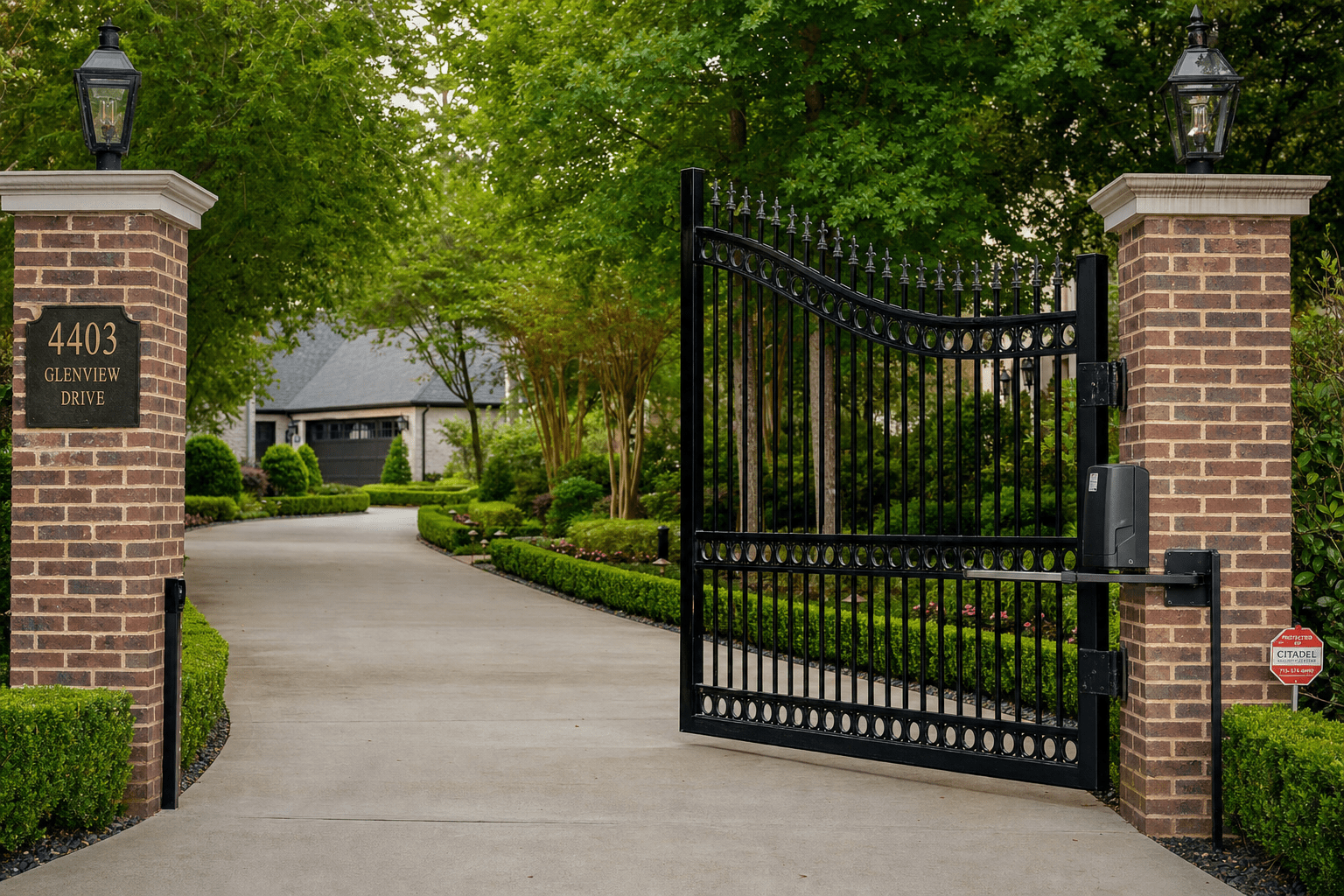
Gates: Walk gates typically add $200–$350 each. Double drive gates (for a driveway opening) range from $400–$700 depending on width and hardware.
Site preparation: Rocky terrain, significant slope, or proximity to tree roots can add to installation time and cost. In Houston specifically, our clay soil typically requires augering post holes to 36–42 inches depth (deeper than average due to expansive soil), which is factored into our standard Houston pricing.
Demolition: Removing an existing fence typically adds $2–$4 per linear foot to the project total.
Want to get a more precise number for your specific property? Use our online fence estimator to get a starting ballpark, then call us for an on-site estimate — which is always free.
- Cedar fence installation in Houston averages $18–$25 per linear foot fully installed in 2025
- A typical 150-linear-foot backyard project runs approximately $2,700–$3,750
- Upgraded height (8 ft), premium styles, and gates add to base pricing
- Houston clay soil requires deeper post holes — typically 36–42 inches — factored into Griffin Fence pricing
- Demolition of existing fencing adds $2–$4 per linear foot
Cedar Fence Installation Specifics for Houston’s Clay Soil
This is where local expertise genuinely matters. Houston sits on one of the most challenging soil types for fence installation in the country: expansive black clay, known as Houston Black soil. This clay is incredibly cohesive when dry and expands significantly when wet — a property called high shrink-swell capacity. The cycle of Texas summers drying out the soil and fall and winter rains saturating it causes the ground to heave and contract, which puts constant lateral and upward pressure on fence posts.
Contractors who do not understand Houston’s soil conditions — or who cut corners on post depth to save time — produce fences that lean, heave, or fail within five years. We have inspected dozens of failed fences in Houston neighborhoods where posts were only driven 24–30 inches into the ground with minimal concrete, and the expansive clay pushed them right out of plumb within a season or two.
Our standard installation procedure for Houston addresses this directly:
Post depth: We auger cedar fence posts to a minimum of 36 inches in standard Houston clay, and 42 inches in areas with particularly expansive soil profiles (common in parts of the Heights, Meyerland, and Sugar Land). The general rule we follow is one-third of the total post length below grade, which means a standard installation using 9-foot posts puts three feet in the ground.
Post material: We use steel posts rather than wood posts for our cedar fence installations. Steel posts do not rot, do not get attacked by termites, and do not flex or heave in clay the way wood posts do. We sleeve cedar boards over the steel posts for a clean appearance. This is one of the most significant quality differentiators between Griffin Fence and many competitors in the Houston market.
Concrete setting: Every post is set in concrete — mixed on-site to the correct consistency. We use a fast-setting concrete mix (Quikrete 5000 or equivalent) that cures properly even in Houston’s humid conditions. Concrete is poured around each post and allowed to fully cure before rail installation begins. No “dry pack” or surface-pour shortcuts.
Spacing and panels: We space our posts on 8-foot centers for standard cedar privacy fencing, balancing structural integrity with material efficiency. In high-wind exposure zones — properties that back up to open fields, near bodies of water, or on exposed corners — we tighten spacing to 6 feet and use 4×4 rail lumber for additional structural resistance.
To see how our installation process works from start to finish, visit our our installation process page — we walk through every step we take on every project.
- Houston’s black clay soil expands and contracts significantly — demanding post depths of 36–42 inches
- Griffin Fence uses steel posts set in concrete — not wood posts — for all cedar fence installations
- Concrete is mixed on-site and fully cured before rail installation begins
- Post spacing tightens to 6 feet in high-wind exposure zones near Houston’s bayous and open fields
- Proper Houston installation prevents the lean and heave problems common with cut-rate contractors
Maintaining Your Cedar Fence in Houston’s Climate
Cedar is the most forgiving wood you can install in Houston, but it still requires a maintenance schedule to reach its full potential lifespan. Left completely untreated, cedar will weather to a silver-gray patina — it won’t rot quickly, but it will dry out, check slightly, and lose the warm tones that made it so attractive when first installed. With proper maintenance, cedar fences in Houston can easily reach 20 to 25 years of service life and still look excellent at the end of that period.
First Stain Application
New cedar fence boards contain natural moisture and oils that need time to stabilize before they accept stain efficiently. We generally recommend waiting 3 to 6 months after installation before applying your first stain or sealant. Staining too early — within the first few weeks — often results in the product sitting on the surface rather than penetrating the wood fiber, leading to peeling and uneven color. Let the wood settle through one Houston wet season first.
When you do apply the first coat, use a penetrating oil-based stain rather than a film-forming product. Film-forming finishes look attractive initially but peel in Houston’s heat and UV exposure, requiring more labor to strip before re-coating. Penetrating stains absorb into the wood fiber and fade naturally over time, making re-application as simple as cleaning the surface and brushing on a new coat.
Ongoing Maintenance Schedule
After the initial application, cedar fences in Houston generally need re-staining every 2 to 3 years. Houston’s combination of intense UV radiation, tropical rainfall, and occasional freeze-thaw cycles is harder on exterior finishes than many other climates. A fence in full south- or west-facing sun exposure may need attention closer to the 2-year mark; a fence with good tree shade may stretch to 3 years between coats.
Between stain applications, we recommend:
- Annual inspection of all post bases for soil movement, concrete cracking, or signs of heave — especially after wet winters
- Checking all fasteners (screws or nails) for rust staining, which can indicate inferior hardware — quality installations use hot-dipped galvanized or stainless fasteners
- Clearing vegetation and mulch from the base of fence boards — keeping 2 inches of air gap between soil/mulch and wood boards significantly slows decay
- Inspecting after major storm events for board displacement, post movement, or structural damage from falling limbs
- Applying a spot treatment of wood preservative to any areas showing early surface mold (common after extended wet periods)
Browse our project gallery to see examples of well-maintained cedar fences from our Houston installations — many photographed years after the original build.
- Wait 3–6 months before applying the first stain to new cedar — let the wood stabilize
- Use penetrating oil-based stains, not film-forming products, for Houston’s heat and UV conditions
- Re-stain Houston cedar fences every 2–3 years depending on sun exposure
- Keep 2 inches of clearance between soil or mulch and fence board bases to prevent decay
- Inspect posts and fasteners after each major storm season
Cedar vs. Other Wood Fence Options in Houston
We are often asked how cedar compares to other wood species available in the Houston market. Here is a straightforward comparison from our experience installing wood fences across Houston neighborhoods for over two decades.
Cedar vs. Pine
Standard pine (whether Southern Yellow Pine or other varieties) is less expensive than cedar upfront — sometimes by $2–$4 per linear foot in material cost. However, pine’s natural oils provide far less inherent rot and insect resistance than cedar. In Houston’s humidity, pine fences require more rigorous sealing and maintenance schedules to achieve the same lifespan. Our experience has shown that properly maintained cedar typically outlasts properly maintained pine by 5–8 years in Houston’s climate.
Cedar vs. Pressure-Treated Pine
Pressure-treated pine has its merits — the chemical treatment (typically alkaline copper quaternary, or ACQ) provides genuine rot and insect resistance. However, pressure-treated pine is heavier, more prone to checking and splitting as it dries out, and many homeowners dislike the greenish tint of freshly treated lumber. It also contains copper compounds that can leach into soil over time and react with certain metals. For residential privacy fencing in Houston, we believe cedar offers a better balance of natural beauty, workability, and durability for most applications. Pressure-treated lumber does remain a good option for specific applications like post material or ground-contact situations.
Cedar vs. Composite/Vinyl
Composite and vinyl fence products have improved significantly and offer genuine zero-maintenance advantages. However, they are consistently more expensive than cedar to install — often 40–70% more per linear foot. They also cannot be repaired the same way wood can; damaged wood boards swap out easily, while composite panels are more complex to replace. For homeowners who want the warmth and character of natural wood in their Houston yard, cedar remains the superior choice both aesthetically and economically. We can also quote composite alternatives through our financing options if budget flexibility is a factor.
- Cedar outlasts standard pine by 5–8 years in Houston’s climate despite higher upfront cost
- Pressure-treated pine is heavier, checks more, and lacks cedar’s natural warmth
- Composite/vinyl offers zero maintenance but costs 40–70% more per linear foot than cedar
- Cedar’s repairability is a long-term value advantage — individual boards replace easily
Houston HOA Considerations for Cedar Fence Installation
Houston is unique among major American cities in having no city-wide zoning ordinance, but HOAs fill that role in most of the established neighborhoods and master-planned communities across Harris County. If your property is in an HOA-governed community — and most Greater Houston properties built after 1970 are — you will need to check your deed restrictions before selecting a fence style, height, or stain color.
Common HOA requirements we encounter in Houston:
- Maximum fence height of 6 feet in rear yards (some require a setback from property line)
- Finished side of fence boards must face outward (toward the street or neighbor’s yard)
- Approved materials lists — some HOAs have approved species lists, and many specifically allow cedar
- Color restrictions on stain — some communities require natural wood tones and prohibit painted or dramatically colored stain
- Front yard fence restrictions — many Houston HOAs prohibit privacy fences in the front yard entirely
- Gate hardware and style requirements in upscale communities
We have installed fences in virtually every major Houston master-planned community — from The Woodlands to Sugar Land to Pearland — and we are familiar with common HOA requirements across these areas. When you call us for an estimate, we can walk you through what we typically see in your specific community and whether your plans are likely to need HOA architectural review committee approval. This is part of our standard consultation process.
Frequently Asked Questions: Cedar Fence Installation in Houston
How long does a cedar fence last in Houston, TX?
A properly installed cedar fence with steel posts set in concrete, well-maintained with staining every 2–3 years, will typically last 20 to 25 years in Houston’s climate. The post installation is the most critical longevity factor — cedar boards can be replaced individually as they age, but poorly set posts that heave in Houston’s clay soil can compromise the entire fence structure within 5–7 years. Griffin Fence’s steel post installation is specifically designed for Houston soil conditions to give you maximum service life from your cedar investment.
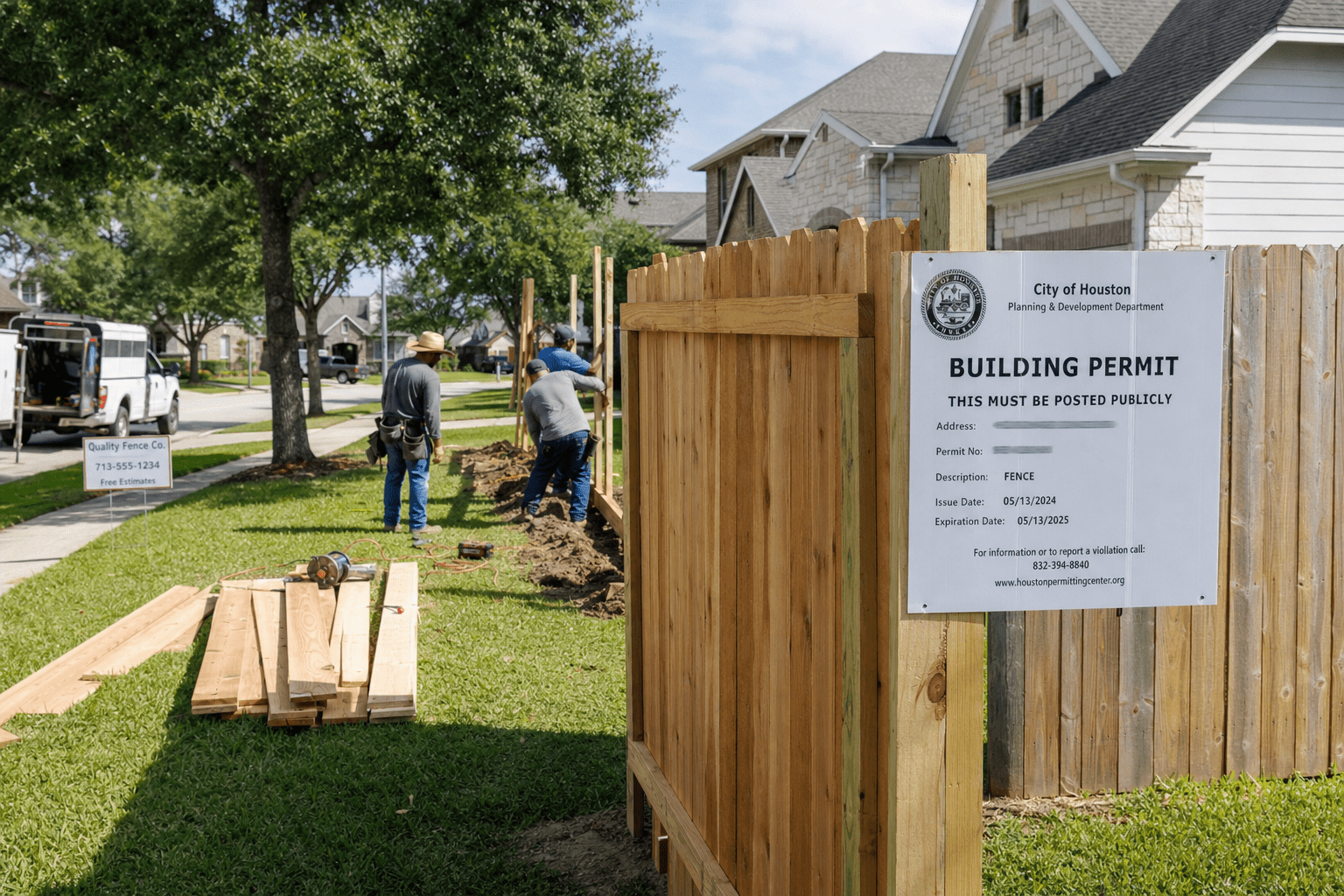
Do I need a permit to install a cedar fence in Houston?
The City of Houston does not currently require a building permit for most residential fence installations under 8 feet in height that do not obstruct sight lines at intersections. However, you may still need approval from your HOA architectural review committee, and certain areas near Harris County flood control channels, public right-of-ways, or utility easements have additional restrictions. We recommend calling 311 or checking the Houston Permitting Center website before breaking ground. For commercial fence installations or fences in incorporated suburbs like Bellaire, West University, or Sugar Land, local municipal permit requirements vary. We handle the permit research and filing process as part of our full-service installation at Griffin Fence.
What is the best stain color for cedar fences in Houston?
The most popular cedar fence stain colors in Houston are rich warm tones that complement the natural red-brown of Western Red Cedar — colors in the cedar, redwood, and honey oak families tend to look beautiful while protecting the wood effectively. For full-sun-exposed fences in Houston, we recommend semi-transparent stains over solid colors because they provide UV protection while still showing the wood’s natural grain. Solid colors offer the most UV protection but conceal the wood character many homeowners chose cedar specifically to showcase. TWP (Total Wood Preservative), Defy, and Armstrong Clark are all reputable brands that perform well in Houston’s climate.
Can you install cedar fencing on a sloped yard?
Yes — sloped yards are common throughout Houston, particularly in areas near bayous and in neighborhoods with lot grading for drainage. We handle sloped yard installations using either a stepped fence design (where individual fence sections step down in uniform increments, following the slope in a staircase pattern) or a raked fence (where the top rail follows the slope angle continuously). The right choice depends on your slope gradient, HOA requirements, and aesthetic preference. Stepped designs work better for steep slopes; raked designs are cleaner on moderate slopes. We assess slope conditions during the free on-site estimate and recommend the appropriate approach for your property.
Get Your Free Cedar Fence Estimate From Griffin Fence
Griffin Fence has been Houston’s trusted cedar fence installation specialist since 2001. We are a family-owned, Houston-based company with over 25 years of experience installing cedar fences that stand up to our city’s demanding climate. Every project we complete uses steel posts set in concrete, premium Western Red Cedar, hot-dipped galvanized hardware, and the care that comes from a team that has been doing this work here — in Houston’s clay soil, Houston’s heat, and Houston’s storm seasons — for more than two decades.
When you choose Griffin Fence, you are not hiring a national franchise that sends out a different subcontractor each time. You are working directly with an experienced Houston fencing team that stands behind every post they set. We offer competitive pricing, honest estimates, and a workmanship warranty on all our installations.
Call Griffin Fence today at (713) 937-6611 or contact us online for a free estimate.