Why choosing the right fence contractor matters in Houston, TX
In Houston, a fence isn’t just curb appeal — it’s storm resilience, security, privacy, and (often) a big investment around your home or commercial property. The contractor you choose determines how well your fence handles our clay soil, heavy rain events, humidity, and intense sun. We’ve repaired plenty of fences that looked fine on day one but failed early due to shallow post depth, poor drainage planning, or low-grade fasteners that corroded in Gulf Coast moisture.
- In Houston, the “cheapest” bid often becomes the most expensive once you factor in repairs, callbacks, and early replacement.
- A qualified contractor should be able to explain post depth, concrete placement, drainage, and material options for your specific neighborhood.
- Good crews protect your property: clean lines, proper gate alignment, and a plan for utilities and permits before digging.
If you want to see how we run jobs from the first site visit to final walkthrough, take a look at our process.
Step 1: Start with your goals (privacy, security, pets, HOA, budget)
Before you call a “fence contractor near me,” get clear on what you need the fence to do. In Houston, the right design is often a balance between privacy and airflow, or security and visibility, or long-term durability and budget.
Questions to answer before you request bids
- Do you need true privacy (6–8 ft) or decorative boundary fencing?
- Is this primarily for pets or kids (gate latches, bottom gaps, picket spacing)?
- Do you want low maintenance, or are you comfortable staining/sealing wood periodically?
- Is this for a business site (after-hours security, access control, traffic patterns)?
- Do you have HOA rules or deed restrictions that limit height, style, or materials?
- Clear goals make bids comparable — contractors can price the same scope instead of guessing.
- Fence material choice should match Houston conditions (sun, moisture, and soil movement).
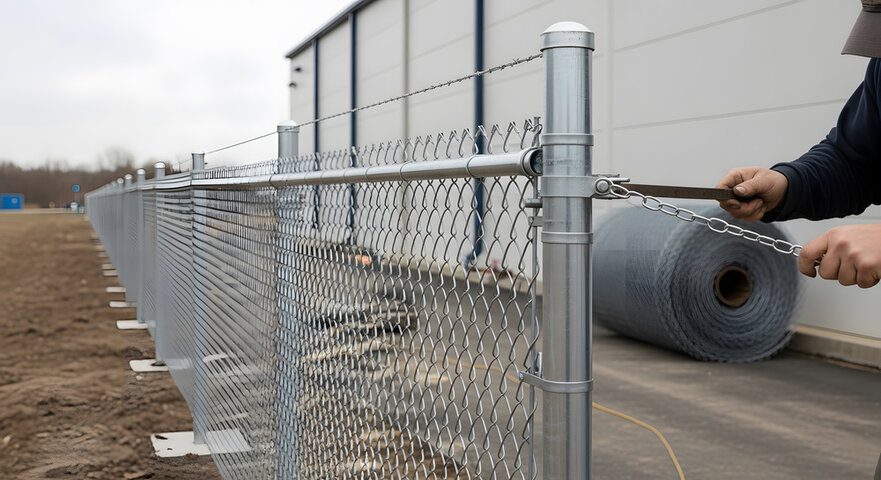
If you’re still deciding on material, you can also browse our service pages for wood fencing, chain link fencing, and iron fencing to see what fits your property.
Step 2: Verify the basics — insurance, experience, and who is actually doing the work
One of the biggest “Houston contractor” problems we see is a sales rep who quotes the job, then hands it to a crew you never meet until install day. That doesn’t automatically mean the work will be bad, but it does mean you should ask very direct questions about supervision, materials, and warranty responsibility.
What to ask every fence contractor
- Are you insured, and can you provide proof (general liability and workers’ comp or equivalent coverage)?
- Is the crew in-house, or subcontracted?
- Who is my on-site lead, and how do I reach them during the job?
- What hardware do you use for gates (hinges/latches) to prevent sagging?
- What is your workmanship warranty, and what does it cover?
- Insurance and accountability protect you if something goes wrong on your property.
- Knowing who’s supervising the job helps prevent miscommunication on layout and gate placement.
We outline our workmanship standards and what customers can expect on our warranty page.
Step 3: Compare bids the right way (and why 3 quotes is usually enough)
We recommend getting at least three quotes in Houston. That’s usually enough to see the true price range and spot outliers. The key is to compare bids on scope, not just total price.
Bid checklist: what should be itemized
- Fence type, height, and total linear footage
- Post size/species or gauge (for chain link), and spacing
- Concrete details (diameter of hole, depth, and whether concrete crowns above grade)
- Gate size, frame style, hinges, latches, and stop posts
- Removal/disposal of old fence (if needed)
- Staining/sealing options (if wood)
- Timeline, payment schedule, and change-order process
- A “good” quote reads like a plan — not just a dollar amount.
- Itemized bids make it obvious when one contractor is cutting corners.
If you need a baseline for what full-service installation includes, our Houston fence installation page walks through the basics.
Step 4: Watch for these red flags (common in Houston, TX)
Houston is a big market, and unfortunately that attracts fly-by-night crews after storms and peak seasons. Here are the warning signs we tell homeowners and property managers to take seriously.
7 red flags to avoid
- No written scope — only a text message price or vague estimate.
- Pressure to decide today — legitimate contractors will hold pricing for a reasonable period.
- Unclear materials — “cedar” without grade/species details, or no gauge specs for chain link.
- Shallow post depth — in Houston soil, shortcuts here cause leaning and gate sagging.
- Cash-only with no paper trail — payments should be documented.
- No plan for utility locating — digging without a locate request risks dangerous, expensive hits.
- Warranty talk that sounds too good — “lifetime everything” without terms is usually meaningless.
- If a contractor can’t explain materials and installation details, assume corners will be cut.
- Utility locating and written scope protect your safety and your budget.
Step 5: Don’t skip 811 and permits (two Houston-specific deal breakers)
Fence posts mean digging, and digging means underground utilities. Texas law requires contacting 811 before digging — even for homeowners installing a fence. You can start at Texas 811’s “I Want to Dig” page to request utility markings.
Permits are another common surprise. In the City of Houston, residential fencing permits are typically required for fences over 8 feet, and masonry/concrete fences may require permits regardless of height. If you’re unsure, a reliable contractor should help you confirm what applies to your address and fence type before install day.
- Utility marking is fast, free, and prevents dangerous service interruptions.
- Permit awareness avoids fines and teardown orders after the fence is installed.
Step 6: Ask about gate performance (this is where quality shows up)
In Houston, gates take more abuse than most people realize — daily cycles, humidity, shifting soil, and vehicle traffic all add stress. A “good-looking” fence with a sagging gate is a quality problem, not just an annoyance.
Gate questions that separate pros from amateurs
- How will you prevent sag (frame design, diagonal bracing, hinge selection)?
- What’s the plan for latch alignment after the first seasonal shift?
- For driveway gates: do you coordinate with access control/openers?
- Gate craftsmanship is one of the best predictors of overall fence quality.
- Hardware selection matters in Houston humidity — corrosion-resistant components last longer.
Step 7: Make sure the contract protects you
Before you sign, make sure you have clear documentation on scope, payment, and warranty. The contract should also explain what happens if hidden issues show up (like rotten posts in an old fence line, underground obstructions, or property line disputes).
What a solid fence contract includes
- Exact fence layout description (or a simple sketch)
- Materials, height, and finish details
- Start date, estimated completion, and weather delay expectations
- Payment schedule tied to milestones (not just dates)
- Warranty terms in writing
- Written terms prevent misunderstandings and scope creep.
- A milestone payment schedule aligns incentives for quality completion.
Local tip: property lines and Houston neighborhoods
If you’re in a neighborhood with older surveys, shared driveways, or tight lot lines, the “where exactly is the fence going?” question can get complicated quickly. When in doubt, we recommend confirming property lines before setting posts. It’s far cheaper than moving a fence later.
- Property line clarity avoids neighbor disputes and expensive rework.
- Good contractors will pause and clarify layout rather than “guess and dig.”
Cost expectations: why fence prices vary so much in Houston, TX
Even with the same linear footage, fence costs can swing based on terrain, access, material grade, post depth, number of gates, and demolition needs. If a bid is dramatically lower, it’s usually because something important is missing — shallow posts, lighter hardware, or no cleanup/disposal.
- Large price gaps usually mean scope gaps — ask what’s excluded.
- In Houston, durability details (posts, concrete, hardware) are where quality lives.
FAQ: choosing a fence contractor in Houston, TX
How do I find a reliable fence contractor near me in Houston, TX?
Start with three local quotes, then compare scope line-by-line. Look for clear material specs, a written timeline, and a real warranty. A reliable contractor will also discuss utilities (811) and permit rules before digging.
Should I choose the lowest fence bid?
Not automatically. The lowest bid often excludes key durability items like adequate post depth, quality gate hardware, or demolition/haul-off. In Houston’s soil and weather, shortcuts show up fast as leaning panels and sagging gates.
Do fence contractors handle permits in Houston?
Many do, but it depends on the company and the fence type. For City of Houston residential fencing, permits are commonly required for fences over 8 feet and for masonry/concrete fences. Ask your contractor how they confirm permit needs for your address.
What should a fence warranty cover?
A warranty should clearly separate materials coverage from workmanship coverage, define the duration, and explain what’s excluded (like storm damage). If the warranty isn’t in writing, assume it won’t be honored.
Get a professional fence quote from Griffin Fence
We build fences for Houston-area homeowners and businesses with a focus on long-term durability, clean installation, and gates that work smoothly year after year. We’re happy to walk your property, talk options, and provide a detailed quote you can compare confidently.
Call Griffin Fence today at (713) 937-6611 or contact us online for a free estimate.