When a business in Houston needs to control vehicles without slowing operations, a well-designed commercial gate system is usually the fastest way to upgrade security, traffic flow, and accountability at the same time. The challenge is that “a gate” can mean a lot of different things: a cantilever slide gate for a truck yard, a barrier arm at a parking entry, a swing gate at a back service drive, or a fully integrated access-controlled system with camera verification and audit trails.
At Griffin Fence, we design and install commercial gate systems across Houston, TX, with a focus on reliable operation, code-conscious safety, and access control that matches how your site actually runs. In this guide, we’ll break down the most common gate types, automation options, access control methods, and the planning decisions that prevent expensive rework later.
Commercial gate systems in Houston: what they include (and what they should do)
A commercial gate system is more than the gate panel and an operator. In most real-world Houston installs, you’re coordinating multiple pieces:
- Gate structure (slide, swing, cantilever, barrier arm, etc.)
- Operator sized for the gate weight, duty cycle, and usage class
- Access control (keypad, card/fob, phone entry, intercom, app, or guard integration)
- Safety devices (photo eyes, edge sensors, loop detectors, and proper clearances)
- Controls and power (conduit, call boxes, operator power, and surge protection)
- Perimeter fencing that ties the opening into the rest of the site (so vehicles can’t simply drive around the gate)
- Good systems reduce tailgating and unauthorized entry without creating long queues at peak times.
- The “best” gate design depends on your driveway geometry, traffic mix (cars vs. trucks), and staffing (guarded vs. unguarded).
- Reliable gating in Houston starts with proper drainage, concrete, and operator sizing for humidity, heat, and daily cycles.
Common commercial gate types we install in Houston, TX
Slide gates (track or cantilever)
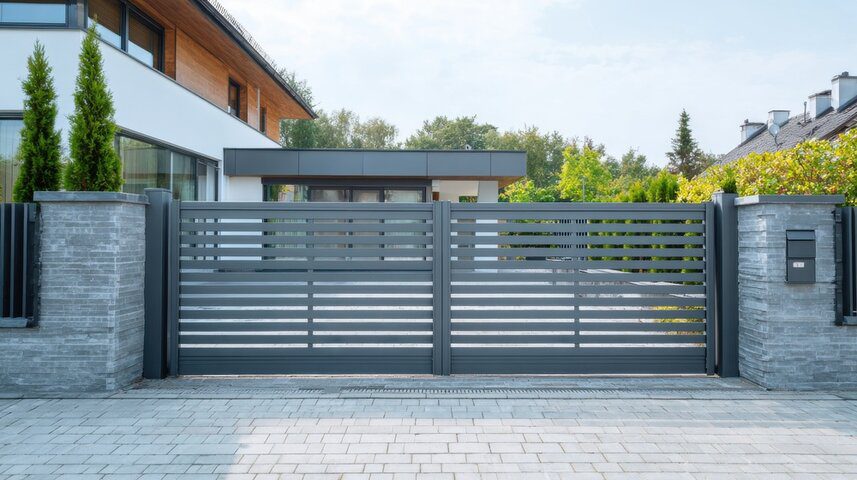
Slide gates are one of the most common choices for commercial and industrial properties because they can be built wide, stay stable in wind, and work well for truck access. In Houston, we often recommend slide or cantilever designs when you have limited swing clearance or need a long opening.
- Track slide gates roll on a ground track. They’re typically cost-effective, but they require a clean, stable track area.
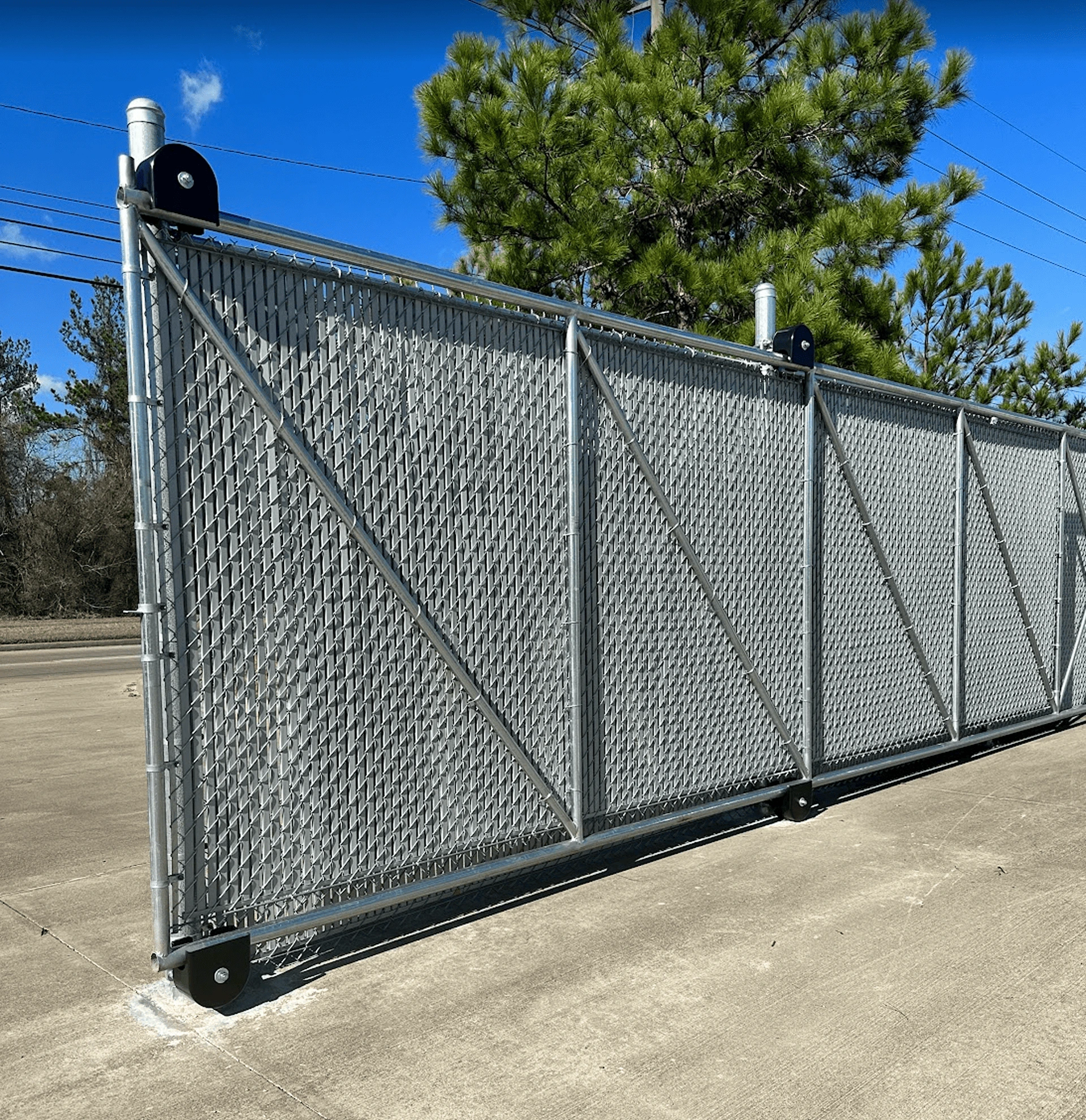
- Cantilever slide gates ride on rollers and do not require a ground track across the driveway. They’re great where debris, water runoff, or surface conditions make tracks hard to maintain.
- Track slide is often a solid fit for paved, well-drained entries that can stay clean.
- Cantilever is a strong option for yards with gravel, frequent debris, or drainage patterns that would foul a track.
- Either way, we plan gate run-back space so the open gate doesn’t block internal traffic lanes.
Swing gates (single or dual leaf)
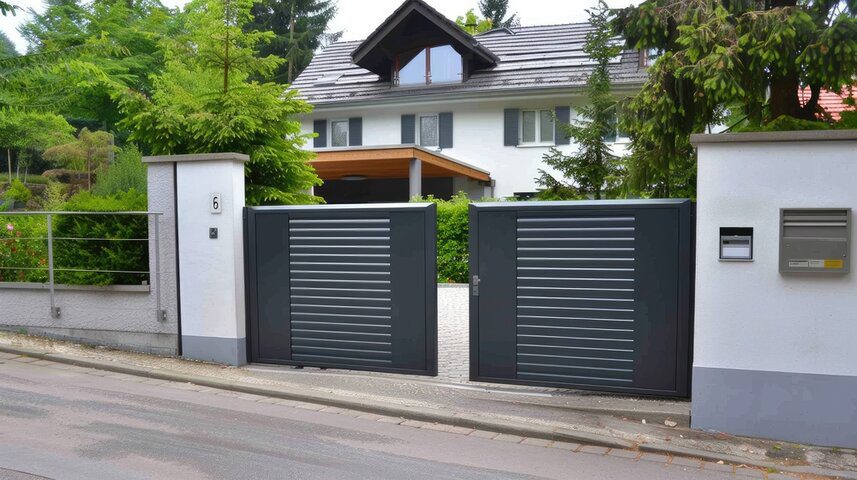
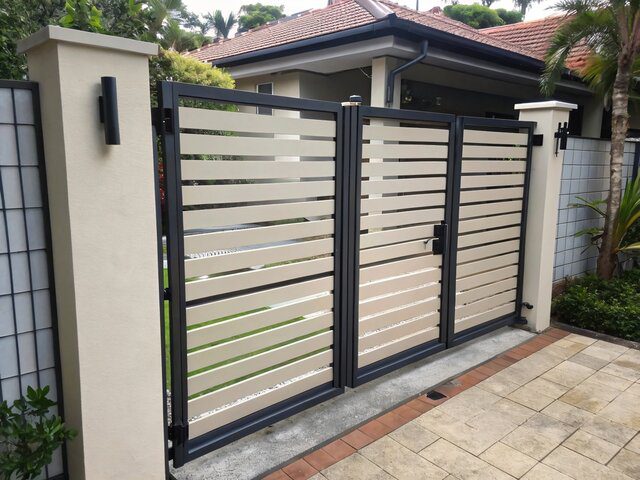
Swing gates can be a clean solution for certain entries, but they need room to swing and they need well-designed hinge/post support. For many Houston commercial sites, swing gates make sense for lower-traffic service drives, back entrances, or locations where you want a “closed” aesthetic with minimal gate run-back space.
- They can be configured as single-leaf (one gate panel) or dual-leaf (two panels meeting in the middle).
- They can be paired with access control and safety devices like photo eyes and edge sensors.
- Swing gates require clearance, so we map turning radii and gate swing arcs before committing to the design.
- For windy areas or large panels, we size hinges, posts, and operators to avoid sagging and premature wear.
- For facilities that need frequent truck access, slide gates often handle high cycles more comfortably.
Barrier arms (parking and controlled-lane entries)
If you’re primarily controlling vehicles at a defined lane (parking lots, private drives, employee lots), a barrier arm can be the simplest and fastest throughput solution. Barrier arms are not a perimeter gate by themselves, so they’re usually paired with fencing, curbing, bollards, or lane design that prevents drive-around entry.
- High throughput for cars and light vehicles
- Works well with card readers, keypads, phone entry, and ticketing systems
- Best when the “security boundary” is enforced by the rest of the site design
- Barrier arms are ideal when the main goal is access management rather than heavy perimeter security.
- We often add loop detectors for reliable vehicle sensing in Houston’s heavy rain conditions.
- For higher security, we usually recommend a slide gate or a gate + barrier arm combination.
Cantilever slide gates for industrial yards
Industrial yards and distribution sites around Houston frequently choose cantilever slide gates because they avoid track issues and handle uneven surfaces well. They also pair well with chain link fencing and barbed wire where appropriate for the application.
- Cantilever designs reduce maintenance related to debris in a ground track.
- They can be designed for wide openings and frequent daily cycles.
- They integrate well with chain link fence systems in Houston, TX.
Automation: choosing the right operator for duty cycle, weight, and usage
A commercial gate operator is not “one size fits all.” Two gates that look similar can require different operators depending on:
- Gate weight and length
- Duty cycle (how many cycles per day)
- Speed requirements (faster operation for higher throughput entries)
- Environmental exposure (rain, standing water risk, wind load, corrosion exposure)
- Usage class (commercial, industrial, or restricted access application)
- In Houston, we plan for heat, humidity, and heavy storms by focusing on proper foundations, drainage, and corrosion-resistant hardware.
- The most common operator failures we see are tied to poor site prep, under-sized operators, or missing safety devices.
- Good automation starts with a clean spec: gate weight, run-back, access method, and safety plan.
Access control options for Houston commercial properties
Access control is where a gate system becomes a true security system. Here are the most common options we install and integrate.
Keypads (PIN access)
Keypads are a practical entry method for small teams, service vendors, and multi-tenant sites. They can be standalone or integrated with a larger access platform.
- Simple for drivers and vendors
- Codes can be changed when staff roles change
- Works well when you need quick deployment
Card readers and fobs
Card and fob systems are great for businesses that want to issue access credentials and track usage. They’re common for employee lots, private drives, and gated service areas.
- Easy to assign and revoke access
- Supports access schedules (time-of-day controls)
- Works well with audited access logs on many platforms
Phone entry and intercom systems
Phone entry is a strong fit for offices, warehouses with reception, and multi-tenant properties. Visitors call a directory, staff approve entry, and the gate opens remotely.
- Good visitor management without an on-site guard
- Can integrate with cameras for visual verification
- Useful for deliveries after hours
Vehicle detection (loops and sensors)
Vehicle detection is part access control and part safety. Proper loops help prevent gate strikes and reduce “false closes.” In high-traffic Houston entries, we often recommend thoughtful loop layouts to match how vehicles actually approach and exit.
- Exit loops for automatic opening on outbound traffic
- Safety loops to keep the gate open while a vehicle is in the path
- Improves flow and reduces wear on the system
Safety and compliance: standards that affect automated gate systems
Automated vehicular gates can be hazardous if they’re not designed and installed correctly. Industry safety standards help guide the correct approach. ASTM explains that the automated vehicular gate standard (F2200) covers multiple gate types (slide, swing, vertical lift, vertical pivot, overhead pivot, and horizontal bifold) and includes safety requirements such as positive stops and protection against protrusions and fall-over risks (ASTM).
DoorKing also notes that an automated vehicular gate system includes multiple components—access control, the operator, and the gate itself—and that ASTM F2200 (gate construction) complements UL 325 (operator safety criteria) in a complete safety approach (DoorKing).
- Commercial gate safety is not just about sensors; it starts with gate design, clearances, and protected pinch points.
- We plan safety devices (photo eyes, edges, loops) based on gate type and site conditions, not a generic template.
- If pedestrians use the same area, we strongly recommend separate pedestrian access paths to reduce risk.
Planning your project: the details that make or break a commercial gate install
Traffic flow and geometry
Before we recommend a gate type, we map how vehicles actually move at your site. In Houston, that often includes delivery trucks, employee traffic waves, and visitor peaks.
- Turning radii for trucks and trailers
- Stacking room so vehicles don’t back up into public streets
- Lane width and “drive-around” prevention
Foundation, drainage, and concrete
Houston storms can turn small drainage problems into operator problems fast. We look closely at grading and where water will sit after heavy rain.
- Stable concrete pads for operators and posts
- Drainage planning to reduce standing water near electrical components
- Hardware choices to reduce corrosion over time
Power and conduit planning
Commercial gates almost always require thoughtful conduit planning—operator power, low-voltage for access control, and any camera or intercom wiring.
- Clean conduit routes reduce future troubleshooting time.
- Surge protection matters for Houston thunderstorms.
- We plan space for future upgrades, like adding cameras or a new entry method.
Integration with fencing (don’t leave weak points)
A strong gate system needs the perimeter to match. If the gate is secure but the adjacent fence line is weak, vehicles can simply go around the controlled opening.
- For many commercial sites, we pair gates with commercial fencing solutions.
- If your site uses chain link for durability and speed, we can coordinate with chain link fence installation and chain link fence contractor services.
- For higher-security needs, we can discuss upgrades like access control, camera-ready layouts, and security-focused gate designs.
Commercial gate system maintenance in Houston (what we recommend)
Most commercial gate issues can be prevented with a simple maintenance routine. Houston’s weather is hard on moving parts, so consistent inspection matters.
- Inspect rollers, hinges, and guide hardware for wear
- Keep track areas clean (for track slide gates)
- Test safety devices regularly (photo eyes, edges, loops)
- Check for standing water around operator pads after storms
- Fast “small” fixes prevent expensive operator replacements.
- Maintenance planning is part of the ROI of an automated gate system.
- If your gate is down, your operations slow down—reliability is a security feature.
FAQ: commercial gate systems in Houston, TX
What is the best type of commercial gate for a warehouse in Houston?
For most warehouses, a slide gate (often cantilever) is a strong option because it works well for truck access, handles frequent cycles, and doesn’t need swing clearance. The final choice depends on run-back space, drainage, and the width of your opening.
Do commercial gate systems need safety sensors?
Yes. Automated gate systems typically use a combination of safety devices such as photo eyes, edge sensors, and vehicle loops to reduce the risk of entrapment and gate strikes. The right setup depends on gate type, site layout, and how vehicles and pedestrians move through the area.
Can you add access control to an existing gate?
In many cases, yes. We often retrofit keypads, card readers, phone entry, and vehicle detection to existing automated gates. We’ll evaluate operator condition, wiring routes, and whether the gate construction and clearances are suitable for safe automation.
How long does it take to install a commercial gate system?
Timelines vary based on site prep and complexity. Smaller projects may move quickly, while larger industrial installs with concrete work, conduit, and access control integration take longer. During an estimate, we’ll outline the scope and realistic scheduling based on Houston conditions and your operational needs.
Talk with Griffin Fence about commercial gate systems in Houston, TX
If you’re planning a new automated gate, upgrading access control, or fixing a gate that’s becoming unreliable, we can help you choose a system that fits your traffic, security goals, and budget.
Call Griffin Fence today at (713) 937-6611 or contact us online for a free estimate.
Related reading: If you’re also planning the perimeter, start with our Houston fence installation overview or browse the fence estimator to get an initial budget range.