Construction projects across Houston require more than skilled labor and quality materials. They also demand compliance with local construction site fence requirements that protect workers, pedestrians, neighboring properties, and the public. Whether you are building in Downtown Houston, expanding in Katy, or developing property in The Woodlands, understanding construction site fence Houston, TX requirements is essential for staying compliant and avoiding costly delays.
Griffin Fence is based in Houston, Texas and proudly serves residential and commercial clients throughout Harris County, Fort Bend County, Montgomery County, and Galveston County. With decades of experience installing wood, chain link, and ornamental iron fencing, our team helps contractors, developers, and property owners meet local codes while maintaining a professional appearance on job sites.
In this comprehensive guide, we will walk through:
- Houston rules for construction fencing requirements
- When permits are required for site fencing
- Height and material standards
- Safety and compliance tips for contractors
- Inspection and enforcement procedures
- How to choose a reliable Houston fence company
If you are planning a project anywhere in the Greater Houston area, this article will help you navigate the regulations and make informed decisions.
Houston Rules for Construction Requirements
Construction site fencing in Houston serves several purposes. It protects the public, secures equipment and materials, limits liability, and keeps projects aligned with municipal safety standards. The City of Houston and surrounding municipalities require temporary fencing for many active job sites, particularly those involving demolition, new construction, or significant renovation.
At its core, Houston’s construction fencing requirements focus on safety and access control. Job sites must be clearly defined and restricted to authorized personnel. Open lots with heavy machinery, debris, or excavation zones present serious hazards if left unsecured.
Key objectives of Houston construction fence rules include:
- Preventing unauthorized access to active work zones
- Protecting pedestrians along sidewalks and public rights of way
- Securing materials and equipment from theft or vandalism
- Reducing liability risks for property owners and contractors
In most Houston-area jurisdictions, temporary construction fencing is required when:
- The project includes structural demolition
- There is exposed excavation or foundation work
- Heavy machinery is stored on-site overnight
- The property borders public sidewalks or streets
The exact requirements can vary slightly depending on the city or county. For example, regulations in Sugar Land or Pearland may differ from those in central Houston. That is why contractors working across Harris County, Fort Bend County, Montgomery County, and Galveston County must verify local ordinances before beginning installation.
Griffin Fence works closely with builders and project managers to ensure fencing solutions meet both municipal codes and practical job site needs. Our experience across the Greater Houston area allows us to anticipate local expectations and streamline compliance.
When a Permit Is Needed in Houston for Site Fences
One of the most common questions contractors ask is whether a permit is required for a construction site fence in Houston. The answer depends on several factors, including fence type, location, height, and duration of use.
In many cases, temporary fencing used during active construction does not require a separate fence permit if it is part of an already permitted construction project. However, there are situations where permitting becomes necessary.
You may need a permit if:
- The fence encroaches into a public right of way
- The fence exceeds standard temporary height limits
- The fencing includes permanent structural components
- The property is located in a historic district or special zoning area
If your site is near public sidewalks or streets, additional review may be required to ensure pedestrian access remains compliant with ADA guidelines. Houston inspectors pay close attention to access points, gate placement, and sidewalk clearances.
It is important to understand that:
- Temporary chain link panels often fall under job site safety requirements
- Permanent perimeter fencing usually requires a building permit
- Commercial properties may have stricter zoning-related requirements
- HOA communities may impose additional restrictions beyond city codes
Contractors working in areas such as 77002 or 77084 should verify whether municipal or county regulations apply, especially if the site sits near jurisdictional boundaries. Surrounding cities like Missouri City, League City, and Conroe may have separate permit processes.
Griffin Fence assists clients by reviewing project scope and identifying when a permit may be required. Our team can coordinate with local authorities and ensure fence installation aligns with project timelines, reducing the risk of stop-work orders or compliance issues.
Height and Material Standards Explained for Houston Sites
Height and material specifications are central to construction site fence Houston, TX requirements. While chain link is the most common material for temporary construction fencing, certain projects may require specific heights or enhanced security features.
In general, Houston-area temporary construction fences are commonly installed at six feet in height. This height effectively restricts unauthorized access while remaining practical for installation and removal. In higher-risk areas or larger commercial developments, eight-foot fencing may be recommended.
Typical height and material standards include:
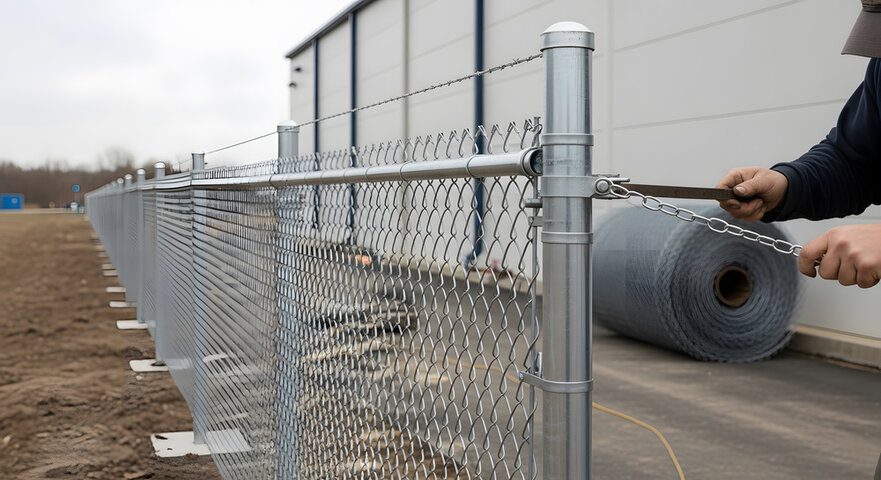
- Six-foot chain link panels for standard job sites
- Eight-foot fencing for high-security or large-scale projects
- Wind-resistant bracing for hurricane-prone areas
- Lockable gates for controlled access points
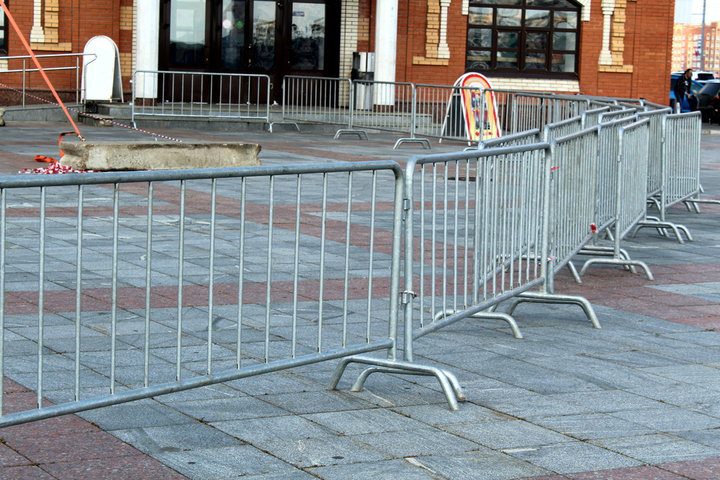
Material selection is driven by function. For example, chain link panels with driven posts or weighted stands are common for temporary sites. Privacy mesh may be added to reduce visibility, control dust, and enhance security.
In some situations, particularly in mixed-use developments or near residential neighborhoods, aesthetic considerations matter. While temporary fencing must prioritize safety, developers often choose options that:
- Minimize visual impact on surrounding properties
- Reduce noise and debris transfer
- Maintain a professional appearance
- Align with adjacent permanent fencing plans
Houston’s climate also plays a major role in fence performance. Strong winds, heavy rain, and occasional tropical storms require properly anchored panels. Poorly secured temporary fencing can collapse, creating safety hazards and liability exposure.
Griffin Fence evaluates site conditions, soil type, wind exposure, and project duration before recommending a solution. Whether you need a temporary chain link system or a more durable semi-permanent barrier, our team ensures compliance with local standards while delivering dependable performance.
Safety and Security Compliance Tips for Contractors
Beyond meeting height and material standards, contractors must ensure ongoing compliance throughout the life of the project. Installing a fence is only the first step. Maintaining it properly is equally important.
Houston inspectors may revisit sites to confirm continued compliance. A damaged or partially collapsed fence can result in citations or work stoppages. That is why routine inspection and maintenance are critical.
To maintain safety compliance:
- Inspect fencing weekly for loose panels or damaged sections
- Ensure gates remain secured after working hours
- Repair storm damage immediately
- Keep signage visible and unobstructed
Construction sites in areas like Pasadena, Baytown, or Galveston may face higher wind exposure, making regular inspections especially important during storm season.
Security best practices include:
- Installing lockable access gates
- Limiting entry points to controlled areas
- Adding privacy mesh for theft deterrence
- Using reinforced posts in high-traffic zones
Storm preparedness is another key factor in the Greater Houston area. Severe weather can impact temporary fencing systems. Griffin Fence provides responsive repair and reinforcement services following storms to help contractors restore safety quickly and remain compliant with local expectations.
Maintaining clear communication with your fencing contractor ensures adjustments can be made as project phases change. Excavation zones may expand, equipment storage areas may shift, and fencing layouts may need updates. Partnering with an experienced Houston fence company makes these transitions smoother and more efficient.
Local Inspections and Code Enforcement in Houston
Understanding how inspections and enforcement work in Houston helps contractors avoid delays. Municipal inspectors may review construction sites at various stages, and fencing is often one of the first visible compliance elements evaluated.
Inspectors typically look for:
- Adequate perimeter coverage
- Proper height and structural stability
- Secure, functional gates
- Clear separation between public and private spaces
If fencing fails inspection, the city may issue a correction notice requiring prompt remediation. In more serious cases, fines or temporary work stoppages can occur.
Common inspection-related issues include:
- Gaps between panels allowing unauthorized access
- Fence encroachment into sidewalks
- Insufficient anchoring in high-wind zones
- Missing or damaged sections after storms
Contractors working across Harris County and neighboring counties must also be aware that county-level regulations may apply in unincorporated areas. Requirements can differ slightly from City of Houston codes.
Griffin Fence helps clients prepare for inspections by ensuring installations meet standard expectations from the outset. Our familiarity with local code enforcement trends across the Greater Houston area allows us to proactively address common problem areas before they become compliance issues.
Choosing a Reliable Houston Fence Pro Company
Selecting the right fencing contractor is one of the most important decisions for any construction project. Compliance with construction site fence Houston, TX requirements depends heavily on proper installation and ongoing support.
An experienced local contractor understands:
- City and county code variations
- Permit and inspection processes
- Climate-related structural considerations
- Security needs for commercial job sites
Griffin Fence is based in Houston, Texas and serves communities throughout Harris County, Fort Bend County, Montgomery County, and Galveston County. Our team works with residential builders, commercial developers, property managers, and general contractors to deliver reliable fencing solutions.
When evaluating a Houston fence company, look for:
- Proven experience with commercial construction fencing
- Knowledge of temporary and permanent fence systems
- Clear communication and project coordination
- Responsive maintenance and repair services
Griffin Fence offers custom fence design, professional installation, and dependable repair services tailored to each project. Whether you need temporary chain link panels for a downtown high-rise development or perimeter fencing for a large commercial expansion in Sugar Land or Conroe, we provide solutions that align with both code requirements and project goals.
By partnering with a trusted Houston-based contractor, you can focus on construction progress while knowing your site perimeter remains secure and compliant.
Frequently Asked Questions
Do I need a permit for a temporary construction fence in Houston?
In many cases, temporary fencing installed as part of an active, permitted construction project does not require a separate fence permit. However, permits may be needed if the fence encroaches into public rights of way, exceeds typical height limits, or includes permanent components. Griffin Fence serving the Greater Houston area can help review your project details and determine whether additional permitting steps are necessary.
What is the standard height for construction site fencing in Houston?
The most common height for temporary construction fencing in Houston is six feet, typically using chain link panels. For larger commercial projects or higher-security sites, eight-foot fencing may be recommended. Griffin Fence evaluates each site’s risk level, location, and exposure to determine the appropriate height for safety and compliance.
What materials are typically used for construction site fences?
Chain link is the most widely used material for temporary construction fencing due to its durability and ease of installation. Privacy mesh can be added for security and dust control. For semi-permanent or long-term projects, more robust systems may be appropriate, and Griffin Fence offers customized solutions throughout Harris, Fort Bend, Montgomery, and Galveston counties.
Can Griffin Fence repair storm-damaged construction fencing?
Yes, Griffin Fence provides responsive repair services throughout the Greater Houston area following severe weather events. Strong winds and heavy rain can damage temporary fencing, creating safety risks and compliance issues. Our team can assess the damage, reinforce weak sections, and restore your perimeter quickly so your project remains secure.
Do commercial construction sites require different fencing than residential builds?
Commercial construction sites often require enhanced security measures, such as taller fencing, reinforced gates, and controlled access points. Residential construction projects may use standard six-foot chain link systems. Griffin Fence works with both residential builders and commercial contractors to tailor fencing solutions to the specific demands of each project.
Does Griffin Fence install permanent fencing after construction is complete?
Yes, Griffin Fence provides both temporary construction fencing and permanent fence installation. Once your project transitions from active construction to occupancy, we can install wood, chain link, or ornamental iron fencing designed for long-term durability and curb appeal throughout the Greater Houston area.
How often should construction site fencing be inspected?
Construction site fencing should be inspected at least weekly and after any major weather event. Regular inspections help identify loose panels, damaged sections, or compromised gates before they become safety hazards. Griffin Fence can assist with ongoing maintenance and adjustments to keep your site compliant.
What should I look for in a Houston commercial fencing contractor?
Look for a company with local experience, knowledge of municipal codes, strong communication practices, and a track record of reliable installation. Griffin Fence, based in Houston, Texas, brings decades of expertise serving residential and commercial customers across the surrounding metropolitan area, making us a dependable partner for construction site fencing needs.