Installing a fence around mature trees is one of the most common challenges property owners face in Southeast Texas. In neighborhoods across Houston, Katy, Sugar Land, The Woodlands, Pearland, and League City, trees are a defining feature of residential and commercial landscapes. At the same time, privacy, security, and property boundaries often require new fencing.
For property owners searching for fence installation around trees Houston, TX tips, it is essential to understand how fencing and tree health intersect. Poor planning can damage root systems, destabilize trees, and shorten the lifespan of your fence. On the other hand, thoughtful design and professional installation can protect both your trees and your investment.
Griffin Fence, based in Houston, Texas, provides residential and commercial fencing services throughout Harris County, Fort Bend County, Montgomery County, and Galveston County. With decades of experience working in local soil conditions and around mature trees, our team understands how to install durable, attractive fencing while preserving the natural beauty of your landscape.
Why Protecting Trees During Fence Work Matters
Mature trees add significant value to properties across the Greater Houston area. Whether you have towering live oaks in West University, pines in Conroe, or shade trees in Friendswood, these natural assets contribute to curb appeal, comfort, and environmental health. When installing a fence, protecting those trees should be a top priority.
Tree roots often extend well beyond the visible canopy. Cutting or disturbing major roots during fence post installation can weaken the tree’s structural stability. In storm-prone regions like Houston, compromised trees are more likely to fall during heavy winds or saturated soil conditions.
Protecting trees during fence work helps ensure:
- Long-term tree health and structural stability
- Reduced risk of storm-related tree failure
- Compliance with local neighborhood or HOA guidelines
- Preservation of property value and landscaping investments
Beyond structural concerns, there are legal and financial considerations. Some municipalities and master-planned communities in Harris and Fort Bend counties have regulations regarding protected trees. Damaging a regulated tree during construction can lead to fines or mandatory replacement.
From a practical standpoint, trees and fences share space. If roots lift fence posts or panels over time, you may face costly repairs. A properly designed fence installation accounts for existing trees rather than fighting against them.
When working with a professional contractor like Griffin Fence, planning begins with a careful site evaluation. We look at tree placement, trunk diameter, canopy spread, and root zones before recommending post placement or alternative installation methods.
Key reasons to prioritize tree protection include:
- Maintaining shade and energy efficiency for homes and buildings
- Avoiding unnecessary removal of healthy, mature trees
- Preventing uneven fence lines caused by shifting soil
- Supporting long-term landscape design goals
Ultimately, protecting trees during fence installation is about balance. You should not have to choose between security and sustainability. With proper planning and expertise, you can have both.
Houston Soil and Root Challenges to Know
Houston’s soil composition plays a major role in fence installation around trees. Much of the region sits on expansive clay soils that shrink during dry periods and swell when saturated. This constant movement affects both fence posts and tree roots.
In areas like Cypress and Spring, clay-heavy soil can become extremely compacted. Digging near established trees in these conditions requires precision to avoid severing structural roots. In coastal communities like Galveston, sandy soils present a different challenge, as they may shift more easily around roots and fence posts.
Common soil and root challenges in Greater Houston include:
- Expansive clay that causes fence posts to heave or tilt
- Shallow root systems due to high water tables
- Dense root networks from mature hardwood trees
- Storm saturation leading to unstable soil conditions
Tree species also matter. Live oaks, common throughout Houston, often have broad, shallow root systems. Pine trees may have deeper taproots but still develop lateral roots that extend far beyond the trunk. Crepe myrtles, magnolias, and other ornamental trees each have distinct root patterns that influence fence placement.
Because roots can extend two to three times the diameter of the canopy, digging post holes too close to the trunk increases the risk of cutting essential support roots. Even a single large root can represent a significant portion of a tree’s anchoring system.
Additional regional factors to consider:
- Frequent heavy rainfall events
- Hurricane-season wind loads
- High humidity affecting wood fencing materials
- Irrigation systems intertwined with tree root zones
Professional fence contractors in Houston must account for these conditions. Griffin Fence evaluates soil stability, drainage patterns, and tree health before beginning installation. In some cases, alternative post spacing or slight layout adjustments can significantly reduce root disturbance.
Understanding local soil and root challenges is not just about avoiding immediate damage. It is about ensuring that your fence remains stable and that your trees remain healthy for decades to come.
Choosing the Right Fence Style for Yards
Selecting the right fence style is especially important when trees are involved. Some fencing materials and designs are more adaptable to uneven terrain and root zones than others.
Wood privacy fences are popular in neighborhoods throughout Houston because they provide security and visual separation. However, solid panels may require careful alignment around tree trunks to prevent awkward gaps or pressure against bark.
Ornamental iron fencing offers greater flexibility around trees because:
- Panels can be adjusted to follow natural contours
- Open designs allow airflow around trunks and roots
- Narrow posts may reduce excavation footprint
- The visual impact around large trees is minimal
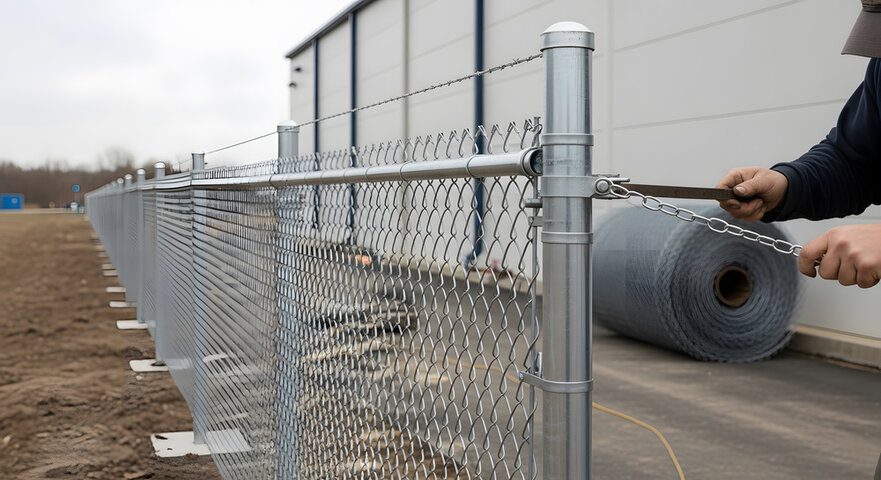
Chain link fencing is another practical option for both residential and commercial properties. It works well in large yards with multiple trees because the flexible mesh can accommodate slight shifts in terrain. For commercial sites in areas like Pasadena or Baytown, chain link is often used to secure perimeters without disrupting landscaping.
When deciding on a fence style around trees, consider:
- Desired level of privacy
- Tree trunk size and proximity to property lines
- Slope or grade changes near root zones
- Long-term maintenance requirements
Custom fence design is often the best solution for tree-heavy properties. Instead of forcing a straight line through a root system, a custom layout can curve or step around trunks while maintaining structural integrity.
At Griffin Fence, we work with homeowners and business owners across the Greater Houston area to design fencing that complements existing landscapes. Whether it is a backyard in Katy or a commercial property in Missouri City, we tailor materials and layout to the environment.
A thoughtful design approach ensures:
- Minimal root disturbance
- Balanced aesthetics between fence and landscape
- Proper post depth and spacing
- Long-lasting structural performance
The right fence style does more than define a boundary. It enhances your property while respecting the natural features that make it unique.
Tips to Avoid Damaging Tree Root Systems
One of the most important fence installation around trees Houston, TX tips is simple: plan before you dig. Careful planning dramatically reduces the risk of harming root systems.
Before installation begins, identify the tree’s critical root zone. This area typically extends outward from the trunk to the drip line, and often beyond. Avoid placing fence posts within this zone whenever possible.
Practical tips to protect roots during fence installation include:
- Shifting fence lines slightly to avoid major roots
- Using hand-digging techniques near sensitive areas
- Reducing post depth where structurally appropriate
- Consulting an arborist for high-value or protected trees
In some cases, alternative installation methods can help. For example, spacing posts differently or using shorter panels may allow the fence to navigate around large roots rather than cutting through them.
Another effective approach is bridging over roots. If a significant root is encountered, it may be possible to:
- Relocate the post a few inches to one side
- Use smaller diameter posts where feasible
- Adjust panel alignment to maintain strength
- Reinforce adjacent posts to compensate
Avoid cutting large structural roots unless absolutely necessary. Roots larger than two inches in diameter often play a key role in anchoring the tree. Severing them can increase the likelihood of leaning or failure during storms.
Irrigation lines often run near tree roots. Damaging these systems during fence installation can stress trees and lead to additional repair costs. Professional contractors carefully map and avoid existing utilities whenever possible.
Griffin Fence emphasizes:
- Thorough site inspection before digging
- Clear communication with property owners
- Precision excavation techniques
- Long-term structural planning
Taking these precautions protects both your trees and your fence. In a region where severe weather is common, preserving root integrity contributes to overall property safety.
Working With Local Pros for Custom Fencing Solutions
Fence installation around trees is not a one-size-fits-all process. Every property in the Greater Houston area presents unique challenges, from tight urban lots in central Houston to expansive commercial tracts in Montgomery County.
Working with a local, experienced contractor ensures your fence design accounts for regional soil conditions, tree species, and climate factors. Griffin Fence is based in Houston, Texas, and serves residential and commercial customers throughout the surrounding metropolitan area, including communities such as Bellaire, Richmond, Tomball, and Dickinson.
Benefits of hiring experienced local professionals include:
- Knowledge of Houston soil movement patterns
- Familiarity with common native and ornamental trees
- Experience navigating HOA and municipal requirements
- Proven installation techniques suited to Gulf Coast weather
Custom fencing solutions often involve collaboration. For example, a homeowner may want to preserve a mature oak in the backyard while adding privacy fencing. A business owner may need secure perimeter fencing that works around established landscaping.
Professional contractors can:
- Design curved or stepped fence layouts
- Recommend material options based on site conditions
- Coordinate with landscapers or arborists
- Provide repair solutions after storm-related damage
In storm-prone areas like Houston, responsive repair services are also essential. If a tree falls or shifts during severe weather, prompt fence repair helps restore security and prevent further damage.
Griffin Fence provides:
- Residential fence installation and repair
- Commercial fencing solutions
- Custom gate design and installation
- Storm damage fence repair throughout the Greater Houston area
Choosing a trusted contractor ensures that your fence installation around trees is handled with precision, care, and long-term durability in mind.
Maintaining Fence and Tree Health Long Term
Once your fence is installed, ongoing maintenance plays a key role in protecting both the structure and nearby trees. Houston’s humidity, rainfall, and heat can impact materials and landscaping alike.
For wood fences, regular sealing or staining helps prevent moisture damage. Ornamental iron fencing may require periodic inspection for rust or coating wear. Chain link fences should be checked for tension and stability, especially after heavy storms.
Long-term maintenance tips include:
- Inspecting fence posts annually for shifting or leaning
- Monitoring tree growth near panels and posts
- Trimming branches that may rub against fencing
- Ensuring proper drainage around root zones
As trees grow, trunks may expand closer to fence lines. Leaving a small buffer during initial installation allows room for natural growth. Avoid attaching fencing directly to tree trunks, as this can restrict growth and damage bark.
Storm season in the Greater Houston area can bring strong winds and saturated soil. After severe weather events, inspect both trees and fences for signs of stress.
Watch for:
- Newly exposed roots
- Leaning fence sections
- Soil erosion around posts
- Cracks or splits in wood panels
If issues arise, timely repairs prevent more extensive damage. Griffin Fence offers repair services for residential and commercial properties, helping restore structural integrity while preserving surrounding landscaping.
Long-term success comes from proactive care. By combining professional installation with consistent maintenance, property owners can enjoy secure boundaries and thriving trees for many years.
Frequently Asked Questions
How do you install a fence without damaging tree roots in Houston?
Installing a fence without harming tree roots requires careful planning, strategic post placement, and sometimes hand-digging near sensitive areas. Griffin Fence serving the Greater Houston area evaluates the tree’s root zone before installation and may adjust the fence line or spacing to minimize disruption. This approach protects mature trees while ensuring a strong, stable fence structure.
What is the best fence material for yards with many trees?
The best material depends on your goals, but ornamental iron and chain link often adapt well around trees due to their flexible layouts. Wood fencing can also work when custom-designed to avoid major roots. Griffin Fence in Houston, Texas helps homeowners and businesses choose materials that balance durability, appearance, and compatibility with existing landscaping.
Can tree roots damage my fence over time?
Yes, expanding roots and shifting soil can push against fence posts and panels, especially in Houston’s clay-heavy soils. Over time, this movement may cause leaning or misalignment. Professional installation techniques and thoughtful spacing reduce this risk, and Griffin Fence provides repair services throughout the Greater Houston area if adjustments are needed.
Do you offer commercial fencing around landscaped properties?
Yes, commercial fencing can be designed to work around trees, green spaces, and existing landscaping. Griffin Fence serves businesses across Harris County, Fort Bend County, Montgomery County, and Galveston County with customized chain link, ornamental iron, and security fencing solutions that respect both functional and aesthetic needs.
What should I do if a storm damages my fence and nearby trees?
After severe weather, inspect your property for leaning fence sections, exposed roots, or fallen branches. Addressing these issues quickly helps maintain safety and security. Griffin Fence provides responsive storm damage fence repair services throughout the Greater Houston area, helping property owners restore fencing after hurricanes, heavy rain, or high winds.
Can you build a custom gate around an existing tree?
In many cases, yes. Custom gate design allows flexibility in placement and swing direction to accommodate nearby trees. Griffin Fence works with residential and commercial clients in Houston and surrounding communities to design gates that function properly while preserving mature landscaping features.
How often should I maintain my wood fence in Houston’s climate?
Houston’s humidity and rainfall can accelerate wear on wood fencing. Most wood fences benefit from sealing or staining every two to three years, along with annual inspections for rot or shifting posts. Griffin Fence offers maintenance guidance and repair services to help property owners extend the life of their fencing investment.
Do I need permits for fence installation in the Greater Houston area?
Permit requirements vary by municipality and HOA. Some areas may have height restrictions or guidelines related to property lines and protected trees. Griffin Fence, based in Houston, Texas, is familiar with local regulations and helps clients navigate requirements to ensure smooth, compliant fence installation.