Fence installation in Houston, Texas requires more than basic hand tools and a truckload of materials. From clay-heavy soils in Harris County to sandy coastal conditions in Galveston County, installing a durable, long-lasting fence demands specialized equipment and experienced professionals who understand the local environment. Griffin Fence, based in Houston, TX, brings decades of hands-on expertise to residential and commercial projects throughout the Greater Houston area.
The right fence installation equipment ensures structural integrity, efficiency, and safety. Whether building a backyard privacy fence in Katy, securing a commercial property in The Woodlands, or installing ornamental iron fencing in Sugar Land, professional-grade tools make a measurable difference in both performance and appearance. Griffin Fence uses industry-standard machinery and proven installation methods tailored to each property’s soil conditions, layout, and design goals.
This comprehensive overview explains the essential tools, machinery, and safety equipment used by Houston fence professionals. Property owners will gain insight into how professional contractors approach installation projects, why specific equipment matters, and how choosing the right tools directly impacts the longevity of a fence system.
Essential Fence Installation Tools in Houston
Fence installation in Houston begins with foundational tools that ensure accuracy, alignment, and durability. The Gulf Coast climate presents unique challenges such as shifting soils, high humidity, and intense sun exposure. Precision tools help contractors create straight fence lines, evenly spaced posts, and properly anchored foundations that withstand these environmental factors.
Professional fence crews use layout and measuring equipment before any digging begins. Proper planning minimizes mistakes and ensures compliance with property lines and local codes. In neighborhoods throughout Harris County and Fort Bend County, accurate measurements are especially important for maintaining good relationships between neighboring properties and meeting community requirements.
Key essential tools include:
- Laser levels and string lines for straight fence alignment
- Measuring wheels and tapes for precise property layout
- Marking paint and stakes for defining post locations
- Heavy-duty shovels and tampers for soil compaction
Beyond layout tools, fastening and assembly equipment plays a crucial role. High-torque drills, impact drivers, and pneumatic nail guns allow installers to secure rails, pickets, and panels efficiently while maintaining structural strength. For wood fences, proper fastening prevents warping and separation over time. For chain link and ornamental iron systems, precision tools ensure secure connections and smooth operation of gates.
Professional installers also rely on post-setting tools designed specifically for Texas soil conditions. Manual digging is rarely sufficient for deep, structurally sound posts, particularly when installing privacy fences or commercial security fencing. Griffin Fence uses appropriate equipment to create consistent post depths that support wind resistance and long-term durability.
Equipment Used by Houston Fence Pros and Contractors
While basic tools are essential, professional-grade equipment sets experienced contractors apart. Fence installation across the Greater Houston area often requires machinery capable of handling large-scale projects, challenging terrain, and high-performance materials.
Commercial and residential fencing projects may require:
- Skid steers for transporting materials across large properties
- Mini-excavators for removing old fencing and debris
- Hydraulic post drivers for steel and commercial posts
- Concrete mixers for consistent post stabilization
In commercial settings such as warehouses, retail centers, and industrial facilities in Montgomery County or along major Houston corridors, fencing equipment must handle heavier gauge materials and larger posts. Hydraulic drivers provide deep, stable placement for steel posts, particularly important for security fencing and perimeter enclosures.
Residential projects also benefit from professional machinery. For example, in established neighborhoods with limited access, compact equipment allows crews to work efficiently without damaging landscaping. Griffin Fence prioritizes both efficiency and property care, ensuring that lawns, driveways, and surrounding structures remain protected during installation.
Weather responsiveness is another factor. Houston’s climate can shift quickly, especially during hurricane season or heavy spring storms. Professional contractors use equipment that allows them to secure posts quickly and effectively, reducing the risk of weather-related delays or structural weaknesses.
Post Hole Diggers and Power Augers Explained
One of the most critical components of fence installation is digging proper post holes. The depth and diameter of each hole directly influence the fence’s strength, especially in Houston’s expansive clay soils that can shift during wet and dry cycles.
Manual post hole diggers may be suitable for small repairs or light-duty installations, but most professional fence projects require power augers. These motorized tools bore consistent, deep holes quickly and efficiently. Griffin Fence uses commercial-grade augers designed to handle tough soil conditions found throughout Harris County and surrounding areas.
Common digging equipment includes:
- Manual clamshell post hole diggers for minor adjustments
- One-person power augers for residential fence lines
- Two-person hydraulic augers for deeper commercial posts
- Tractor-mounted augers for large-scale installations
Power augers improve consistency. Each hole can be drilled to uniform depth, typically 24 to 36 inches or deeper depending on fence height and local requirements. Consistency ensures that posts remain aligned and stable even during heavy rains or high winds common in the Houston metropolitan area.
Proper hole preparation also involves soil removal and debris clearing. In some cases, rocky or root-filled areas require additional cutting tools or specialized bits. Professional installers evaluate soil conditions before selecting the appropriate auger type, reducing the risk of uneven posts or premature fence failure.
Concrete reinforcement often follows digging. Contractors use mixers or pre-mixed concrete solutions to secure posts firmly in place. Proper curing time is observed to ensure maximum strength before panels or rails are fully attached.
Materials and Machinery for Lasting Fences
Fence durability depends not only on materials but also on how those materials are handled and installed. Different fencing systems require distinct equipment to ensure longevity and performance.
Wood fencing remains a popular choice in Houston neighborhoods due to its natural appearance and privacy benefits. Installing wood fences requires precision cutting tools, moisture-resistant fasteners, and sealing equipment. Contractors use circular saws, miter saws, and treated fasteners to reduce splitting and enhance long-term stability.
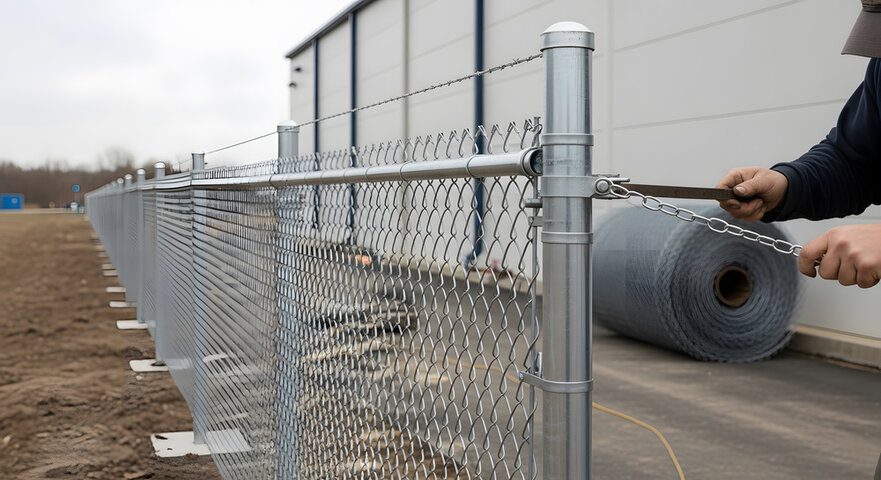
Chain link fencing, commonly used for commercial properties and security applications, demands specialized stretching and tensioning tools. Proper installation prevents sagging and ensures a tight, professional finish.
Essential chain link equipment includes:
- Fence stretchers and pullers
- Tension bars and bands
- Pipe cutters for steel posts
- Come-alongs for wire tightening
Ornamental iron fencing requires additional care and machinery. Welders, metal grinders, and precision alignment tools ensure decorative elements remain secure and visually appealing. Protective coatings may be applied using spray equipment to guard against corrosion, especially important in humid environments near the coast in Galveston County.
Material transport equipment is also critical. Skid steers and utility vehicles help move heavy panels, steel posts, and lumber efficiently across job sites. Proper handling reduces the risk of material damage and keeps projects on schedule.
By combining high-quality materials with appropriate machinery, Griffin Fence ensures that residential and commercial fencing systems are built to withstand Texas weather conditions while maintaining their appearance.
Safety Gear for Professional Fence Installation
Professional fence installation involves heavy materials, power tools, and excavation equipment. Safety gear protects workers and property owners while ensuring compliance with industry standards.
Houston’s heat and humidity add another layer of complexity. Crews must stay hydrated and wear protective clothing designed for high-temperature conditions. Griffin Fence prioritizes safety practices to maintain efficient and incident-free job sites.
Standard safety equipment includes:
- Hard hats and impact-resistant gloves
- Protective eyewear and hearing protection
- Steel-toe boots for heavy material handling
- High-visibility vests for commercial job sites
When operating augers or hydraulic drivers, additional precautions are taken. Stabilization measures and controlled work zones prevent accidental injuries. Proper training ensures that machinery is used according to manufacturer specifications and safety guidelines.
Electrical and utility awareness is equally important. Before digging, professional contractors verify underground utility locations to avoid damage or service disruptions. This process protects both the property and the surrounding community.
In the event of storm damage repairs, safety becomes even more critical. Fallen fencing, debris, and unstable structures require careful assessment. Responsive repair services are available throughout the Greater Houston area following severe weather events, using the appropriate tools and protective equipment to restore security efficiently.
Choosing the Right Tools for Your Property
Every property presents unique challenges. Soil type, terrain slope, fence material, and intended use all influence which equipment should be used during installation. Choosing the right tools is not simply about convenience but about long-term performance and reliability.
For example, a residential privacy fence in Houston, TX 77084 may require deep-set wooden posts with reinforced concrete footings due to soil movement. Meanwhile, a commercial security fence in a business district such as 77002 might demand steel posts driven with hydraulic equipment for added stability.
Considerations when selecting fence installation equipment include:
- Soil composition and drainage patterns
- Fence height and material weight
- Property accessibility and space constraints
- Local building codes and HOA guidelines
Professional contractors evaluate each site before beginning work. This evaluation allows them to select machinery that balances efficiency with precision. Using undersized equipment can lead to unstable posts, while oversized machinery may damage landscaping or hardscapes.
Griffin Fence, based in Houston, Texas, serves homeowners and businesses throughout Harris County, Fort Bend County, Montgomery County, and Galveston County. Their team carefully matches tools and materials to each project’s needs, ensuring both visual appeal and structural integrity.
Ultimately, professional-grade equipment supports better results. Straight lines, properly set posts, and secure fastenings contribute to a fence that enhances property value and provides reliable protection for years to come.
Frequently Asked Questions
What equipment is used for professional fence installation in Houston?
Professional fence installation typically involves power augers, hydraulic post drivers, laser levels, skid steers, and concrete mixers. Griffin Fence serving the Greater Houston area uses commercial-grade equipment tailored to local soil conditions and fence materials. This ensures consistent post depth, structural stability, and long-lasting results for both residential and commercial properties.
How deep should fence posts be set in Texas soil?
In Texas, fence posts are generally set 24 to 36 inches deep, depending on fence height and soil composition. In areas with expansive clay soils common around Houston, deeper placement with concrete reinforcement may be required. Griffin Fence evaluates each property to determine the appropriate depth for maximum durability and wind resistance.
What is the best equipment for installing chain link fencing?
Chain link fencing requires tensioning tools, stretchers, pipe cutters, and specialized fastening hardware. Professional contractors use equipment designed to create tight, secure installations that resist sagging. Griffin Fence provides expert chain link installation throughout the Greater Houston area for both residential backyards and commercial security applications.
Can fence installation equipment handle storm-damaged fence repairs?
Yes, professional-grade equipment is essential for storm damage repairs. Power tools, post pullers, and excavation equipment allow contractors to remove damaged sections safely and install new posts securely. Griffin Fence offers responsive fence repair services across Houston and surrounding counties following severe weather events.
What materials require specialized fence installation machinery?
Ornamental iron fencing often requires welding equipment and precision alignment tools, while chain link fencing needs tensioning systems and steel post drivers. Wood fencing involves cutting tools and moisture-resistant fasteners. Griffin Fence selects the appropriate machinery based on material type to ensure long-lasting, visually appealing results.
Is professional equipment necessary for residential fence installation?
Professional equipment significantly improves accuracy, efficiency, and durability compared to basic DIY tools. Proper post depth, straight alignment, and secure fastening contribute to a fence that withstands Houston’s weather conditions. Griffin Fence serving the Greater Houston area uses advanced tools to deliver reliable residential fencing solutions.
How does commercial fence installation differ from residential projects?
Commercial fencing often involves heavier materials, taller posts, and larger property perimeters. Equipment such as hydraulic drivers and skid steers may be required for efficiency and structural strength. Griffin Fence provides commercial fencing solutions throughout Harris County and neighboring counties, using machinery suited for large-scale installations.
How do I choose the right fencing contractor in Houston?
Look for a contractor with local experience, professional-grade equipment, clear communication, and a proven track record. Griffin Fence, based in Houston, Texas, offers custom design, expert installation, and dependable repair services across the Greater Houston area. Their commitment to craftsmanship and service ensures fencing systems built for long-term performance.