The Complete Guide to Fence Installation in Houston, TX
Houston is one of the most fence-dense metropolitan areas in the United States. Drive through Bellaire, Memorial, or Katy and you’ll see wood privacy fences stretching for blocks. Head toward Pearland or League City and you’ll find iron ornamental fences framing custom homes. In the Montrose or Heights neighborhoods, low picket fences and masonry walls define older lots with character. The point is: Houston takes its fences seriously, and for good reason.
A properly installed fence does far more than mark a property line. It provides privacy for backyard living — a genuine quality-of-life amenity in a city where homes are often built close together. It contains children and pets. It deters trespassers and adds a layer of security. And it dramatically improves curb appeal, which matters enormously in a real estate market as active as Houston’s.
But fence installation in Houston, TX is not a simple commodity purchase. The local climate — coastal humidity, expansive clay soils, annual hurricane threats, and intense summer heat — creates demands that aren’t present in drier parts of the country. HOA restrictions are prevalent throughout the metro area. City and suburban permit requirements vary widely. And the range of fence types, materials, and styles available to Houston homeowners is broader than most people realize.
At Griffin Fence, we’ve been helping Houston homeowners and businesses navigate all of this since 1999. This guide covers every fence type we install, a detailed cost comparison, permit and HOA guidance, and everything you need to make a confident decision about your project.
- Houston’s climate, soil, and storm exposure create unique requirements for every fence type
- Fence types available in Houston include wood, chain link, iron/ornamental, vinyl, and masonry
- HOA approval is required before installation in most Houston master-planned communities
- City of Houston and suburban municipality permits are required for most new fence projects
- Total project costs vary from $15/linear foot for basic chain link to $80+/linear foot for masonry
Fence Types Available in Houston: A Full Overview
Before diving into costs and logistics, let’s survey the full range of fence types available to Houston property owners. Each has a distinct profile of cost, durability, appearance, and ideal use cases.
Wood Fencing
Wood is the most popular residential fence material in the Houston metro area, and it’s where our team does the most work. The dominant style is the 6-foot privacy fence — typically cedar or pressure-treated pine — installed as board-on-board, shadow box, or traditional dog-ear privacy fence. Wood offers unmatched natural beauty and can be stained or painted to match any home exterior.
In Houston’s climate, wood choice matters enormously. Western Red Cedar is the premium choice, with natural oils that resist moisture and insects. Pressure-treated pine is the economical alternative. Either way, posts must be set in concrete at a minimum depth of 24–36 inches to resist Houston’s expansive clay soil movement. For a comprehensive breakdown of wood fence types, styles, and pricing, visit our wood fence installation page.
Best for: Residential backyards, privacy, pet containment, neighborhood aesthetic. Typical lifespan in Houston: 15–25 years with maintenance.
Chain Link Fencing
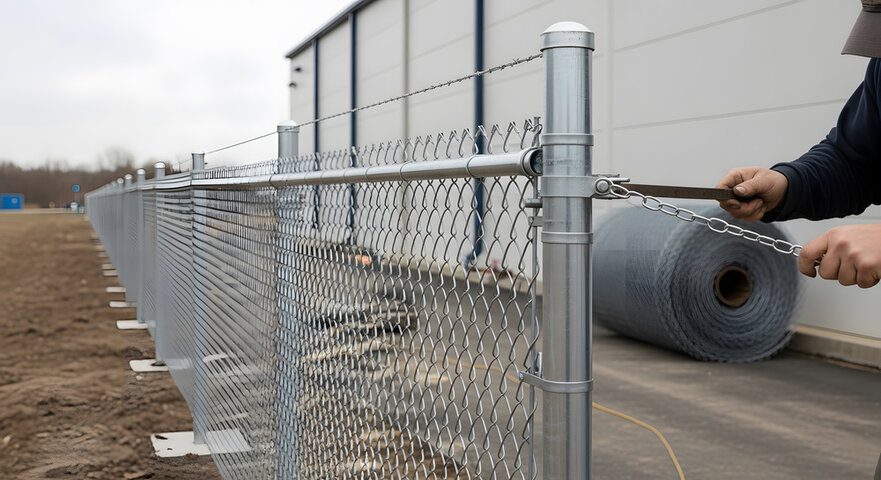
Chain link is the workhorse of Houston’s commercial, industrial, and utilitarian fencing market. It’s also a practical choice for residential applications where the priority is pet containment, pool code compliance, or security without the need for complete visual privacy. Chain link fences are low-maintenance, highly durable, and significantly less expensive than wood or iron.
Houston’s Gulf Coast environment requires attention to material quality for chain link. Standard galvanized chain link holds up well in most residential and light commercial applications. Vinyl-coated chain link (typically black or green) offers enhanced corrosion resistance and a cleaner appearance — it’s the standard choice for school fences and commercial properties throughout the metro area. Our chain link fence installation page covers all available gauges, heights, and coating options.
Best for: Commercial properties, dog runs, pool enclosures, athletic facilities, industrial perimeter fencing. Typical lifespan: 20–40 years.
Iron and Ornamental Steel Fencing
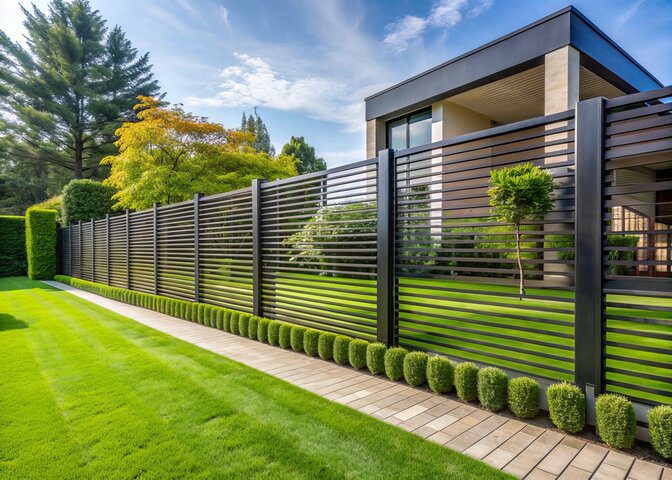
Ornamental iron and tubular steel fencing bring an architectural elegance that no other material can match. These fences are common along the front yards of high-end custom homes in West University, River Oaks, Tanglewood, and Memorial, where they frame landscaping and announce the property without blocking views. Commercial and HOA properties use iron for security applications — particularly for access control and perimeter fencing on upscale communities.
Modern ornamental fencing is typically fabricated from tubular steel rather than solid wrought iron, which makes it lighter, less expensive, and just as attractive. Custom designs — scrollwork, spearhead pickets, double gates, arched panels — are available in virtually any configuration. Our iron gates Houston page covers driveway gates and ornamental iron options in detail.
Best for: Upscale residential frontage, pool enclosures (meets standard pool codes), commercial security, driveway gates. Typical lifespan: 30–50+ years with periodic painting.
Vinyl and Composite Fencing
Vinyl fencing — made from PVC or composite materials — has gained significant market share in Houston over the past decade, particularly in newly developed master-planned communities in Katy, Pearland, and Conroe. The appeal is obvious: vinyl never needs painting or staining, doesn’t rot, and maintains its appearance with minimal maintenance. A simple rinse with a garden hose is all most vinyl fences need each year.
The trade-off is that vinyl is less forgiving in extreme wind events. Houston’s experience with Hurricane Ike (2008) and Harvey (2017) showed that vinyl fences in exposed locations can flex and fail at the post connections during tropical storm gusts. Choosing a heavier-gauge product with steel-reinforced posts and proper concrete footings significantly reduces this risk. See our vinyl/composite fencing page for available styles and specifications.
Best for: Low-maintenance residential applications, HOA communities, pool enclosures, white picket aesthetic. Typical lifespan: 20–30 years.
Masonry Fencing
Masonry fences — brick walls, stone walls, and stucco-finished concrete block walls — are the premium tier of Houston residential fencing. They’re common in Bellaire, Piney Point Village, and older River Oaks lots, where mature hedges and masonry walls create a compound-like privacy and security. HOA communities in West Houston’s Cinco Ranch and Sugar Land Town Square use masonry columns with iron panels as their signature aesthetic.
Masonry fences are permanent structures that require structural engineering in most Houston permit jurisdictions, particularly for walls taller than 6 feet or longer than a certain lineal span. They’re also the most expensive option by a significant margin. But they’re also effectively permanent — a properly built masonry wall in Houston can last 50 to 100 years with minimal maintenance. Visit our masonry fencing page for examples and specifications.
Best for: High-end residential applications, commercial entry statements, extreme privacy, permanent property boundaries. Cost per linear foot is the highest of any fence type.
- Wood fences dominate Houston residential applications — cedar board-on-board is the most popular style
- Chain link offers the best value for commercial, industrial, and functional residential applications
- Ornamental iron is the prestige choice for upscale front yards, gates, and pool enclosures
- Vinyl offers zero-maintenance appeal but requires reinforced posts for hurricane resilience
- Masonry is the permanent premium option — brick and stone walls can last 50–100 years
Houston Fence Cost Comparison: 2025–2026 Pricing by Type
These price ranges reflect professional installation in the Houston metro area, including materials, labor, standard post setting in concrete, and one walk gate. Prices are per linear foot for the fence run, with gates billed separately. Ranges reflect standard residential projects — commercial or unusually complex projects may fall outside these ranges.
| Fence Type | Low End ($/LF) | High End ($/LF) | Walk Gate | Drive Gate |
|---|---|---|---|---|
| Wood — Pine Privacy | $15 | $20 | $250–$400 | $500–$900 |
| Wood — Cedar Board-on-Board | $22 | $30 | $300–$500 | $600–$1,200 |
| Chain Link — Residential (4 ft) | $12 | $18 | $200–$350 | $400–$700 |
| Chain Link — Commercial (6 ft, vinyl coated) | $18 | $28 | $300–$500 | $600–$1,200 |
| Ornamental Iron / Tubular Steel | $28 | $55 | $400–$800 | $900–$3,000 |
| Vinyl / Composite Privacy | $24 | $40 | $350–$600 | $700–$1,500 |
| Masonry (Brick or Stone) | $55 | $120+ | N/A | N/A |
Additional Costs to Budget For
The per-linear-foot figures above assume a standard, flat residential lot with good access. These additional line items affect most projects:
- Old fence removal and disposal: $3–$6 per linear foot, depending on fence type and accessibility
- Terrain and grade changes: Add $2–$5 per linear foot for significant slopes or irregular terrain
- Permit fees: $75–$200 depending on municipality and project scope
- Staining or sealing (wood fences): $1–$3 per linear foot for factory-applied sealant at installation
- Tree root conflicts: Hand-digging around root systems adds labor cost; typically $100–$300 per affected post location
We offer a free, no-obligation estimate for all fence projects in the Houston metro area. Use our fence estimator tool for an online estimate, or call us for a same-week site visit. Ask about our service areas to confirm we cover your neighborhood.
- Cedar board-on-board runs $22–$30/LF installed — the most popular choice in Houston residential neighborhoods
- Chain link is the most economical option at $12–$28/LF depending on gauge and coating
- Always budget for old fence removal ($3–$6/LF), permits ($75–$200), and any grade-change labor
- Masonry is by far the most expensive at $55–$120+/LF but lasts 50–100 years with minimal maintenance
Fence Permits in Houston and Surrounding Municipalities
One of the most common surprises for first-time fence buyers in the Houston area is the patchwork of permit requirements across the metro. Because Houston famously has no zoning code for many land-use categories, some homeowners assume permitting is similarly relaxed for fences — but that’s not the case.
City of Houston
Within Houston city limits, residential fence permits are required for most new fence installations and replacements involving structural changes. The City of Houston Planning & Development Department processes residential fence permits with fees generally ranging from $75 to $150. You’ll need to submit a basic site plan showing the fence location relative to property lines and setback lines. Key setback rules for Houston: rear and side yard fences can typically be placed at the property line, while front yard fences usually must maintain a setback.
Suburban Municipalities
Sugar Land, Katy, Pearland, Friendswood, The Woodlands, Conroe, and other incorporated cities all have their own permit requirements. Sugar Land, for example, requires permits for all new fence construction including like-for-like replacements. Pearland requires permits for fences over 4 feet in height. Pasadena and La Porte have specific requirements for fences near drainage easements, which are common throughout the Gulf Coast area. We’re familiar with the requirements for dozens of Houston-area jurisdictions and handle permit applications on behalf of our customers as part of our standard service on applicable projects.
Unincorporated Harris County
Properties in unincorporated Harris County (outside city limits but within the county) generally fall under less restrictive rules. However, flood zone designations — which apply to a significant portion of the county following repeated flooding events — can restrict fence installation near bayous, drainage channels, and detention basins. We always verify flood zone status as part of the permit research process.
- City of Houston permits run $75–$150 for most residential fence projects
- Suburban cities like Sugar Land and Pearland have their own permit requirements — often stricter than Houston proper
- Flood zone restrictions apply to significant portions of Harris County — always verify before installing near drainage areas
- Griffin Fence handles permit applications as part of our service on applicable projects
HOA Rules for Fences in Houston Neighborhoods
Houston’s master-planned communities are some of the most HOA-governed neighborhoods in the country. The Woodlands, Cinco Ranch, First Colony, Riverstone, Cross Creek Ranch, Shadow Creek Ranch, and dozens of other large communities have architectural review committees (ARCs) with specific rules governing fence materials, heights, styles, and colors. Getting approval wrong — or skipping the process entirely — can result in forced removal at your expense.
What HOA Fence Rules Typically Cover
- Approved materials: Many HOAs specify cedar, specific grades of treated pine, or certain vinyl brands. Cheap pine fences and some vinyl styles may be explicitly prohibited.
- Height limits: Most HOA communities cap residential privacy fences at 6 feet. Some neighborhoods near greenbelt areas or waterways have lower limits (5 feet or 4 feet) to preserve sightlines.
- Setback requirements: HOAs often require fence setbacks from property lines or from easements that are more restrictive than the municipal code.
- Style and appearance: Board-on-board and shadow box fences (which look the same from both sides) are required in many communities. Solid single-face fences that expose rails to the neighbor are often prohibited.
- Stain or paint color: Some communities specify approved stain colors or require natural cedar. Others prohibit paint on wood fences entirely.
- Front yard rules: Front yard fences are prohibited or severely restricted in most Houston master-planned communities.
How to Get HOA Approval
The HOA approval process typically takes 2 to 4 weeks and requires submitting a fence modification request to the architectural review committee with a site plan, fence specifications, material samples or photographs, and the contractor’s information. We have experience working within dozens of Houston-area HOA systems and can prepare the submission package for you as part of our estimate process — saving you time and ensuring the application is complete the first time.
- HOA approval is required before installation in most Houston master-planned communities — skipping it can mean forced removal
- HOA fence rules typically cover material type, height, style, color, and setbacks
- The approval process takes 2–4 weeks — plan accordingly before scheduling installation
- Griffin Fence prepares HOA submission packages as part of our estimate service in applicable communities
Houston Climate Factors That Affect Every Fence Type
Houston’s environment is genuinely demanding on outdoor structures, and understanding the local climate helps you make better decisions about materials, installation depth, and maintenance.
Humidity and Rainfall
Houston averages nearly 50 inches of rainfall annually and maintains summer relative humidity between 80% and 95%. This environment accelerates rust on ungalvanized metal, rot in untreated wood, and mold and mildew growth on virtually any surface. Material selection — galvanized or powder-coated metal, cedar or treated wood, UV-stabilized vinyl — should always prioritize moisture resistance over upfront cost savings.
Expansive Clay Soil
Houston sits on some of the most expansive clay soils in the United States, classified as Beaumont Clay and Houston Black Clay by soil scientists at the Texas A&M University Soil & Crop Sciences department. These soils can move several inches vertically between wet and dry seasons, which is why fence post depth and concrete footing design are so critical here. We set posts a minimum of 24–36 inches deep depending on soil profile and use properly formed concrete footings with drainage crowns to resist soil heave.
Hurricane Season
June through November is hurricane season, and Houston has suffered direct hits or near-misses from significant storms in recent decades. Hurricanes Alicia (1983), Ike (2008), and Harvey (2017) all caused widespread fence damage across the metro area. Our design choices — three-rail systems on wood fences, board-on-board spacing that allows air passage, deeper post depths, reinforced concrete footings — are all specifically intended to improve storm resilience. No fence is hurricane-proof, but a properly engineered installation significantly outperforms one built to minimum standards.
Heat and UV Exposure
Houston’s summer sun is intense. Average daily solar irradiance during peak summer months rivals Phoenix and Las Vegas in UV intensity, even though temperatures are moderated by cloud cover and humidity. UV degradation bleaches and checks untreated wood, fades unstabilized vinyl, and chalks powder-coated metal finishes over time. We recommend UV-stable stains or sealants on wood fences and powder-coat quality specification on any metal product.
- 50 inches of annual rainfall and 90%+ summer humidity require moisture-resistant materials across all fence types
- Beaumont and Houston Black Clay soils require post depths of 24–36 inches and proper concrete footing drainage
- Hurricane season (June–November) demands reinforced post depths, three-rail systems on wood, and airflow-capable designs
- Intense UV exposure in Houston summers degrades untreated wood and unstabilized vinyl — quality sealants are essential
Fence Installation by Houston Neighborhood Type
Houston’s neighborhoods have distinct characters that influence what fence types make the most sense aesthetically, practically, and within HOA or deed restriction frameworks.
Inner Loop Neighborhoods (Heights, Montrose, Midtown, Eastwood)
Older inner-loop neighborhoods have smaller lots, mature trees, and varied architectural styles. Cedar privacy fences (6 feet, board-on-board or dog-ear) dominate the backyard landscape. Front yard fences are more common here than in the suburbs — often low cedar pickets, iron rails, or decorative wood fencing. Tree root conflicts are common and require hand-digging and sometimes creative post placement. Deed restrictions in these neighborhoods often function like informal HOA rules but without a formal approval process.
Memorial, River Oaks, and West University
High-value inner-loop communities favor premium materials — cedar with custom finishes, ornamental iron, and masonry walls. Properties here often have longer fence runs (deeper lots), higher privacy expectations, and more elaborate gate requirements. HOA and deed restriction review is active in most of these neighborhoods. Ornamental iron front fences and security gates are common along major streets.
Katy, Sugar Land, and Pearland Master-Planned Communities
Suburban master-planned communities have strict HOA rules governing fence materials, styles, and colors. Cedar board-on-board (often with a required stain color or natural finish) is the standard in most of these communities. Vinyl is permitted in some communities and prohibited in others. Front yard fences are almost universally prohibited. HOA approval is required before any installation. The lots tend to be larger with more accessible installation conditions, making these projects relatively straightforward once HOA approval is secured.
The Woodlands
The Woodlands has its own Village Associations with their own architectural standards, and fence rules vary by village and subdivision. Many sections of The Woodlands actually restrict or limit the use of traditional privacy fences to preserve the community’s wooded, open aesthetic. Wrought iron, open-style metal fencing, and low wood fences are often preferred over 6-foot solid privacy fences, particularly in front and side yards. We’re very familiar with The Woodlands’ requirements and can advise on what’s permitted in your specific village.
- Inner-loop neighborhoods favor 6-foot cedar privacy fences with occasional front-yard picket or iron styles
- High-value neighborhoods like River Oaks and Memorial frequently use ornamental iron, masonry, and premium cedar
- Suburban master-planned communities (Katy, Sugar Land, Pearland) have strict HOA rules — cedar board-on-board is the standard choice
- The Woodlands restricts traditional privacy fences in many sections — always verify village-specific rules before planning
Why Choose Griffin Fence for Your Houston Fence Installation
When you search “fence installation Houston TX,” you’ll find dozens of options. Here’s what distinguishes Griffin Fence from the typical low-bid operators that populate the market.
We’ve been in business since 1999 — over 25 years serving Houston homeowners and businesses. That longevity means we’ve installed thousands of fences across every neighborhood in the metro area, navigated permit requirements in dozens of municipalities, worked within hundreds of HOA systems, and weathered multiple major hurricane seasons with our installed projects. We know what works and what fails in Houston’s specific environment.
Our crews are experienced, full-time employees — not day-labor crews assembled project by project. Every installation uses premium materials: cedar from reputable lumber mills, UC4B pressure-treated posts, hot-dipped galvanized fasteners, and quality concrete mix. We don’t cut corners on post depth, concrete volume, or rail counts, because we know those corners are exactly what fail in a tropical storm.
We’re fully insured with general liability and workers’ compensation coverage on every project. We handle permit applications. We prepare HOA submission packages. We back our work with a comprehensive warranty. And we show up on time and clean up when we’re done.
Fence installation in Houston is our specialty and has been for over two decades. We’d love to earn your business.
Frequently Asked Questions About Fence Installation in Houston, TX
How long does fence installation take in Houston?
Most residential fence projects in the 100–200 linear foot range are completed in 1 to 2 days. Larger projects, projects requiring significant old fence removal, or projects on difficult terrain may take 2 to 3 days. Projects requiring permits add 3 to 10 business days of processing time before the installation date is scheduled. HOA-governed projects add 2 to 4 weeks for architectural review committee approval. We provide a detailed project timeline with every written estimate so there are no surprises.
What fence type holds up best in Houston’s weather?
For pure weather resistance, masonry (brick or stone) is the most durable material available. For practical residential applications, Western Red Cedar with a quality UV-resistant stain or sealant is the best wood option, offering 20–25 year lifespans with normal maintenance. Vinyl with steel-reinforced posts performs well in most conditions but can flex and fail during severe tropical storm events. Ornamental iron with quality powder coating holds up extremely well but requires periodic repainting to prevent rust. Chain link with vinyl coating offers exceptional longevity with virtually no maintenance in Houston’s environment.
Do I need to notify my neighbor before installing a fence on the property line?
Texas law does not require you to notify your neighbor before installing a fence on your property line, but it’s generally good practice — and in some HOA communities it may be required by the CC&Rs. If the fence will sit exactly on the property line (a “boundary fence”), there may be shared maintenance obligations depending on your deed restrictions or any boundary fence agreements in place. We recommend reviewing your deed restrictions and having a friendly conversation with affected neighbors before breaking ground, particularly if the fence will block a view or access path they’ve grown accustomed to.
Can I install my own fence in Houston, or do I need a licensed contractor?
Texas does not require a state license for fence contractors or for homeowners who install their own fences. However, the City of Houston and most surrounding municipalities do require a permit even for DIY installations, and they may require the work to meet specific standards for post depth, concrete, and materials. More practically, DIY wood fence installations in Houston’s clay soil — without the right equipment for post hole digging and with limited experience on concrete footing technique — frequently result in leaning fences within the first wet-dry cycle. If you’re handy and willing to invest in the right tools and materials, DIY is possible. But for most homeowners, professional installation from an experienced local contractor is the better long-term investment.
Ready to Get Your Houston Fence Project Started?
Whether you’re replacing a storm-damaged wood fence in Katy, installing a new cedar privacy fence in Pearland, adding ornamental iron to a River Oaks front yard, or enclosing a commercial property in Pasadena — Griffin Fence has the experience, materials, and local knowledge to do it right.
We serve all of the Greater Houston metro area, from Galveston County to Montgomery County and everywhere in between. Our estimates are free, our pricing is transparent, and our work is backed by a comprehensive warranty.
Call Griffin Fence today at (713) 937-6611 or contact us online for a free estimate.