Why sloped yards are common in Houston, TX (and why fences fail there)
Houston neighborhoods often have subtle elevation changes for drainage, plus swales and rear easements that create a noticeable pitch along property lines. A fence that looks straight on a flat lot can rack, gap, or lean on a slope if we don’t plan the layout and set posts correctly.
When homeowners search for “fence on slope” solutions, they’re usually trying to solve three problems at once: keeping privacy consistent, preventing pets from slipping under panels, and making the fence look clean from the street.
- Most slope issues are solved before we dig the first hole: we confirm boundaries, drainage patterns, and how the gate will swing.
- In Houston’s clay soils, consistent post depth and proper concrete placement matter more than the fence style.
- A good sloped fence balances appearance with function—no big gaps, no wobble, and no awkward transitions.
Step 1: Choose the right sloped-fence method (stepped vs. racked)
There are two classic ways to build a fence on a slope:
Stepped fencing (also called stair-step)
Each panel stays level, then ‘steps’ down at each post. This works well for privacy fences and for taller panels where you want a crisp, squared look.
Racked fencing (also called sloped panels)
The rails and pickets follow the grade. This can look smoother on gentle slopes and helps reduce gaps at the bottom, but it depends on the panel design and the amount of slope.
- Stepped is best for sharper grade changes and clean modern lines.
- Racked is best for gradual slopes where you want the fence to ‘flow’ with the yard.
- We often combine methods near gates, corners, and drainage swales.
Step 2: Plan your fence line (measure the grade before you buy materials)
Before materials are ordered, we measure the slope across the full run. A simple method is to set a string line at the top of the run, measure down to grade at each post location, and record the change.
If you’re replacing an old fence, don’t assume the old post spacing was correct. On a slope, a few inches of grade change per bay can add up quickly and create a “roller coaster” top line.
- Use a string line to visualize straightness and identify high/low spots.
- Confirm where the gate will be; the gate area should be as level as possible.
- Plan post spacing around the slope—not the other way around.
Step 3: Set posts correctly for Houston soil conditions
Houston-area soils often include expansive clay. That means consistent depth, proper bell-shaped footing when needed, and good drainage at the hole are critical to prevent leaning over time.
As a rule, we aim for a minimum of about one-third of the fence height in the ground, then adjust based on wind exposure and soil conditions. On sloped lots, we also keep the post tops aligned to the layout method (stepped or racked) so the rails land cleanly.
- Depth and consistency are more important than ‘extra concrete.’
- Posts should be plumb even when the ground is not—check in two directions.
- Let concrete set properly before hanging heavy panels or gates.
Step 4: Build panels to control gaps and keep the fence secure
Gaps are the most common complaint on sloped fences. With stepped panels, the triangular gap at the bottom of each bay can be addressed with a rot board (kick board), a bottom rail, or grading adjustments. With racked panels, the key is making sure the pickets track the slope without binding.
For pet safety, we look closely at the bottom-of-fence clearance. Even a 3–4 inch gap can become an escape route on a sloped section.
- Rot boards help protect pickets from soil contact and reduce ‘daylight’ at the bottom.
- Racked panels need the right hardware and a design that allows for angle adjustment.
- On steep slopes, mixing stepped and racked sections often looks best.
Gates on a slope: what to do so they don’t drag or sag
Gate placement is the make-or-break detail. On a slope, a gate can drag on grade, swing into a high spot, or bind if the hinge post shifts. We prefer to place gates on the flattest available section and then transition the fence line with stepped bays.
If a gate must be on a slope, we’ll account for swing clearance and use robust bracing so the gate stays square.
- Choose a level gate location when possible; it saves headaches long-term.
- Use heavy-duty hinges and proper diagonal bracing to fight sag.
- Confirm drainage patterns so the gate area doesn’t erode over time.
Related fence services and resources on our site
If you’re planning a sloped-fence project, these pages can help you compare materials and options:
Common mistakes we see with DIY sloped fences (and how we avoid them)
We’re big fans of homeowners understanding the process, but we also see the same issues come up when a sloped run gets built without a plan. The biggest problem is usually not the fence style—it’s the layout decisions that were made quickly and then become permanent once posts are set.
Mistake 1: Setting posts in a straight line without accounting for drainage
On many Houston lots, the slope exists because water needs a route to move away from the home. If posts are set through a low drainage path, the area can stay saturated after storms. Over time, that can soften the soil around the footing and contribute to movement.
Mistake 2: Using uniform panel spacing on a changing grade
Post spacing that looks fine at the top of the run can create big gaps at the bottom as the grade drops. We adjust spacing and transitions so each bay looks intentional and the top line stays visually consistent.
Mistake 3: Hanging a gate before posts are fully cured
Gates add weight and leverage. If the concrete hasn’t cured, the hinge post can shift slightly out of plumb—and on a slope that tiny change can make a gate drag. We schedule work so heavy components go up after the structure is stable.
Mistake 4: Letting pickets touch soil on the low side
When the yard drops, the low side is where pickets are most likely to end up buried. That accelerates rot and makes stain/paint maintenance harder. A rot board or a bottom rail keeps wood off the soil and helps your fence last longer.
Mistake 5: Ignoring wind exposure on tall fences
Wind loads don’t care if a yard is flat or sloped. In open areas, a tall privacy fence needs strong posts and good fastening. We build for the real conditions on the property, not just the minimum.
- Most sloped-fence failures come from layout decisions, not materials.
- Post depth, plumb, and cure time are critical for gates and tall runs.
- Keeping wood off the soil on the low side helps prevent early rot.
- https://griffinfence.com/chain-link-fence-houston-tx/
- https://griffinfence.com/types-of-projects/
- https://griffinfence.com/service-areas/stafford-tx/
- https://griffinfence.com/terms-and-conditions/
- https://griffinfence.com/service-areas/missouri-city-tx/
- https://griffinfence.com/iron/
- https://griffinfence.com/vinyl-composite/
- https://griffinfence.com/service-areas/katy-tx/
- Comparing a few options first can prevent expensive mid-project changes.
- Material choice affects how well panels rack on a slope.
- We can recommend the cleanest layout after a quick site visit.
Material tips: wood, chain link, and iron on sloped properties
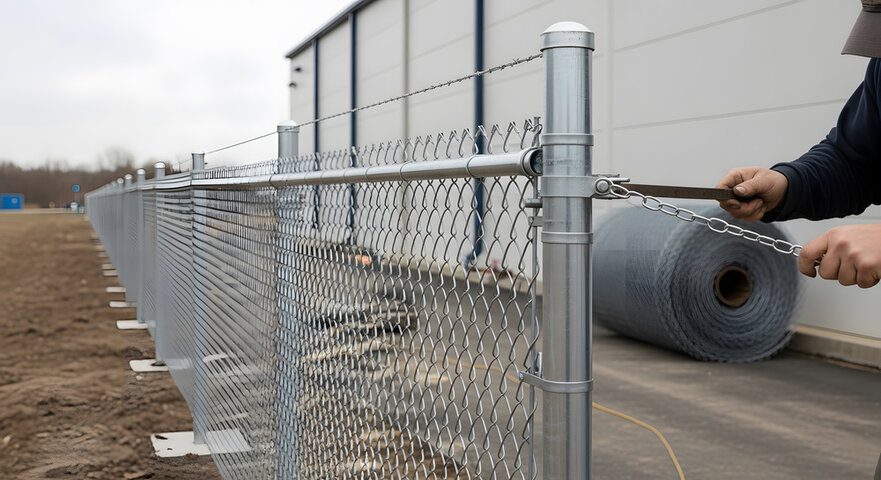
Different fence types handle slopes differently. A wood privacy fence gives you the most flexibility because we can adjust picket lengths, rot boards, and bay transitions. Chain link can follow grade smoothly, but the terminal posts and gate frames still need precise layout. Ornamental iron looks excellent on slopes, yet it requires careful stepping so the panels stay aligned and the gaps stay consistent.
If you’re deciding which material fits your yard, we’ll look at your slope, your privacy needs, and how you use the space. For example, a backyard with a pool may need tighter bottom clearance and a gate layout that self-closes reliably, while a side yard may prioritize a clean top line from the street.
- Wood offers the most ways to control bottom gaps and transitions.
- Chain link follows gentle grades well but still needs strong terminal posts.
- Iron often uses stepped panels for the cleanest look on changing grade.
Permits and safety reminders before you dig
Fence rules can vary by neighborhood and HOA, and most residential work should follow accepted building practices for structural safety. For general residential code references, the International Residential Code is a helpful baseline.
We also strongly recommend calling before you dig to locate buried utilities. In Texas, you can start that process through Texas 811 (Call Before You Dig).
For general code guidance, see International Code Council (IRC).
- Always confirm property lines before setting posts near a boundary.
- Utility locates help prevent dangerous and costly hits.
- Good planning protects your fence investment and your landscaping.
FAQ: Installing a fence on a slope in Houston, TX
Is stepped or racked fencing better for privacy?
For full privacy, stepped fencing is often the most consistent because each panel stays level and tight. On gentle grades, racked panels can also look great if the design supports the slope.
How do you stop gaps under a fence on a hill?
We typically use a combination of correct post spacing, rot boards, and clean grade transitions. On steep areas, mixing stepped sections can reduce oversized triangular gaps.
How deep should fence posts be on a slope?
The slope doesn’t change the basic rule: posts need consistent depth and solid footings. In Houston-area clay, proper depth and curing time help prevent leaning later.
Can you put a gate on a slope?
Yes, but it takes careful planning. Whenever possible we locate the gate on the flattest section; if not, we plan swing clearance and use heavy-duty bracing so it doesn’t bind or drag.
Get a sloped-fence plan that looks clean and works long-term
If you want a fence that follows your yard without looking uneven or leaving pet-sized gaps, we can help you choose the right layout and materials for your property.
Call Griffin Fence today at (713) 937-6611 or contact us online for a free estimate.