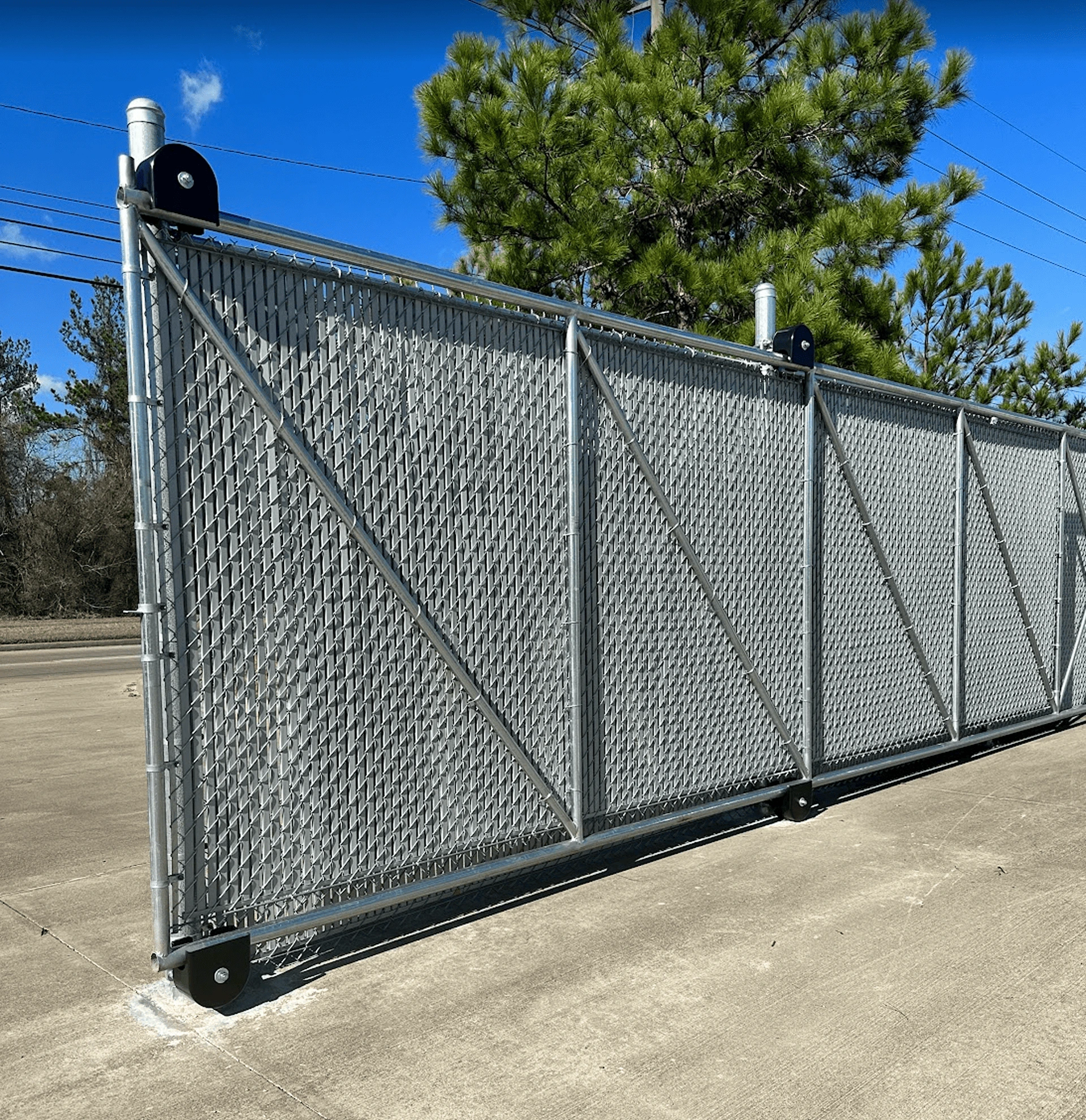
In Houston, TX, chain link is one of the most common fences we install for homes, businesses, dog runs, sports fields, and utility areas. We hear the same question on estimates all the time: how long does a chain link fence last in Houston’s weather? The honest answer is that lifespan depends on the materials you choose (galvanized vs. vinyl-coated), how it’s installed, and how well the site drains.
In this guide, we’ll break down realistic lifespan ranges for chain link in our Gulf Coast conditions, what actually causes premature rust or loose fabric, and the upgrades we recommend when you want the fence to look good and stay tight for decades.
Quick answer: chain link fence lifespan in Houston
For most Houston properties, a properly installed galvanized chain link fence commonly lasts 20–30 years before you need major repairs or replacement. With the right material choices and maintenance, it can last longer.
- Galvanized chain link: typically the best value for long-term durability.
- Vinyl-coated chain link: often lasts longer cosmetically because it adds another corrosion barrier.
- Posts and framework matter as much as the fabric—thin-wall or poorly set posts can fail early even if the mesh still looks fine.
What Houston weather does to chain link (and why it matters)
Houston’s heat, humidity, and heavy rains don’t automatically “ruin” chain link—but they do punish weak coatings, poor drainage, and shortcuts in installation. The biggest issues we see are corrosion at low points, movement in posts from saturated soil, and tension loss when the fabric isn’t stretched correctly from day one.
- Moisture sits in shaded areas and along fence bottoms after storms.
- Clay soils can expand/contract and loosen concrete footings if they’re undersized.
- Standing water near posts speeds up corrosion where the coating is damaged.
Humidity and salt exposure (even inland)
Even if you’re not right on the coast, Houston’s humid air accelerates corrosion when bare steel is exposed. That exposure usually happens at cut ends, damaged spots from landscaping equipment, or where the fabric rubs against metal due to missing ties or loose bands.
- Rust starts where steel is exposed—not where the coating is intact.
- Small damage can spread if you don’t address it early.
Rainfall, drainage, and “wet feet” on posts
We pay close attention to drainage during installs. If a property holds water, the bottom of posts and low fence sections stay wet longer. That doesn’t mean chain link can’t work—it means we may recommend better coatings, concrete details, or small grading fixes to protect your investment.
- Better drainage usually equals longer fence life.
- Posts set deep and straight resist movement during soggy seasons.
Galvanized vs. vinyl-coated: which lasts longer in Houston?
Both can perform well here, but they age differently.
Galvanized chain link lifespan
Galvanized chain link relies on a zinc coating to protect the steel. When installed with quality framework and proper tension, it’s a durable, cost-effective option for most residential and commercial uses in Houston, TX.
- Typically 20–30 years to major replacement for many properties.
- Best for customers prioritizing value and straightforward maintenance.
Vinyl-coated chain link lifespan
Vinyl-coated chain link adds a polymer layer over galvanized steel. This can add corrosion resistance and also helps the fence look better longer—especially in shaded, damp areas where algae/mildew can discolor bare galvanized fences over time.
- Often longer cosmetic lifespan, especially in black or green finishes.
- Great choice for front-facing areas, pools, and neighborhoods that care about appearance.
What we recommend most often
For most Houston installs, we recommend quality galvanized framework and then choosing the fabric/coating based on your goals: maximum value (galvanized) or longer-lasting appearance (vinyl-coated). If you’re unsure, we walk you through options during an estimate.
- Match the coating to the site: shaded and damp areas benefit from higher corrosion resistance.
- Don’t cut corners on posts and rails—framework failure is a common early “end of life” trigger.
Key factors that determine how long your chain link fence lasts
Two fences can be the same height and still age very differently. Here’s what actually controls lifespan in real-world Houston conditions.
1) Wire gauge and mesh quality
Heavier gauge (thicker wire) holds tension better and resists impact. For dog runs, commercial lots, or anywhere you want long-term tightness, heavier wire and quality fabric are worth it.
- Thicker wire resists bending and sagging.
- Quality coating reduces rust risk over decades.
2) Post depth, concrete footings, and alignment
In Houston’s soils, post installation is a major longevity factor. Posts need the right depth, properly sized concrete, and correct alignment to keep gates operating smoothly and fabric tension consistent.
- Proper post installation prevents leaning after heavy rains.
- Stable posts keep gates from dragging and hardware from wearing out early.
3) Tensioning and tying (a big deal people don’t see)
A chain link fence should be stretched tight, then tied correctly to the framework so it stays tight. Missing ties, loose bands, or rushed stretching can lead to ripples, sagging, and premature wear where the wire rubs metal-on-metal.
- Correct tension keeps the fence looking sharp and secure.
- Proper ties reduce rubbing and coating damage.
4) Gate quality and hardware
Many “fence failures” are actually gate failures. In humid Houston weather, cheap hinges and latches corrode, and lightweight gate frames can twist. If you use the gate every day, it’s worth building it right.
- Quality hinges/latches reduce sagging and sticking.
- Stronger gate frames handle daily use longer.
5) Vegetation and sprinkler exposure
Sprinklers that constantly soak the fence and vegetation that stays pressed against the mesh both speed up corrosion. We often recommend simple changes: redirect a sprinkler head, trim back shrubs, and keep the fence line clean.
- Keep plants from touching the fabric to reduce trapped moisture.
- Avoid constant sprinkler spray on posts and bottom rail areas.
How to make a chain link fence last longer in Houston
If you want the longest practical lifespan, focus on smart material selection and a few easy habits.
- Choose the right coating: consider vinyl-coated fabric in damp, shaded zones.
- Invest in framework: strong posts and rails are the backbone of the fence.
- Protect the bottom: keep soil and mulch from piling up against the fabric.
- Address damage early: fix bent fabric, broken ties, or coating scrapes before rust spreads.
- Keep drainage in mind: if the area floods, consider small grading improvements.
When to repair vs. replace an aging chain link fence
We’re big believers in repair when it makes sense. Many older fences can be tightened, re-tied, or have a gate rebuilt without replacing everything.
Repair is usually the right call when:
- The posts are still solid and straight.
- The fence fabric is mostly intact but sagging or slightly rusted in spots.
- The main issue is a gate that’s dragging, sticking, or out of square.
Replacement is usually smarter when:
- Multiple posts are loose, leaning, or rusted through near ground level.
- The fabric has widespread rust and breaks easily when tensioned.
- You want a major upgrade (height, privacy, security) that the old frame can’t support.
Internal resources for planning your chain link fence project
If you’re still comparing options, these pages help you plan the right solution for your property:
- Chain Link Fence Installation Near Me
- Chain Link Fence Houston, TX
- Chain Link Fence Contractors Near Me
- Chain Link Fence with Barbed Wire
- Fence Estimator
- Our Process
- Financing
External references (for standards and planning)
When customers ask what’s considered “normal” for materials and design, we like to point to a few reputable references:
- ASTM International (material standards used across the construction industry)
- National Institute of Standards and Technology (NIST) (helpful for general materials and corrosion information)
FAQ: chain link fence lifespan in Houston
How long does a chain link fence last in Houston’s humidity?
With quality galvanized or vinyl-coated materials and a proper install, chain link commonly lasts 20–30 years in Houston, TX. Lifespan drops when coatings are damaged, drainage is poor, or posts are undersized.
Does vinyl-coated chain link rust in Houston?
Vinyl-coated chain link can still rust if the coating is cut or damaged, but it typically resists corrosion better and maintains appearance longer, especially in shaded, damp areas.
What parts fail first on a chain link fence?
Gates and hardware often fail first (sagging hinges, sticking latches), followed by loose ties or tension loss. If posts are installed poorly, leaning posts can become the biggest issue after heavy rainy seasons.
Can you extend the life of an existing chain link fence?
Often, yes. We can tighten the fabric, replace broken ties, rebuild gates, and swap out corroded hardware. If the posts are still solid, repairs can add years of service life.
Call to schedule an estimate
If you want a chain link fence built to last in Houston, TX, we’ll help you choose the right materials and install it correctly the first time. Call Griffin Fence today at (713) 937-6611 or contact us online for a free estimate.