On active jobsites across Houston, TX—from roadway expansions near the Beltway to multi-family builds inside the Loop—temporary construction fencing is more than a checkbox. It’s how you control access, protect materials, reduce liability, and keep crews moving without unnecessary interruptions.
We install and service temporary construction fence systems every week, and we’ve learned that the difference between a fence that “looks fine” and a fence that actually performs comes down to planning: site layout, wind exposure, gate locations, and how long you need the system in place.
When a temporary construction fence is the right choice in Houston, TX
Temporary fencing makes sense when you need fast perimeter control without pouring footings or setting permanent posts. Common local scenarios include:
- Short-term commercial builds and tenant improvements
- Long-duration projects where the site footprint changes over time
- Utility work and trenching where you need to protect open excavations
- Material laydown yards that need a defined boundary
- Event-adjacent builds where pedestrian flow must be separated from equipment
- Temporary fence is ideal when your footprint shifts and timing changes.
- It’s often the fastest way to control access on day one.
- Planning gates and signage early prevents daily bottlenecks.
Rental vs. purchase: what we recommend for most Houston jobsites
Most contractors we work with prefer rentals because it keeps cash free for the parts of the job that can’t be postponed. Rentals also make service easy—if a panel gets damaged, you want replacement fast, not a long procurement cycle.
Purchase can make sense if you manage many simultaneous sites, run recurring projects, or need a custom configuration that you’ll reuse. If you’re unsure, we can quote both paths and explain the total cost difference over the schedule you expect.
- Rentals usually win for speed, flexibility, and service.
- Buying can pencil out for contractors with multiple ongoing sites.
- We can structure a plan that matches your project timeline.
Panel styles, heights, and privacy options
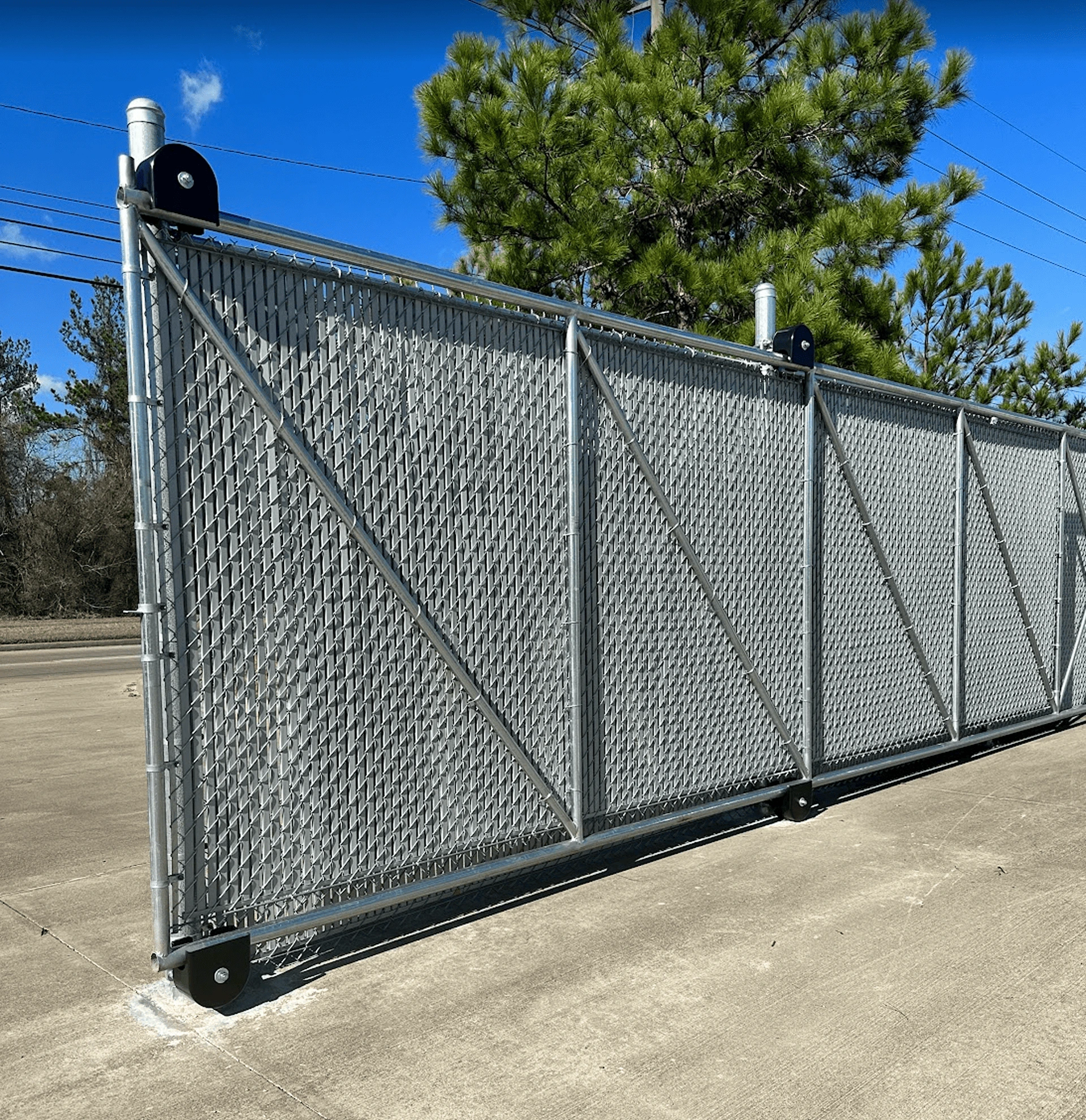
Temporary construction fence in Houston, TX is most often built with chain link-style panels. Heights commonly range from 6 to 8 feet depending on the site and the risk profile. For higher sensitivity areas (tools, copper, generators), we can recommend enhancements like tighter mesh, anti-climb measures, or moving the laydown yard inside a secondary barrier.
Need privacy or dust control? We can add screening where it makes sense. Just keep in mind: screening increases wind load, so the bracing plan matters more—especially during storm season.
- 6–8 ft chain link panels are the most common jobsite solution.
- Privacy screening changes wind forces—bracing becomes critical.
- High-risk storage areas often benefit from a second layer of control.
Wind bracing in Houston: the detail that prevents expensive failures
If you’ve built in Houston for long, you already know that wind isn’t theoretical. Open areas near the Ship Channel, large cleared pads in Katy and Cypress, and corner lots with no wind breaks can turn a lightly supported fence into a domino line.
We evaluate exposure, fence length runs, and where gates break up the line. We’ll also look at where screening is planned. The goal is simple: keep the fence standing and safe so it doesn’t become a hazard to workers, vehicles, or pedestrians.
- Wind exposure changes by neighborhood and site conditions.
- Long straight runs need planned reinforcement points.
- Screening should always trigger a stronger bracing plan.
Gates and access control: keeping crews moving while controlling risk
On busy jobsites, gates are the choke points. We plan them around delivery routes, swing radius for trucks, and where supervisors want visibility. In Houston, TX, it’s common for sites to need separate entrances for heavy equipment and pedestrian access.
When you want tighter control, we can integrate temporary solutions with your longer-term access goals. For example, if the finished property will use controlled entry, we can help you think through gate layout now so your permanent system installs cleanly later.
If you’re planning a longer-term perimeter, our Problems You May Face With Iron Fence Installation And How To Avoid Them page is a helpful overview of how we coordinate layouts and schedules.
- Gate placement impacts daily productivity more than most people expect.
- Separate equipment and pedestrian access reduces conflict points.
- Plan temporary gate locations with the future permanent system in mind.
Compliance and safety considerations (what we watch for)
Every site is different, and we’re not your safety officer—but we do install fencing in a way that supports safe operations. We pay attention to:
- Clear paths for pedestrians and marked access points
- Keeping fence lines away from active swing zones when possible
- Maintaining stable base conditions so panels don’t drift or tilt
- Posting signage where it helps control entry and communicate hazards
For reference, many contractors keep OSHA construction guidance handy for broader site safety planning: OSHA construction industry standards.
Local rules can also impact how sites handle sidewalks, right-of-way, and public interface areas. The City of Houston Code of Ordinances (Municode) is a useful starting point when you’re coordinating with inspections or permits.
For sites that need stronger perimeter control, review our Wood Fence Repairs in Houston, TX resource and we’ll recommend the right add-ons.
- Good temporary fencing supports safer access and clearer boundaries.
- Signage and stable base conditions reduce preventable incidents.
- We coordinate fence layout with how your site actually operates.
Houston weather and site conditions: rain, mud, and shifting ground
Houston-area projects also deal with heavy rainfall and muddy access points that can shift base conditions. We’ll note drainage paths and soft spots so the fence line stays true after storms, and we can schedule quick service calls if panels need re-leveling.
- Drainage patterns matter—especially around curb lines and swales.
- Soft ground can shift panel bases after storms.
- Quick adjustments keep the perimeter working as the site changes.
How fast can we install temporary construction fence near you in Houston, TX?
Most temporary fencing projects move quickly once we confirm the site layout and the access plan. For straightforward perimeters, we can often schedule installation in a short window. Complex sites—multiple gates, screening, uneven ground, or phased footprints—take more coordination, but we still aim to keep turnaround times contractor-friendly.
The fastest way to get a reliable schedule is to share your address (or cross streets), approximate linear footage, the height you want, and how many gates you need. Photos of the pad and entry points help too.
- Simple perimeters can often be installed quickly after layout confirmation.
- Phased sites need a plan for moves, adds, and removals.
- Footage, height, and gates are the three details that drive timelines.
Service, moves, and removals: planning for the real life of a jobsite fence
Temporary fence isn’t “set it and forget it.” As the job progresses, you may need to shift panels to open staging areas, add a gate for a new traffic flow, or pull sections to accommodate concrete pours. We build service into the conversation upfront so you’re not stuck with a perimeter that fights the schedule.
If your project will ultimately include permanent fencing, our Sample Page page can help you align temporary gate locations with the finished plan.
- Jobsites change—your fence should be able to change with them.
- Planning service calls early prevents schedule surprises.
- We can handle adds, moves, and removals as your phases shift.
One more tip we share with Houston, TX superintendents: designate a single, clearly marked visitor entry and keep it consistent. When deliveries, inspectors, and subs all use different gaps in the perimeter, the fence stops functioning as access control.
Common temporary construction fence questions
How tall should a temporary construction fence be in Houston, TX?
Most sites choose 6 or 8 feet. We recommend selecting height based on what you’re protecting, how visible the site is, and whether screening is planned. We’ll walk through the tradeoffs so you don’t overbuild or under-protect.
Can temporary fence be installed on uneven ground?
Yes. Uneven ground is common around curb lines, drainage areas, and lots that are still being graded. We adjust panel placement and reinforcement so the perimeter stays stable and gaps are minimized.
Do you provide gates for equipment and deliveries?
We do. We can set up gate widths and locations based on your delivery routes and turning radius needs, and we can adjust gate plans as the site evolves.
How do you keep temporary fence secure during high winds?
We plan bracing around exposure, run length, and screening. On windy sites, we add reinforcement points and review the layout so the fence remains stable instead of shifting or tipping.
Get a temporary construction fence quote from Griffin Fence
Whether you need a clean perimeter for a short-term project or a longer-term rental with planned moves, we’ll help you set up a temporary fence system that fits your schedule and keeps the site controlled.
Call Griffin Fence today at (713) 937-6611 or contact us online for a free estimate.
Related Griffin Fence resources
- Problems You May Face With Iron Fence Installation And How To Avoid Them
- Wood Fence Repairs in Houston, TX
- Sample Page
- Fence Installation Equipment Houston, TX Overview
- Fence Installation in Bellaire, TX
- Residential vs Commercial Fencing in Houston – What’s Right for Your Property?
- Best Fence Installation Services In Houston, TX
- Wood Fences with Steel Posts in Houston, TX