A fence does more than define property lines. It shapes the first impression visitors have of a home, improves privacy, enhances security, and often contributes to resale value. For homeowners planning an exterior upgrade, choosing the right fence material is one of the most important decisions because appearance and performance directly influence long-term value.
With so many fencing options available, many homeowners ask the same question: Which fence material adds the most value and curb appeal?
The answer depends on several factors including home style, neighborhood trends, maintenance expectations, budget, durability, and the purpose of the fence itself.
Among the most popular options are wood, iron, aluminum, vinyl, and composite fencing. Each offers unique benefits and affects property value differently.
This guide explores how various fence materials influence curb appeal, buyer perception, and long-term investment value.
Why Fence Material Matters for Home Value
A fence is often one of the first exterior features people notice.
Potential buyers frequently evaluate:
- Privacy
- Safety
- Design quality
- Material condition
- Maintenance requirements
- Compatibility with the home
An attractive fence can improve:
First Impressions
Curb appeal plays a major role in real estate value. Homes with coordinated exterior features tend to attract more attention.
A well-designed fence creates visual structure and makes landscaping appear more polished.
Functional Benefits
Fences provide:
- Property boundaries
- Child safety
- Pet containment
- Noise reduction
- Security enhancement
Buyers often see these features as added value.
Exterior Consistency
The right fence complements:
- Roofing
- Siding
- Driveways
- Gardens
- Outdoor living areas
Poor material choices may reduce visual appeal even if the fence itself is expensive.
Wood Fencing: Natural Beauty and Strong Buyer Appeal
Wood remains one of the most requested fencing materials because of its timeless appearance and versatility.
Popular wood choices include:
- Cedar
- Pine
- Redwood
- Pressure-treated lumber
Wood fencing fits many home styles, from traditional suburban homes to rustic properties.
Curb Appeal Advantages
Wood creates a warm and inviting appearance.
It works especially well with:
- Cottage-style homes
- Ranch properties
- Craftsman architecture
- Landscaped yards
Natural textures blend easily with outdoor spaces.
Homeowners can customize wood through:
- Staining
- Painting
- Decorative tops
- Horizontal layouts
- Privacy designs
This flexibility boosts visual impact.
Property Value Benefits
Wood fences often increase perceived value because buyers appreciate privacy.
Solid wood panels create:
- Backyard separation
- Noise reduction
- Secure play areas
Families with pets and children frequently prioritize fenced yards.
A professionally installed cedar privacy fence may become a strong selling point.
Maintenance Considerations
Wood offers beauty but requires upkeep.
Common maintenance tasks include:
- Sealing
- Staining
- Cleaning
- Rot prevention
Without maintenance, wood may experience:
- Warping
- Cracking
- Fading
- Moisture damage
Buyers sometimes view high-maintenance materials as a drawback.
Best Situations for Wood Fencing
Wood works best when homeowners want:
- Maximum privacy
- Traditional appearance
- Custom design flexibility
- Natural landscaping integration
For many neighborhoods, wood delivers excellent curb appeal and moderate resale value improvements.
Iron Fencing: Premium Appearance and Luxury Appeal
Iron fencing has long been associated with upscale properties.
Decorative wrought iron styles create elegance and sophistication that few materials can match.
Homes featuring iron fencing often appear more refined and architecturally impressive.
Curb Appeal Strengths
Iron fencing instantly attracts attention.
Popular applications include:
- Front yards
- Entry gates
- Driveway borders
- Estate properties
- Garden enclosures
Decorative elements may include:
- Scrollwork
- Spear tops
- Curved rails
- Custom patterns
These details elevate exterior design.
Iron complements:
- Brick homes
- Colonial designs
- Mediterranean architecture
- Luxury residences
Property Value Impact
Iron fencing can contribute significant visual value.
High-end buyers frequently associate iron with:
- Security
- Prestige
- Permanence
Even short sections around entryways improve property presentation.
Because iron fences are open designs, they maintain visibility while adding definition.
This creates an upscale appearance without making landscapes feel closed off.
Maintenance Requirements
Iron demands regular attention.
Owners must manage:
- Rust prevention
- Repainting
- Surface treatment
- Moisture protection
Neglected iron may develop:
- Corrosion
- Flaking paint
- Structural weakness
Maintenance affects long-term value.
Well-maintained iron enhances resale appeal.
Poorly maintained iron may do the opposite.
Best Situations for Iron Fencing
Iron is ideal for:
- Luxury homes
- Historic properties
- Decorative front yards
- Custom entrances
It excels when aesthetics matter more than full privacy.
Aluminum Fencing: Low Maintenance With Modern Appeal
Aluminum fencing has become increasingly popular because it offers the appearance of wrought iron with fewer maintenance concerns.
Many homeowners view aluminum as the balance between beauty and practicality.
Visual Benefits
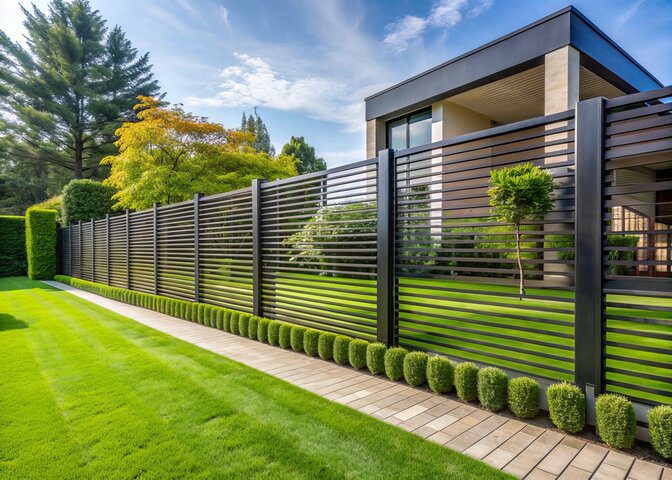
Modern aluminum fencing creates clean lines and elegant boundaries.
Common styles include:
- Flat-top panels
- Spear-top designs
- Ornamental layouts
- Contemporary horizontal patterns
Aluminum works well with:
- Modern homes
- Transitional designs
- Suburban properties
- Pool areas
Its versatility makes it appealing across many markets.
Property Value Advantages
Aluminum offers strong value because buyers appreciate low maintenance.
Benefits include:
- Rust resistance
- Weather durability
- Long lifespan
- Minimal upkeep
This appeals especially to:
- Busy homeowners
- Retirees
- Investment buyers
Aluminum also maintains appearance longer than many alternatives.
Consistent visual quality helps preserve curb appeal.
Security Features
Although aluminum does not provide complete privacy, it offers:
- Boundary definition
- Pool safety
- Pet containment
- Controlled access
Decorative gates add additional value.
Maintenance Expectations
Compared with wood and iron, aluminum needs far less care.
Typical maintenance includes:
- Occasional washing
- Inspection after storms
- Minor touch-ups
No staining or sealing is usually required.
This convenience often increases buyer interest.
Best Situations for Aluminum
Aluminum works well for homeowners seeking:
- Elegant appearance
- Minimal maintenance
- Long lifespan
- Modern curb appeal
For many properties, it offers one of the best value-to-maintenance ratios.
Vinyl Fencing: Clean Appearance and Easy Maintenance
Vinyl fencing continues gaining popularity because it combines durability with simple upkeep.
Available colors commonly include:
- White
- Tan
- Gray
- Wood-look finishes
Curb Appeal Benefits
Vinyl provides a neat, uniform appearance.
It complements:
- Contemporary homes
- Planned communities
- New construction neighborhoods
Many buyers appreciate its clean look.
Privacy panels create strong visual separation while maintaining consistency.
Value Contribution
Vinyl adds value through convenience.
Advantages include:
- Moisture resistance
- No painting
- Minimal fading
- Easy cleaning
Homeowners avoid many maintenance costs associated with wood.
This can improve resale attractiveness.
Potential Drawbacks
Some buyers feel vinyl lacks the warmth of natural materials.
In luxury markets, iron or wood may create stronger impressions.
Still, vinyl performs well in family neighborhoods.
Best Uses
Vinyl suits homeowners wanting:
- Low maintenance
- Privacy
- Consistent appearance
- Long-term durability
Composite Fencing: Premium Performance and Modern Design
Composite fencing blends recycled materials with wood fibers to create a durable product.
It aims to provide wood aesthetics with improved longevity.
Appearance Advantages
Composite often resembles stained wood.
Popular styles include:
- Horizontal boards
- Modern slats
- Dark finishes
- Minimalist designs
This material fits:
- Contemporary homes
- Luxury outdoor spaces
- Modern landscapes
Property Value Benefits
Composite offers:
- Rot resistance
- UV protection
- Reduced maintenance
- Extended lifespan
Buyers may view it as an upgrade over traditional wood.
Its premium appearance often supports higher-end property presentation.
Cost Considerations
Composite installation costs are usually higher.
However, reduced maintenance may offset expenses over time.
Homeowners focused on long-term value often consider it worthwhile.
Comparing Fence Materials for Value and Curb Appeal
| Material | Curb Appeal | Maintenance | Privacy | Durability | Value Potential |
|---|---|---|---|---|---|
| Wood | Excellent | High | High | Moderate | Strong |
| Iron | Premium | Moderate–High | Low | High | Very Strong |
| Aluminum | Excellent | Low | Moderate | High | Strong |
| Vinyl | Good | Low | High | High | Moderate–Strong |
| Composite | Premium | Low | High | High | Excellent |
Every material offers benefits, but the best choice depends on homeowner priorities.
Matching Fence Materials to Home Styles
Traditional Homes
Best options:
- Wood
- Iron
- Vinyl
These complement classic architecture.
Modern Homes
Recommended materials:
- Aluminum
- Composite
- Horizontal wood designs
Clean lines enhance contemporary exteriors.
Luxury Properties
Top choices:
- Decorative iron
- Composite
- Premium aluminum
These materials support upscale presentation.
Family Neighborhoods
Popular selections include:
- Privacy wood fencing
- Vinyl panels
- Aluminum backyard systems
Function often matters as much as appearance.
Factors Buyers Notice Beyond Material
Fence value is not determined by material alone.
Buyers also evaluate:
Installation Quality
Crooked panels or uneven posts reduce appeal.
Professional installation improves:
- Alignment
- Stability
- Appearance
Condition
A newer wood fence may outperform an aging iron system in buyer perception.
Maintenance strongly influences value.
Color Coordination
Fence colors should match:
- Roofing
- Exterior paint
- Landscaping
- Trim details
Consistency improves visual harmony.
Gate Design
Decorative gates often become focal points.
Premium gates can elevate the entire property.
Which Fence Material Adds the Most Overall Value?
The answer varies by property type.
Best for Natural Beauty and Privacy
Wood fencing
Ideal for families and traditional homes.
Best for Luxury Curb Appeal
Iron fencing
Creates premium visual impact.
Best Balance of Appearance and Low Maintenance
Aluminum fencing
Offers elegance with minimal upkeep.
Best for Convenience
Vinyl fencing
Easy to maintain and durable.
Best Long-Term Investment
Composite fencing
Combines modern style with extended performance.
Tips for Maximizing Fence Return on Investment
Choose Neighborhood-Appropriate Styles
Avoid installing fences dramatically different from surrounding homes.
Consistency supports resale value.
Prioritize Quality Materials
Higher-grade products often last longer and maintain appearance better.
Maintain Regularly
Clean, repair, and inspect fences yearly.
Small repairs prevent larger costs.
Add Landscaping
Fence value increases when paired with:
- Shrubs
- Flower beds
- Lighting
- Decorative pathways
Landscape integration improves curb appeal significantly.
Final Thoughts
Choosing the right fence material affects more than property boundaries. It influences curb appeal, maintenance costs, buyer perception, and overall home value.
Wood fencing remains one of the best choices for warmth, privacy, and classic appearance.
Iron fencing delivers unmatched elegance and upscale visual impact.
Aluminum combines durability and beauty with lower maintenance demands.
Vinyl provides convenience and consistent appearance, while composite offers premium performance and modern style.
The best material is the one that matches your home, complements the neighborhood, and supports your long-term goals.
When properly selected and maintained, a quality fence becomes more than an exterior feature—it becomes an investment in your property’s appearance, functionality, and value for years to come.