If you’re trying to figure out the real fence repair cost Houston TX for a home or business, you’re not alone. In Houston, TX we see fence damage from a mix of heat, humidity, soil movement, mower impacts, and the big one: sudden storms that push panels and gates out of alignment. The good news is that many fences can be repaired for far less than a full replacement, as long as the structure is still sound.
In this guide, we’ll break down what typically drives fence repair pricing in Houston, TX, what repairs cost the most, and how we look at “repair vs replace” when we’re on-site. If you want a fast, no-pressure assessment, our team can measure the damage and give you options that fit your budget and timeline.
Typical fence repair costs in Houston, TX (what homeowners usually pay)
National pricing benchmarks are a helpful starting point for budgeting, then we adjust based on your fence material, the extent of damage, and access to the repair area. Industry cost guides commonly put typical fence repair projects in the $304–$946 range, with an average around $615 (HomeAdvisor fence repair cost guide).
For wood fence repairs specifically, many common fixes fall in a $320–$760 project range, with an average around $510 (Angi fence repair cost data). Those numbers line up with what we see most often when a section is leaning, pickets are damaged, or a gate is dragging due to post movement.
- Most repairs are priced by the repair type (post, gate, panel) plus labor time and materials.
- Linear-foot pricing can apply when multiple adjacent sections need work rather than a single isolated issue.
- Storm damage sometimes involves multiple repairs at once (posts + rails + gates), which pushes totals higher.
After you read the ranges, keep one thing in mind: the fastest way to reduce your total cost is to address post and drainage issues early, before the damage spreads across multiple panels.
- Budget ranges are a starting point; the “real number” depends on what’s happening below grade.
- Posts and hardware drive the long-term outcome more than cosmetic board swaps.
- If you fix the root cause, you don’t pay twice.
What drives fence repair cost in Houston, TX?
When we price a repair, we’re not just looking at the broken board you can see. We’re looking at the structure, soil conditions, and the “domino effect” damage that Houston weather can cause. Here are the biggest cost factors.
Fence material (wood, chain link, iron, vinyl, masonry)
Material affects both the parts cost and the labor. Wood repairs are often straightforward (replace pickets, rails, or panels). Chain link repairs usually involve tensioning, ties, and sometimes replacing fabric or posts. Iron and ornamental metal may require welding, fabrication, grinding, and touch-up coating. Masonry walls/fences take specialized labor and can be slower to repair cleanly.
If you’re comparing different materials for a future replacement, see our overview on fence installation in Houston, TX and how different materials handle local conditions.
- Wood: fast part swaps, but rot and post failure can spread.
- Chain link: usually economical, but impact damage can distort alignment.
- Iron/ornamental: durable, but repairs can be more labor-intensive.
Post stability and soil movement
Houston clay soils expand and contract with moisture swings, and that movement can slowly loosen posts over time. A fence can look “fine” for months, then start leaning after a storm saturates the soil. When posts shift, gates sag and panels rack out of square.
Post-related work is one of the most important repairs to do correctly, because it affects every panel connected to it. If you’ve got multiple leaning posts, we may recommend a larger stabilization plan rather than patching one spot at a time.
- Leaning often starts at the post, not the pickets.
- Drainage and grade matter as much as the concrete collar.
- One loose post can stress multiple sections.
Access, debris, and what’s in the way
Repairs cost more when we have to work around landscaping, irrigation lines, tight side yards, or a fence that sits on a slope. Removing storm debris, fallen branches, or old broken panels also adds time.
- Tight access can slow down hauling and material staging.
- Tree roots can interfere with proper post placement.
- Debris removal is often a separate line item.
Matching stain/paint and restoring curb appeal
In many neighborhoods, the fence is a big part of curb appeal. If you’re repairing a few sections, matching stain and keeping the finish uniform matters. That can mean additional prep, sanding, and finish work beyond the structural repair.
- Structural first, cosmetics second (but we plan for both).
- Spot-staining rarely matches perfectly; full-panel finishing looks better.
- Heat and sun exposure can fade south- and west-facing fences faster.
Common fence repairs and what they usually cost
Below are common repairs we see across Houston, TX. We’ve included national benchmark ranges to help you sanity-check quotes, and we’ll explain what typically makes each repair easier or harder. For wood fences, one cost guide estimates common repairs at roughly $15–$35 per linear foot (Angi fence repair cost data).
Fence post replacement or reset
When posts fail, everything else follows. A post can rot at grade, loosen in the soil, or crack from impact. Depending on the fence type and how the post is set, replacement can be a quick fix or a more involved dig-out-and-rebuild. Benchmarks often put post replacement in the $120–$350 per post range for wood fence repairs (Angi fence repair cost data).
- Resetting a post can work if the post is still structurally sound.
- Full replacement is better when there’s rot, splitting, or severe lean.
- We also check for water pooling at the base (a common Houston issue).
Panel/section repair (rails, pickets, wind damage)
If a section is damaged but the posts are solid, panel repairs are often the most cost-effective option. Typical pricing benchmarks for a panel/section repair are often quoted in the $150–$400 per panel range (Angi fence repair cost data).
- We look for racking (out-of-square) and re-fastening needs.
- Board-on-board and shadowbox designs take more labor to match.
- We replace compromised fasteners to prevent repeat failures.
Replacing individual pickets or boards
For cosmetic or localized damage, swapping boards can be a smart repair. Benchmarks often show $20–$60 per board (Angi fence repair cost data), and the big variable is how many boards need to be matched and finished to look consistent.
- We check rails behind the pickets for hidden rot.
- We match board profile and spacing to keep the fence uniform.
- We can advise on stain strategy so repairs blend better.
Gate repair (sagging, dragging, latch issues)
Gates are the first thing homeowners notice when something is off. If a gate is dragging, the fix might be hardware and hinges, or it might be post movement that needs a structural reset. Typical benchmark ranges for gate repair are often $100–$400 (Angi fence repair cost data).
If you’re planning broader access improvements, you may also want to explore automatic gate installation in Houston, TX for driveway gates and operators.
- Hardware-only repairs are inexpensive but don’t solve post movement.
- Square and plumb alignment prevents latch wear.
- We can reinforce frames to reduce future sagging.
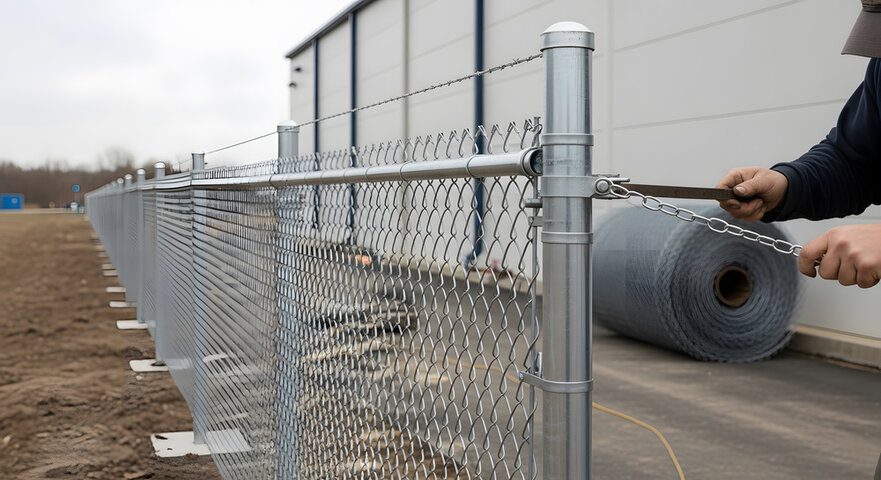
Chain link fence repairs (fabric, tension, posts)
Chain link repairs often involve replacing damaged fabric, re-tensioning, and repairing or replacing posts. If you want to compare chain link and wood from a durability and privacy standpoint, see our chain link vs wood fence comparison for Houston.
- Vehicle impacts can bend framework and require section replacement.
- Loose fabric is usually a tensioning and tie issue.
- Post alignment is the foundation for a clean repair.
Iron/ornamental fence repairs (welding, pickets, finish)
Iron fences are strong, but Houston humidity can still create corrosion if coating is compromised. Repairs can involve welding broken pickets, replacing sections, and touching up finishes. If you’re considering upgrading, read our guide to iron fencing in Houston, TX and what to expect for maintenance.
- Surface prep matters; coating over rust leads to repeat issues.
- Weld quality affects both appearance and strength.
- We aim for repairs that don’t stand out from the street.
Repair vs replacement: how we decide on-site
Homeowners ask us all the time whether they should repair the fence or start fresh. Our rule of thumb is simple: if the structure is still solid and the damage is localized, repair makes sense. If the posts are failing throughout, rails are rotting across multiple runs, or the fence is out of alignment in several places, replacement can be the more economical long-term decision.
We also factor in your goals. Are you trying to restore security quickly? Improve curb appeal before listing a home? Fix a gate that won’t close? Or do you want a full upgrade with a new material and a warranty-backed install? You can learn how we approach projects end-to-end on our Our Process page.
- Repair is best when posts are stable and damage is in one area.
- Replacement is often best when multiple posts are failing or the fence is near end-of-life.
- If you’re unsure, a professional inspection can prevent wasted spend.
Signs repair is the right move
- One fallen section from storm debris, but the rest of the fence is straight.
- A gate sagging because of hinge wear, not post movement.
- A few damaged boards or pickets from lawn equipment or pets.
Signs replacement may save money
- Multiple posts are loose or rotting at the base.
- Rails are splitting or rotting along long stretches.
- Repairs would require rebuilding a large portion of the fence anyway.
- In Houston, TX, moisture management is a big part of lifespan.
- Spending on repeated small repairs can exceed one proper rebuild.
- A new install can let you choose a more storm-resistant design.
How to keep fence repair costs down (Houston, TX practical tips)
We’re big believers in maintenance that’s realistic. You don’t need to baby your fence, but a few small habits can prevent expensive structural problems.
Do quick checks after storms
After high winds or heavy rain, walk the line and look for loose posts, shifted panels, and standing water around post bases. If a section is leaning, temporary bracing can prevent a full collapse until repairs are scheduled.
- Look for new gaps at the base (soil washout).
- Check gates first; they show alignment problems early.
- Photograph damage for insurance if a tree fell or a vehicle hit the fence.
Address drainage and sprinkler overspray
Persistent moisture at the base of wood posts accelerates rot. If sprinklers hit the fence line daily, adjust heads or add shields. Make sure downspouts and grading don’t dump water directly at the posts.
- Moisture control is the cheapest “repair” you can do.
- Even small grading improvements can extend fence life.
- If you’re replacing sections, consider upgraded post solutions.
Use the warranty and financing options when they help
If your fence was installed recently, repairs may be covered depending on cause and warranty terms. You can review our warranty information and, if you’re planning a larger project, our financing options can help spread cost over time.
- Ask about warranty coverage before you pay out of pocket.
- Bundle adjacent repairs to reduce mobilization costs.
- Plan proactive reinforcement before hurricane season ramps up.
Fence repair cost in Houston, TX: FAQ
How much does fence repair cost per foot in Houston, TX?
Many repairs are quoted by the specific repair (post, panel, gate), but benchmarks often put common wood fence repairs around $15–$35 per linear foot depending on the extent of damage and finish matching (Angi fence repair cost data).
What is the most expensive fence repair?
In our experience, widespread post failure and structural rebuilding are usually the most expensive because they require digging, resetting, and re-aligning multiple connected sections. Metal repairs that require welding and refinishing can also add labor time.
Can I repair a leaning fence without replacing it?
Sometimes, yes. If the post is intact and the problem is soil movement, the post may be reset and stabilized. If the post is rotted, cracked, or repeatedly loosens, replacement is typically the better long-term fix.
Should I repair or replace my fence after storm damage?
If the damage is confined to a section or two and the rest of the fence line is solid, repair is usually cost-effective. If multiple posts shifted or the fence line is badly out of alignment, replacement may be the smarter investment.
Related services and guides
If you’re planning a bigger upgrade (or want to compare options before investing), these pages can help: Wood Fence Installation Near Me, Chain Link Fence Houston, TX, Fence Installation Houston, TX, and Our Process. You can also review Financing and Warranty to understand what to expect before we start.
Get a fence repair estimate from Griffin Fence
Call Griffin Fence today at (713) 937-6611 or contact us online for a free estimate.